
Politics
Explore the Charm and Intrigue of Liechtenstein’s Landscape

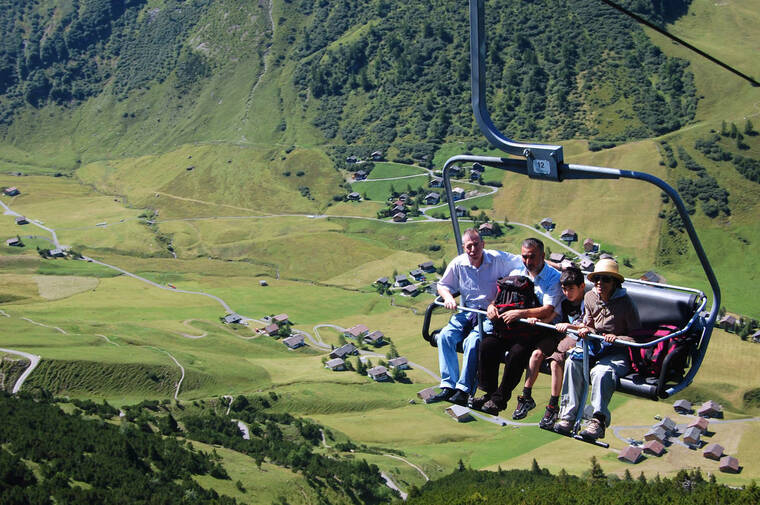
Liechtenstein, a tiny principality nestled between Austria and Switzerland, offers a unique blend of natural beauty and rich history. With a population of just around 40,000, it stands out as one of the last remaining independent states in the German-speaking region of Europe. The country is bordered by the rugged Austrian Alps to the east and the picturesque Rhine River to the west, which flows northward from its origins in the Alps.
The nation’s geography is striking, with its eastern border marked by high ridges and the Rhine River serving as a serene backdrop. Despite its scenic surroundings, Liechtenstein lacks an airport and is doubly landlocked, meaning visitors must cross at least two borders to reach the sea.
A Glimpse into Liechtenstein’s Economy and Governance
Liechtenstein has carved a niche for itself in the global economy by attracting businesses with favorable tax and accounting policies. The country is predominantly urban, characterized by modern office buildings and banking institutions rather than quaint villages. The princely family, particularly Prince Hans-Adam II, plays a significant role in the governance and economic landscape of the nation. The prince, who has transformed his family’s bank into a global financial group, has held substantial influence since taking the throne in 1984.
Prince Hans-Adam II made headlines in the early 2000s when he threatened to leave the principality unless granted more political power. This move seemed to resonate with the citizens, who accepted his demands without significant unrest. Today, he wields considerable authority, making him one of the most powerful royals in Europe, despite ruling over a country with a population comparable to a moderately-sized stadium.
Discovering Liechtenstein’s Rich History
Liechtenstein consists of 11 villages, with Vaduz serving as its capital. The village, home to approximately 6,000 residents, features a pedestrian-friendly main street adorned with modern art and hotels. However, tourists may find that the souvenir shops stock more items related to Switzerland than to Liechtenstein itself.
The principality’s history is intertwined with the Habsburg family, as the House of Liechtenstein purchased its territory from the Holy Roman Emperor. In 1719, it was granted principality status, leading to a long period where the ruling family viewed their new holdings primarily as a status symbol. Remarkably, it wasn’t until the 20th century that a Liechtenstein prince actually resided in the country.
Liechtenstein gained true independence in 1806, severing its obligations to the Habsburgs. Following the economic challenges of World War I, the country entered an economic union with Switzerland, which continues to shape its modern economy. The Swiss franc is the official currency, and public transportation largely relies on Swiss postal buses.
Tourism forms a crucial part of Liechtenstein’s economy, with visitors drawn to its stunning landscapes. Ski lifts operate year-round, inviting nature enthusiasts to explore the breathtaking mountain ridge along the Austrian border. The tiny mountain resort of Malbun serves as a gateway for outdoor activities, showcasing the natural beauty that the principality has to offer.
As the sun sets over this captivating land, visitors can find vantage points across the Rhine River in Switzerland for expansive views of Liechtenstein. This serene experience encapsulates the essence of a country that can be thoroughly explored in a single day, yet leaves a lasting impression of its charm and historical depth.
This article is published with the permission of Rick Steves’ Europe (www.ricksteves.com), where Rick Steves, a renowned travel writer and television host, shares his insights into European travel.

Philadelphia Parks Launch Free Earth Month Events Starting April 1

Bradford’s Fish Fry Fridays Serve Community with Delicious Dinners

Trump Faces Growing Challenges Amid Rising Tensions with Iran

Scientists Probe the Universe’s Missing Topological Defects

Samsung Galaxy Watch 9 to Feature Larger 435mAh Battery

UConn Huskies Aim to Defend Title in 2026 NCAA Women’s Tournament

U.S. Littoral Combat Ships Dock in Malaysia Amid Regional Tensions

Healthy Choice Wellness Reports Quarterly Earnings, Shares Rise

Urgent News: Charles M. Payment Passes Away at 78 in Duluth

University of Hawaiʻi Joins $25.6M AI Project to Enhance Disaster Monitoring

Major Grant Enhances Cancer Care and Research in Hawaiʻi

Joleen Chaney, Beloved Journalist, Passes Leaving Lasting Legacy

San Francisco’s SFO to Welcome 16 Airlines with Nonstop Flights to Europe in 2026

Goldman Sachs Unveils 2026 Catalyst Playbook for Biotech Investors

Discover Top Business Smartphones for Professionals in 2026

Urgent Update: Tom Aspinall’s Vision Deteriorates After UFC 321

Texas Roadhouse Honors Veterans with Free Meal Vouchers

CD Projekt Red Confirms No Release for The Witcher 4 in 2026
-
Science9 months ago
University of Hawaiʻi Joins $25.6M AI Project to Enhance Disaster Monitoring
-
 Health8 months ago
Major Grant Enhances Cancer Care and Research in Hawaiʻi
-
 Top Stories9 months ago
Joleen Chaney, Beloved Journalist, Passes Leaving Lasting Legacy
-
 World7 months ago
San Francisco’s SFO to Welcome 16 Airlines with Nonstop Flights to Europe in 2026
-
 Business8 months ago
Goldman Sachs Unveils 2026 Catalyst Playbook for Biotech Investors
-
 Business7 months ago
Discover Top Business Smartphones for Professionals in 2026
-
 Top Stories9 months ago
Urgent Update: Tom Aspinall’s Vision Deteriorates After UFC 321
-
 Lifestyle9 months ago
Texas Roadhouse Honors Veterans with Free Meal Vouchers
-
 Entertainment8 months ago
CD Projekt Red Confirms No Release for The Witcher 4 in 2026
-

 Top Stories10 months ago
AI Disruption: AWS Faces Threat as Startups Shift Cloud Focus
-

 Health10 months ago
MIT Scientists Uncover Surprising Genomic Loops During Cell Division
-

 Entertainment10 months ago
Discover the Full Map of Pokémon Legends: Z-A’s Lumiose City