
Science
New Algorithms Illuminate Propane-to-Propylene Conversion Process

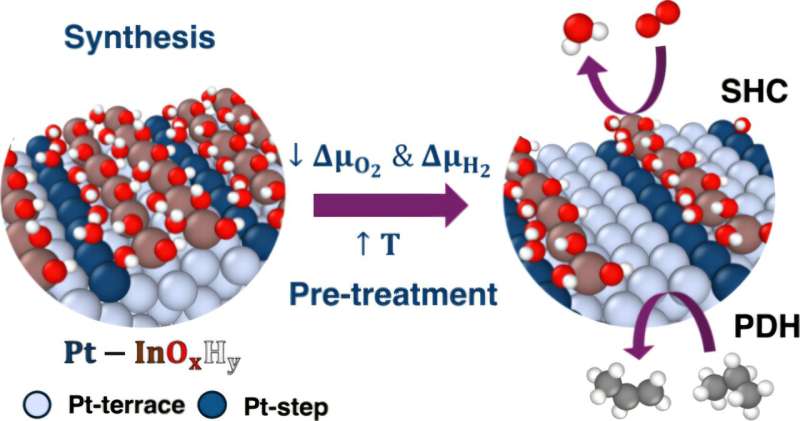
A team of researchers from the University of Rochester has made significant strides in understanding the conversion of propane to propylene, a crucial process for producing many everyday products. Their innovative algorithms reveal the atomic-level interactions that occur during this transformation, enhancing efficiency and potentially reducing costs for manufacturers.
In a study published on November 13, 2025, in the Journal of the American Chemical Society, researchers describe how nanoscale catalysts can streamline this chemical process. Previously, a 2021 study highlighted the potential of using tandem nanoscale catalysts to consolidate multiple steps into a single reaction, but the underlying mechanisms remained elusive.
Deciphering Catalytic Processes at the Atomic Level
The research team, led by assistant professor Siddharth Deshpande, focused on utilizing algorithms to analyze the complex chemistry involved in the catalytic reactions. “There are so many different possibilities of what’s happening at the catalytic active sites, so we need an algorithmic approach to very easily yet logically screen through the large amount of possibilities that exist and focus on the most important ones,” Deshpande explained.
By refining their algorithms, Deshpande and his chemical engineering Ph.D. student, Snehitha Srirangam, conducted a comprehensive analysis of the metallic and oxide phases involved in the reaction. Their findings revealed unexpected behavior: the oxide selectively grows around defective metal sites, which is critical for the catalyst’s stability.
Implications for Future Chemical Production
This new understanding could revolutionize how companies approach the production of propylene and other industrial materials. According to Deshpande, leveraging this knowledge can lead to more strategic and efficient production methods, moving away from traditional trial-and-error techniques that have dominated the industry for decades.
“Our approach is very general and can open the doors to understanding many of these processes that have remained an enigma for decades,” Deshpande stated. He emphasized that while these chemical processes are widely used, the detailed mechanisms have been poorly understood until now.
The researchers believe their work not only sheds light on the propane-to-propylene conversion but also holds potential for other chemical reactions, such as methanol synthesis, which is essential for products ranging from paints to fuel cells.
With this breakthrough, the team at the University of Rochester is paving the way for advancements that could enhance the efficiency of numerous industrial processes, ultimately benefiting manufacturers and consumers alike.

Bitcoin Plummets Below $88K Amid Tether Concerns and Warnings

Tottenville Falls Short in PSAL 4A Title Game Against Erasmus

Shark Teeth Study Reveals Urgent Clues to Prevent Extinction

Church Members Rally Together After Thanksgiving Fire Devastation

U.S. Investment in Canadian Energy Firms Surges Despite Low Oil Prices

Nick Jonas Unveils New Solo Album ‘Sunday Best’ Set for February Release

Researchers Urge Label Changes for Low-Alcohol Drinks to Aid Pregnant Women

Wedding Cookie Table Community Aims for World’s Largest Cookie Exchange

Mayor Appoints Alan Wong as New Supervisor for District 4

Urgent Update: Tom Aspinall’s Vision Deteriorates After UFC 321

MIT Scientists Uncover Surprising Genomic Loops During Cell Division

University of Hawaiʻi Joins $25.6M AI Project to Enhance Disaster Monitoring

AI Disruption: AWS Faces Threat as Startups Shift Cloud Focus

Time Crystals Revolutionize Quantum Computing Potential

Honeywell Forecasts Record Business Jet Deliveries Over Next Decade

Discover the Full Map of Pokémon Legends: Z-A’s Lumiose City

GOP Faces Backlash as Protests Surge Against Trump Policies

Parenthood Set to Depart Hulu: What Fans Need to Know
-
 Top Stories1 month ago
Urgent Update: Tom Aspinall’s Vision Deteriorates After UFC 321
-
 Health1 month ago
MIT Scientists Uncover Surprising Genomic Loops During Cell Division
-
Science4 weeks ago
University of Hawaiʻi Joins $25.6M AI Project to Enhance Disaster Monitoring
-
 Top Stories1 month ago
AI Disruption: AWS Faces Threat as Startups Shift Cloud Focus
-
 Science2 months ago
Time Crystals Revolutionize Quantum Computing Potential
-
 World2 months ago
Honeywell Forecasts Record Business Jet Deliveries Over Next Decade
-
 Entertainment1 month ago
Discover the Full Map of Pokémon Legends: Z-A’s Lumiose City
-
 Top Stories2 months ago
GOP Faces Backlash as Protests Surge Against Trump Policies
-
 Entertainment2 months ago
Parenthood Set to Depart Hulu: What Fans Need to Know
-

 Politics2 months ago
Judge Signals Dismissal of Chelsea Housing Case Citing AI Flaws
-

 Sports2 months ago
Yoshinobu Yamamoto Shines in Game 2, Leading Dodgers to Victory
-

 Health2 months ago
Maine Insurers Cut Medicare Advantage Plans Amid Cost Pressures