
Science
Astronauts Stranded on Tiangong as Shenzhou 21 Faces Lifeboat Crisis

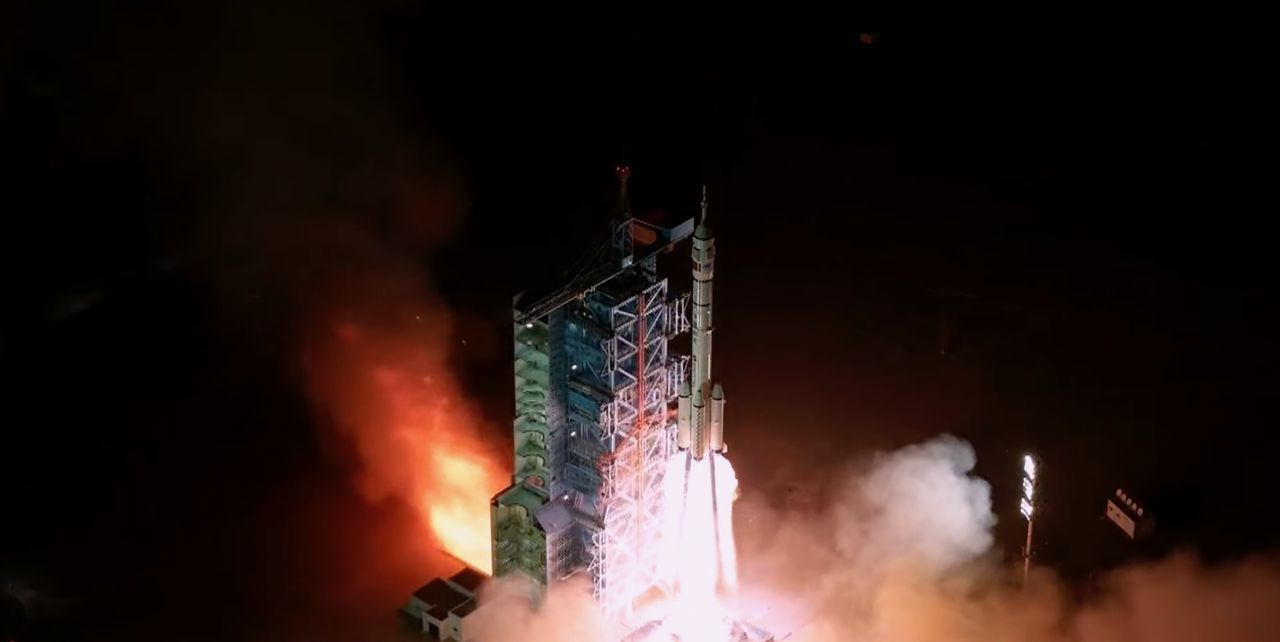
Three astronauts aboard China’s Tiangong space station are currently without a reliable means of returning to Earth. The crew, part of the Shenzhou 21 mission, arrived on October 31, 2023, for a planned six-month stay. Their scheduled return vehicle, the Shenzhou 21 spacecraft, is no longer available after it transported a different crew back on November 13, 2023. This situation arises after the Shenzhou 20 spacecraft was deemed unfit for return following damage from a space debris strike.
The three astronauts—commander Zhang Lu, along with Zhang Hongzhang and Wu Fei—are now living aboard the Tiangong station without a secure lifeboat. Chinese space officials have indicated that a replacement spacecraft is in preparation, but no specific timeline has been provided for its launch. The urgency of the situation is heightened as any emergency aboard the station could leave the astronauts vulnerable.
Immediate Actions and Contingency Plans
According to reports from the China Manned Space Agency, a Long March 2F rocket and a new Shenzhou spacecraft are kept “in a state of near readiness” at the Jiuquan Satellite Launch Center. This contingency policy allows for the launch of a lifeboat as quickly as 8.5 days after a decision is made. The countdown for this potential mission has likely already begun, given the precarious circumstances.
Chinese officials have confirmed that the Shenzhou 22 spacecraft will be launched to Tiangong in the near future, but the exact timing remains uncertain. Safety for the astronauts is paramount, and space authorities are eager to minimize any risk during their time in orbit. Each additional day without a reliable return option increases the stakes for the Shenzhou 21 crew.
The current situation mirrors past challenges faced by astronauts on long-duration missions. For instance, NASA astronauts Butch Wilmore and Suni Williams encountered issues during their mission aboard the International Space Station (ISS) in June 2024, when their spacecraft experienced mechanical problems. While they were able to safely remain on the ISS and eventually return on a SpaceX Crew Dragon, the Shenzhou 21 astronauts do not have similar options. The only crew-capable vehicle currently docked at Tiangong, the Shenzhou 20, is compromised, featuring cracks in one of its windows due to the debris impact.
Mission Context and Future Prospects
The Shenzhou 21 mission is the tenth crewed mission to the Tiangong space station, which is approximately 20% the size of the ISS. This mission highlights China’s growing capabilities in space exploration. Commander Zhang Lu, who previously flew on the Shenzhou 15 mission in 2022, leads the current team of astronauts. Both Zhang Hongzhang and Wu Fei are making their first flights, with Wu being the youngest member of the Chinese astronaut corps.
As the situation develops, the focus remains on ensuring the safety of the astronauts aboard Tiangong. The Chinese government and space authorities are likely to prioritize the launch of a lifeboat to mitigate any potential risks and ensure a safe return home for the Shenzhou 21 crew.

Philadelphia Parks Launch Free Earth Month Events Starting April 1

Bradford’s Fish Fry Fridays Serve Community with Delicious Dinners

Trump Faces Growing Challenges Amid Rising Tensions with Iran

Scientists Probe the Universe’s Missing Topological Defects

Samsung Galaxy Watch 9 to Feature Larger 435mAh Battery

UConn Huskies Aim to Defend Title in 2026 NCAA Women’s Tournament

U.S. Littoral Combat Ships Dock in Malaysia Amid Regional Tensions

Healthy Choice Wellness Reports Quarterly Earnings, Shares Rise

Urgent News: Charles M. Payment Passes Away at 78 in Duluth

University of Hawaiʻi Joins $25.6M AI Project to Enhance Disaster Monitoring

Major Grant Enhances Cancer Care and Research in Hawaiʻi

Joleen Chaney, Beloved Journalist, Passes Leaving Lasting Legacy

San Francisco’s SFO to Welcome 16 Airlines with Nonstop Flights to Europe in 2026

Goldman Sachs Unveils 2026 Catalyst Playbook for Biotech Investors

Discover Top Business Smartphones for Professionals in 2026

Urgent Update: Tom Aspinall’s Vision Deteriorates After UFC 321

Texas Roadhouse Honors Veterans with Free Meal Vouchers

CD Projekt Red Confirms No Release for The Witcher 4 in 2026
-
Science9 months ago
University of Hawaiʻi Joins $25.6M AI Project to Enhance Disaster Monitoring
-
 Health8 months ago
Major Grant Enhances Cancer Care and Research in Hawaiʻi
-
 Top Stories9 months ago
Joleen Chaney, Beloved Journalist, Passes Leaving Lasting Legacy
-
 World7 months ago
San Francisco’s SFO to Welcome 16 Airlines with Nonstop Flights to Europe in 2026
-
 Business8 months ago
Goldman Sachs Unveils 2026 Catalyst Playbook for Biotech Investors
-
 Business7 months ago
Discover Top Business Smartphones for Professionals in 2026
-
 Top Stories9 months ago
Urgent Update: Tom Aspinall’s Vision Deteriorates After UFC 321
-
 Lifestyle9 months ago
Texas Roadhouse Honors Veterans with Free Meal Vouchers
-
 Entertainment8 months ago
CD Projekt Red Confirms No Release for The Witcher 4 in 2026
-

 Top Stories10 months ago
AI Disruption: AWS Faces Threat as Startups Shift Cloud Focus
-

 Health10 months ago
MIT Scientists Uncover Surprising Genomic Loops During Cell Division
-

 Entertainment10 months ago
Discover the Full Map of Pokémon Legends: Z-A’s Lumiose City