
Science
Experts Explore Human-AI Collaboration for Better Diagnoses

On October 23, 2025, the Whiting School of Engineering’s Department of Computer Science welcomed Aaron Roth, a professor of computer and cognitive science from the University of Pennsylvania, to discuss his research on enhancing collaboration between humans and artificial intelligence (AI). His lecture, titled “Agreement and Alignment for Human-AI Collaboration,” highlighted findings from three academic papers and delved into how AI can assist in critical decision-making processes, particularly in healthcare.
Understanding Human-AI Interaction
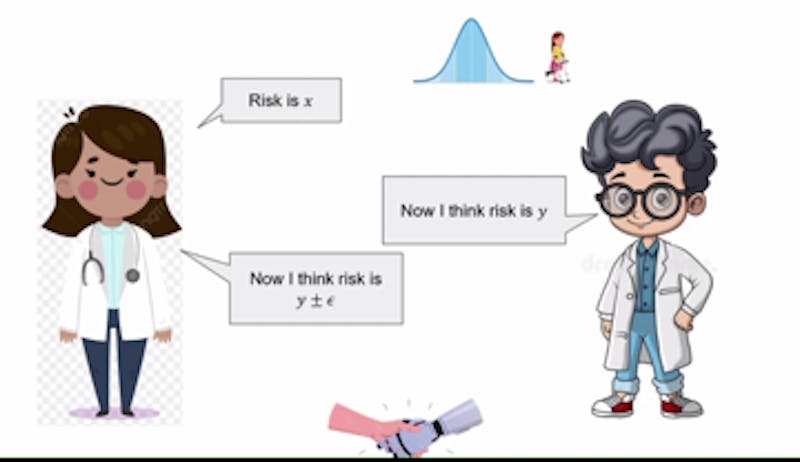
With the increasing integration of AI across various sectors, the need to understand its role in human decision-making is crucial. Roth illustrated this need through the example of AI’s potential to aid doctors in diagnosing patients. In this scenario, the AI generates predictions based on various data points, including previous diagnoses and patient symptoms. The physician then evaluates these predictions, drawing from their own expertise.
Should a disagreement arise between the AI’s assessment and the doctor’s judgment, Roth explained that both parties can reassess their positions through a finite number of iterations. This method allows for a synthesis of knowledge, where the AI and doctor integrate their unique insights, ultimately leading to a consensus. Roth referred to this concept as a common prior, where both parties share similar foundational assumptions, even if their specific information differs.
The framework Roth described aligns with what he terms Perfect Bayesian Rationality. In this model, each party is aware of the other’s knowledge base yet lacks complete insight into its specifics. While this model aims for optimal agreement, Roth acknowledged its challenges, such as the difficulty of establishing a common prior and the complexities arising from multi-dimensional topics like hospital diagnostic codes.
The Role of Calibration and Market Dynamics
Roth emphasized the importance of calibration in reaching agreements between AI and human stakeholders. He illustrated this concept using weather forecasting, where calibrating predictions can enhance the accuracy of forecasts. In the context of doctor-AI collaboration, calibration involves the AI refining its predictions based on the doctor’s responses. For example, if an AI estimates a 40% risk associated with a treatment and the physician suggests a 35% risk, the AI’s subsequent assessments would adjust to lie between these two figures, facilitating a quicker consensus.
While the discussion primarily focused on scenarios where both AI and human parties share a common goal, Roth also acknowledged potential conflicts of interest. For instance, if an AI model is developed by a pharmaceutical company, its recommendations may inadvertently favor the company’s products. To mitigate this risk, Roth proposed that doctors consult multiple AI models from various drug companies, encouraging competition among providers. This strategy could lead to more aligned and unbiased AI models, as each company strives to create a model that aligns with physician preferences.
In closing, Roth addressed the notion of real probabilities—those that accurately reflect the complexities of the world. Although precise probabilities are ideal, he noted that in many cases, it suffices to ensure that probabilities are unbiased under specific conditions. By leveraging data effectively, healthcare professionals and AI can collaborate to enhance diagnostic accuracy and treatment decisions.
The exploration of human-AI collaboration remains a critical area of research, particularly as AI continues to permeate various aspects of society. Roth’s insights into agreement and alignment provide a foundation for future advancements in this field.

Philadelphia Parks Launch Free Earth Month Events Starting April 1

Bradford’s Fish Fry Fridays Serve Community with Delicious Dinners

Trump Faces Growing Challenges Amid Rising Tensions with Iran

Scientists Probe the Universe’s Missing Topological Defects

Samsung Galaxy Watch 9 to Feature Larger 435mAh Battery

UConn Huskies Aim to Defend Title in 2026 NCAA Women’s Tournament

U.S. Littoral Combat Ships Dock in Malaysia Amid Regional Tensions

Healthy Choice Wellness Reports Quarterly Earnings, Shares Rise

Urgent News: Charles M. Payment Passes Away at 78 in Duluth

University of Hawaiʻi Joins $25.6M AI Project to Enhance Disaster Monitoring

Major Grant Enhances Cancer Care and Research in Hawaiʻi

Joleen Chaney, Beloved Journalist, Passes Leaving Lasting Legacy

San Francisco’s SFO to Welcome 16 Airlines with Nonstop Flights to Europe in 2026

Goldman Sachs Unveils 2026 Catalyst Playbook for Biotech Investors

Discover Top Business Smartphones for Professionals in 2026

Urgent Update: Tom Aspinall’s Vision Deteriorates After UFC 321

Texas Roadhouse Honors Veterans with Free Meal Vouchers

CD Projekt Red Confirms No Release for The Witcher 4 in 2026
-
Science9 months ago
University of Hawaiʻi Joins $25.6M AI Project to Enhance Disaster Monitoring
-
 Health8 months ago
Major Grant Enhances Cancer Care and Research in Hawaiʻi
-
 Top Stories9 months ago
Joleen Chaney, Beloved Journalist, Passes Leaving Lasting Legacy
-
 World7 months ago
San Francisco’s SFO to Welcome 16 Airlines with Nonstop Flights to Europe in 2026
-
 Business8 months ago
Goldman Sachs Unveils 2026 Catalyst Playbook for Biotech Investors
-
 Business7 months ago
Discover Top Business Smartphones for Professionals in 2026
-
 Top Stories9 months ago
Urgent Update: Tom Aspinall’s Vision Deteriorates After UFC 321
-
 Lifestyle9 months ago
Texas Roadhouse Honors Veterans with Free Meal Vouchers
-
 Entertainment8 months ago
CD Projekt Red Confirms No Release for The Witcher 4 in 2026
-

 Top Stories10 months ago
AI Disruption: AWS Faces Threat as Startups Shift Cloud Focus
-

 Health10 months ago
MIT Scientists Uncover Surprising Genomic Loops During Cell Division
-

 Entertainment10 months ago
Discover the Full Map of Pokémon Legends: Z-A’s Lumiose City