
Science
Solar System’s Speed Surprises Scientists, Challenges Cosmology

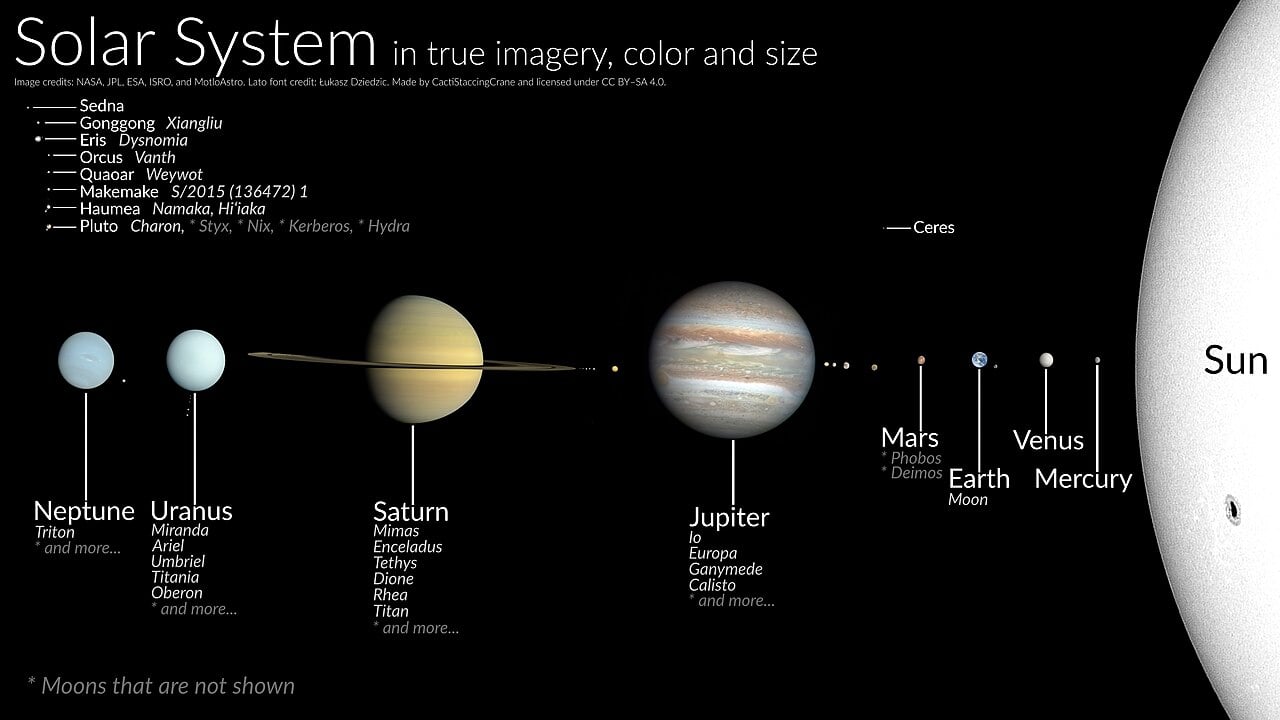
Researchers have discovered that the Solar System is moving through space at a velocity significantly higher than previously estimated. This finding challenges existing models of cosmology, revealing a surprising asymmetry in the distribution of distant galaxies. The study, led by astrophysicist Lukas Böhme from Bielefeld University, utilized advanced radio telescopes to analyze the motion of our Solar System in the vast universe.
Understanding the Solar System’s speed is a complex task. As it travels through space, the motion creates subtle variations in the visibility of galaxies. More distant galaxies appear in our direction of travel, leading to what’s known as a “headwind” effect. This phenomenon is faint and requires highly sensitive measurements to detect.
To address this challenge, Böhme and his team examined radio galaxies, which emit strong radio waves. Unlike optical telescopes that can be obstructed by dust and gas, radio telescopes have the advantage of detecting long-wavelength emissions. This capability allows astronomers to study galaxies that remain hidden from conventional instruments.
The research team combined data from three radio telescope networks, including the LOFAR (Low Frequency Array), a European facility, along with two additional observatories. This collaboration led to an unprecedented dataset, enabling the researchers to count radio galaxies across the sky with remarkable precision.
In addition to gathering data, the team developed a new statistical method to account for the multi-component nature of many radio galaxies. This refinement provided more realistic measurement uncertainties, enhancing the reliability of their findings. The results were unexpected: the analysis uncovered an anisotropy, or uneven distribution, of radio galaxies that achieved a statistical significance greater than five sigma. In scientific terms, this indicates strong evidence for a real effect rather than mere measurement noise.
The measured asymmetry was found to be 3.7 times stronger than predictions from the standard cosmological model. This model, which describes the universe’s evolution since the Big Bang, assumes a relatively uniform distribution of matter. The significant discrepancy suggests two possibilities: either the Solar System is indeed moving much faster through space than current models suggest, or the distribution of radio galaxies is less uniform than previously thought. Both scenarios pose significant challenges to established cosmological theories.
These findings are consistent with earlier studies that utilized different methods. Research examining quasars—powerful cores of distant galaxies fueled by supermassive black holes—showed a similar anomalous effect in infrared data. This independent confirmation indicates that the phenomenon is not merely a measurement artifact but likely reflects a genuine characteristic of the universe.
The research illustrates how advancements in observational techniques can reshape our understanding of cosmic dynamics. It highlights the vast unknowns that remain regarding our place in the universe. The implications of this study will undoubtedly stimulate discussions and research aimed at refining our models of cosmology and understanding the fundamental structure of space itself.

Philadelphia Parks Launch Free Earth Month Events Starting April 1

Bradford’s Fish Fry Fridays Serve Community with Delicious Dinners

Trump Faces Growing Challenges Amid Rising Tensions with Iran

Scientists Probe the Universe’s Missing Topological Defects

Samsung Galaxy Watch 9 to Feature Larger 435mAh Battery

UConn Huskies Aim to Defend Title in 2026 NCAA Women’s Tournament

U.S. Littoral Combat Ships Dock in Malaysia Amid Regional Tensions

Healthy Choice Wellness Reports Quarterly Earnings, Shares Rise

Urgent News: Charles M. Payment Passes Away at 78 in Duluth

University of Hawaiʻi Joins $25.6M AI Project to Enhance Disaster Monitoring

Major Grant Enhances Cancer Care and Research in Hawaiʻi

Joleen Chaney, Beloved Journalist, Passes Leaving Lasting Legacy

San Francisco’s SFO to Welcome 16 Airlines with Nonstop Flights to Europe in 2026

Goldman Sachs Unveils 2026 Catalyst Playbook for Biotech Investors

Discover Top Business Smartphones for Professionals in 2026

Urgent Update: Tom Aspinall’s Vision Deteriorates After UFC 321

Texas Roadhouse Honors Veterans with Free Meal Vouchers

CD Projekt Red Confirms No Release for The Witcher 4 in 2026
-
Science9 months ago
University of Hawaiʻi Joins $25.6M AI Project to Enhance Disaster Monitoring
-
 Health8 months ago
Major Grant Enhances Cancer Care and Research in Hawaiʻi
-
 Top Stories9 months ago
Joleen Chaney, Beloved Journalist, Passes Leaving Lasting Legacy
-
 World7 months ago
San Francisco’s SFO to Welcome 16 Airlines with Nonstop Flights to Europe in 2026
-
 Business8 months ago
Goldman Sachs Unveils 2026 Catalyst Playbook for Biotech Investors
-
 Business7 months ago
Discover Top Business Smartphones for Professionals in 2026
-
 Top Stories9 months ago
Urgent Update: Tom Aspinall’s Vision Deteriorates After UFC 321
-
 Lifestyle9 months ago
Texas Roadhouse Honors Veterans with Free Meal Vouchers
-
 Entertainment8 months ago
CD Projekt Red Confirms No Release for The Witcher 4 in 2026
-

 Top Stories10 months ago
AI Disruption: AWS Faces Threat as Startups Shift Cloud Focus
-

 Health10 months ago
MIT Scientists Uncover Surprising Genomic Loops During Cell Division
-

 Entertainment10 months ago
Discover the Full Map of Pokémon Legends: Z-A’s Lumiose City