
Lifestyle
Archaeologists Uncover Bronze Age City Transforming History in Kazakhstan

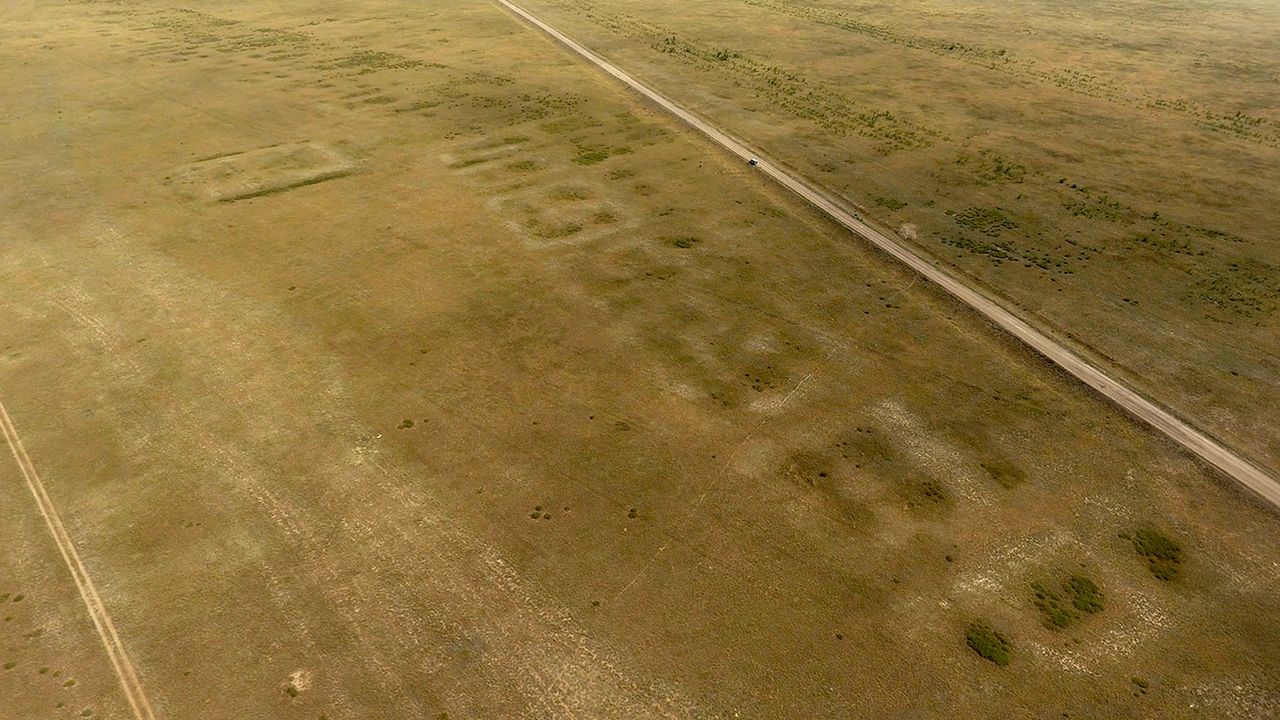
Archaeologists have unearthed a significant Bronze Age settlement in northeastern Kazakhstan, known as Semiyarka, which is believed to have been a major urban center approximately 3,600 years ago. This discovery, detailed in a recent study published in the journal Antiquity, reveals a settlement that spans 346 acres (about 140 hectares), making it more than four times larger than nearby villages from the same era.
The site, dating back to 1600 B.C., represents the first known location in the region with considerable areas dedicated to metallurgy and tin-bronze production, marking a crucial advancement in our understanding of ancient steppe societies. According to study lead author Miljana Radivojević, an archaeologist at University College London, “Semiyarka transforms our understanding of steppe societies. It demonstrates that mobile communities were capable of building and sustaining permanent, well-organized settlements centered on large-scale metallurgical production.”
Significance and Structure of Semiyarka
Situated on a bluff overlooking the Irtysh River, Semiyarka’s strategic location suggests it might have controlled trade routes along the river. The site’s nickname, the “City of Seven Ravines“, reflects its prominent topography and hints at its potential importance as a trading hub. As researchers surveyed the area using drones and conducted excavations, they identified two parallel rows of earthworks, which likely served to demarcate individual households.
Within these earthworks, walls made of mud brick were found, leading to the conclusion that this settlement was carefully planned. A larger central structure, approximately double the size of the others, may have served communal or governmental purposes. The area southeast of the earthworks revealed numerous metal artifacts, ores, and slag, indicating that Semiyarka was an early center for metalworking. This suggests a sophisticated level of industrial production for copper and tin bronze, a crucial material for the Bronze Age economy across Eurasia.
Implications for Understanding Steppe Societies
The metal ores utilized for crafting artifacts likely originated from deposits in the nearby Altai Mountains, which lie near the borders of Kazakhstan, Russia, Mongolia, and China. This proximity to valuable resources reinforces the theory that Semiyarka functioned as a central trade and distribution hub within the region.
Co-author Dan Lawrence, a landscape archaeologist at Durham University, noted, “The scale and structure of Semiyarka are unlike anything else we’ve seen in the steppe zone.” The findings challenge previous notions that the steppe societies were predominantly nomadic and lack substantial urban development. Instead, they demonstrate that these communities developed sophisticated, planned settlements comparable to those found in more established urban areas of the ancient world.
As excavations continue, the research team hopes to clarify Semiyarka’s role in the broader context of Bronze Age societies. The discoveries at this site not only reshape our understanding of the past but also highlight the complexity and innovation of ancient cultures in the steppe region.

Japan’s PM Takaichi Vows Urgent Fiscal Management Amid Rate Trends

Bitcoin Plummets Below $88K Amid Tether Concerns and Warnings

Tottenville Falls Short in PSAL 4A Title Game Against Erasmus

Shark Teeth Study Reveals Urgent Clues to Prevent Extinction

Church Members Rally Together After Thanksgiving Fire Devastation

U.S. Investment in Canadian Energy Firms Surges Despite Low Oil Prices

Nick Jonas Unveils New Solo Album ‘Sunday Best’ Set for February Release

Researchers Urge Label Changes for Low-Alcohol Drinks to Aid Pregnant Women

Wedding Cookie Table Community Aims for World’s Largest Cookie Exchange

Urgent Update: Tom Aspinall’s Vision Deteriorates After UFC 321

MIT Scientists Uncover Surprising Genomic Loops During Cell Division

University of Hawaiʻi Joins $25.6M AI Project to Enhance Disaster Monitoring

AI Disruption: AWS Faces Threat as Startups Shift Cloud Focus

Time Crystals Revolutionize Quantum Computing Potential

Honeywell Forecasts Record Business Jet Deliveries Over Next Decade

Discover the Full Map of Pokémon Legends: Z-A’s Lumiose City

GOP Faces Backlash as Protests Surge Against Trump Policies

Parenthood Set to Depart Hulu: What Fans Need to Know
-
 Top Stories1 month ago
Urgent Update: Tom Aspinall’s Vision Deteriorates After UFC 321
-
 Health1 month ago
MIT Scientists Uncover Surprising Genomic Loops During Cell Division
-
Science4 weeks ago
University of Hawaiʻi Joins $25.6M AI Project to Enhance Disaster Monitoring
-
 Top Stories1 month ago
AI Disruption: AWS Faces Threat as Startups Shift Cloud Focus
-
 Science2 months ago
Time Crystals Revolutionize Quantum Computing Potential
-
 World2 months ago
Honeywell Forecasts Record Business Jet Deliveries Over Next Decade
-
 Entertainment1 month ago
Discover the Full Map of Pokémon Legends: Z-A’s Lumiose City
-
 Top Stories2 months ago
GOP Faces Backlash as Protests Surge Against Trump Policies
-
 Entertainment2 months ago
Parenthood Set to Depart Hulu: What Fans Need to Know
-

 Politics2 months ago
Judge Signals Dismissal of Chelsea Housing Case Citing AI Flaws
-

 Sports2 months ago
Yoshinobu Yamamoto Shines in Game 2, Leading Dodgers to Victory
-

 Health2 months ago
Maine Insurers Cut Medicare Advantage Plans Amid Cost Pressures