
World
Federal Court Blocks Texas Redistricting Plan, Threatening GOP Seats

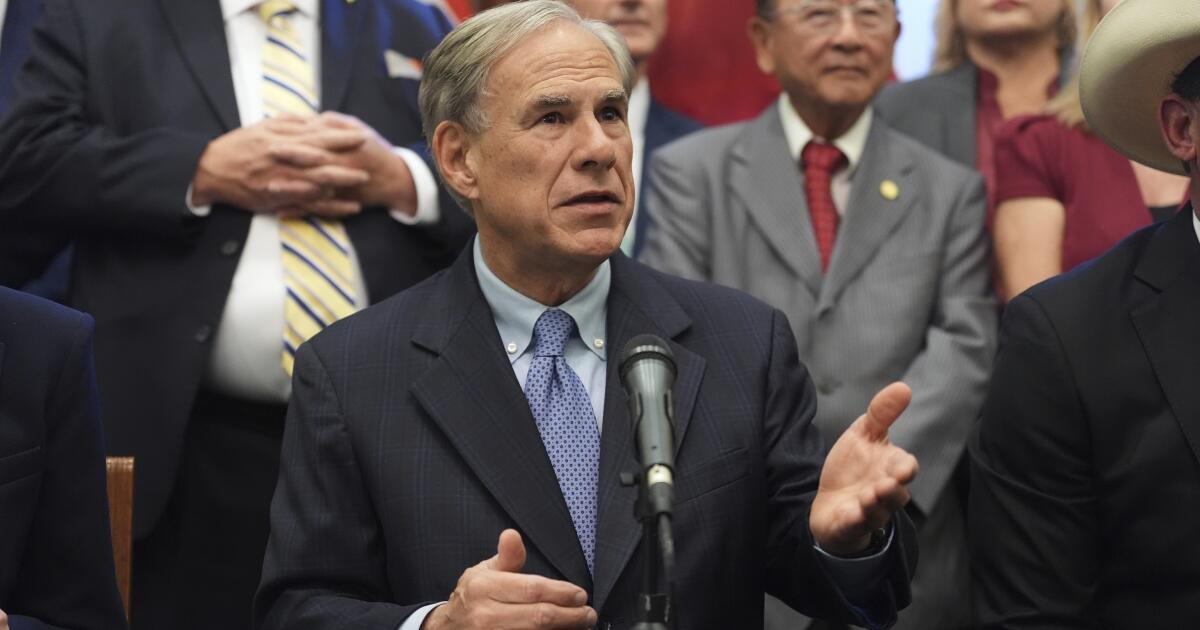
A federal court has effectively halted Texas from implementing a newly drawn congressional map designed to secure additional seats for the Republican Party in the upcoming U.S. midterm elections. The ruling, delivered on October 31, 2023, represents a significant setback for the Republican Party and the Trump administration, which has pushed for aggressive redistricting measures across the nation.
The three-judge panel in El Paso ruled in a 2-1 decision that the proposed congressional map was a result of racial gerrymandering. The court ordered Texas to revert to its previously established district boundaries from 2021. This decision has the potential to impact the Republican Party’s strategy and representation in the U.S. House of Representatives, as it aimed to gain up to five additional seats.
Texas Governor Greg Abbott, who initiated the redistricting process at the behest of former President Donald Trump, announced plans to appeal the ruling to the Supreme Court. Abbott’s statement reflects the urgency and high stakes involved in this politically charged matter.
In response to Texas’ redistricting efforts, California voters approved a temporary congressional map on November 4, which could allow Democrats to gain five new seats. Initially, this proposal, known as Prop. 50, included trigger language that would have linked California’s redistricting to Texas’s congressional map approval. However, that language was removed shortly before the vote, allowing California’s new map to be enacted independently.
Democratic redistricting expert Paul Mitchell, who played a crucial role in drawing the maps for Prop. 50, explained that the trigger was eliminated because Texas had already advanced its redistricting plan. This change could provide an advantage for Democrats as they prepare for the 2026 midterm elections.
Governor Gavin Newsom celebrated the court’s ruling, stating, “Donald Trump and Greg Abbott played with fire, got burned — and democracy won.” In his remarks, Newsom emphasized the ruling as a victory for fair elections and for voters across the nation.
Legal experts had previously indicated that Texas’s redistricting efforts could provoke accusations of racial gerrymandering, a concern that did not apply to California’s maps. The controversy surrounding Texas’s plan appears to have originated from a letter sent by Assistant Attorney General for Civil Rights Harmeet Dhillon, which threatened legal action over three “coalition districts” that included multiple minority communities. The new Texas map aimed to redraw these districts, a move that legal scholars argue could fragment racially diverse communities while maintaining white-majority districts.
The Supreme Court has historically ruled on redistricting with mixed outcomes. While political redistricting is generally permitted, the court has consistently opposed racial gerrymandering. In a significant ruling in 2023, the justices determined in Allen vs. Milligan that discriminatory practices in gerrymandering against minority voters are unconstitutional, mandating Alabama to establish a second minority-majority district.
The Justice Department is also pursuing legal action against California, seeking to prevent the implementation of its new congressional maps in the upcoming elections. As these legal battles unfold, the implications for both Texas and California will likely shape the political landscape leading into the midterms, making this an essential issue for voters and policymakers alike.

Japan’s PM Takaichi Vows Urgent Fiscal Management Amid Rate Trends

Bitcoin Plummets Below $88K Amid Tether Concerns and Warnings

Tottenville Falls Short in PSAL 4A Title Game Against Erasmus

Shark Teeth Study Reveals Urgent Clues to Prevent Extinction

Church Members Rally Together After Thanksgiving Fire Devastation

U.S. Investment in Canadian Energy Firms Surges Despite Low Oil Prices

Nick Jonas Unveils New Solo Album ‘Sunday Best’ Set for February Release

Researchers Urge Label Changes for Low-Alcohol Drinks to Aid Pregnant Women

Wedding Cookie Table Community Aims for World’s Largest Cookie Exchange

Urgent Update: Tom Aspinall’s Vision Deteriorates After UFC 321

MIT Scientists Uncover Surprising Genomic Loops During Cell Division

University of Hawaiʻi Joins $25.6M AI Project to Enhance Disaster Monitoring

AI Disruption: AWS Faces Threat as Startups Shift Cloud Focus

Time Crystals Revolutionize Quantum Computing Potential

Honeywell Forecasts Record Business Jet Deliveries Over Next Decade

Discover the Full Map of Pokémon Legends: Z-A’s Lumiose City

GOP Faces Backlash as Protests Surge Against Trump Policies

Parenthood Set to Depart Hulu: What Fans Need to Know
-
 Top Stories1 month ago
Urgent Update: Tom Aspinall’s Vision Deteriorates After UFC 321
-
 Health1 month ago
MIT Scientists Uncover Surprising Genomic Loops During Cell Division
-
Science4 weeks ago
University of Hawaiʻi Joins $25.6M AI Project to Enhance Disaster Monitoring
-
 Top Stories1 month ago
AI Disruption: AWS Faces Threat as Startups Shift Cloud Focus
-
 Science2 months ago
Time Crystals Revolutionize Quantum Computing Potential
-
 World2 months ago
Honeywell Forecasts Record Business Jet Deliveries Over Next Decade
-
 Entertainment1 month ago
Discover the Full Map of Pokémon Legends: Z-A’s Lumiose City
-
 Top Stories2 months ago
GOP Faces Backlash as Protests Surge Against Trump Policies
-
 Entertainment2 months ago
Parenthood Set to Depart Hulu: What Fans Need to Know
-

 Politics2 months ago
Judge Signals Dismissal of Chelsea Housing Case Citing AI Flaws
-

 Sports2 months ago
Yoshinobu Yamamoto Shines in Game 2, Leading Dodgers to Victory
-

 Health2 months ago
Maine Insurers Cut Medicare Advantage Plans Amid Cost Pressures