
Politics
Australia’s Deforestation Figures Misleading, Researchers Warn

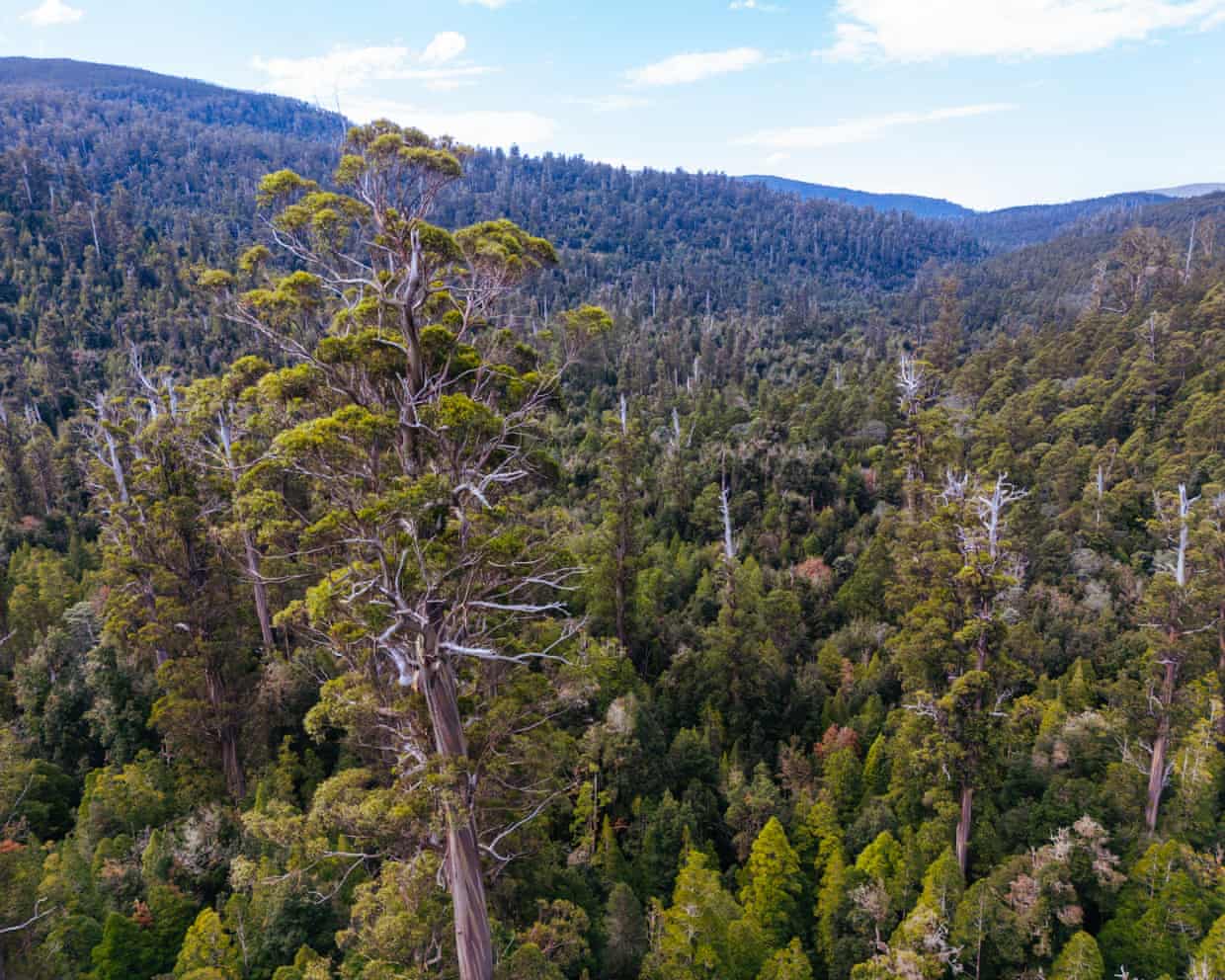
Recent analysis has raised concerns about the accuracy of Australia’s official deforestation figures, suggesting that the true impact of forest loss is obscured by the current accounting methods. While government reports indicate an increase in forest cover since 2008, researchers argue that this portrayal does not reflect ecological realities.
According to a report led by Griffith University’s Climate Action Beacon, Australia calculates forest cover as a net figure, balancing losses against gains. This method is misleading, as new forests do not provide the same carbon storage or wildlife benefits as established old-growth forests that are being cut down. Professor Brendan Mackey of Griffith University, a co-author of the study, described this approach as “an accounting sleight of hand.”
The federal government’s 2023 State of the Forests report claims that “Australia’s total forest area increased by 0.75 million hectares from 2016 to 2021.” However, the new analysis raises doubts about the validity of this reported increase. It suggests that the dataset used to estimate forest area changes often misclassifies regions, leading to an overestimation of actual growth.
The research, commissioned and funded by the Australian Conservation Foundation (ACF), indicates that most forest destruction is occurring in biodiverse forests, while regrowth is predominantly happening in drier regions with less vegetation. These areas are not as effective as carbon sinks. The study estimates that land clearing in intensive regions releases up to 120 times more greenhouse gas emissions per hectare than what could be absorbed by the regrowth in less dense areas.
“If mapped gains in forest area are not really new forests, just greening or thickening of existing wooded lands, then Australia’s seemingly positive net increase in forest cover statistic may be hiding even more substantial losses to biodiversity and much higher greenhouse gas emissions than claimed,” the report states.
Nathaniel Pelle of the ACF emphasized Australia’s unique position among developed nations regarding deforestation. He remarked, “No other rich countries in the world destroy forests like Australia does.” Speaking from the Cop30 climate summit in Brazil, Pelle expressed concern over Australia’s inadequate action on deforestation.
The argument that forest regrowth can offset destruction is increasingly challenged. Pelle noted, “Clearly that’s not true.” He stressed the importance of preserving high-carbon-stock forests to meet commitments to prevent extinctions and achieve net-zero emissions.
Pelle further highlighted the impressive progress made by Brazil in halving deforestation in the Amazon since the return of President Luiz Inácio Lula da Silva. As Australia prepares for potential leadership at future climate conferences, Pelle urged the necessity of taking significant actions to address these environmental challenges.
The Department of Agriculture, Fisheries and Forestry was contacted for comment but did not respond by the time of publication. As discussions surrounding climate change continue to gain prominence, the need for accurate assessments of deforestation remains urgent for Australia’s environmental policies.

Philadelphia Parks Launch Free Earth Month Events Starting April 1

Bradford’s Fish Fry Fridays Serve Community with Delicious Dinners

Trump Faces Growing Challenges Amid Rising Tensions with Iran

Scientists Probe the Universe’s Missing Topological Defects

Samsung Galaxy Watch 9 to Feature Larger 435mAh Battery

UConn Huskies Aim to Defend Title in 2026 NCAA Women’s Tournament

U.S. Littoral Combat Ships Dock in Malaysia Amid Regional Tensions

Healthy Choice Wellness Reports Quarterly Earnings, Shares Rise

Urgent News: Charles M. Payment Passes Away at 78 in Duluth

University of Hawaiʻi Joins $25.6M AI Project to Enhance Disaster Monitoring

Major Grant Enhances Cancer Care and Research in Hawaiʻi

Joleen Chaney, Beloved Journalist, Passes Leaving Lasting Legacy

San Francisco’s SFO to Welcome 16 Airlines with Nonstop Flights to Europe in 2026

Goldman Sachs Unveils 2026 Catalyst Playbook for Biotech Investors

Discover Top Business Smartphones for Professionals in 2026

Urgent Update: Tom Aspinall’s Vision Deteriorates After UFC 321

Texas Roadhouse Honors Veterans with Free Meal Vouchers

CD Projekt Red Confirms No Release for The Witcher 4 in 2026
-
Science9 months ago
University of Hawaiʻi Joins $25.6M AI Project to Enhance Disaster Monitoring
-
 Health8 months ago
Major Grant Enhances Cancer Care and Research in Hawaiʻi
-
 Top Stories9 months ago
Joleen Chaney, Beloved Journalist, Passes Leaving Lasting Legacy
-
 World7 months ago
San Francisco’s SFO to Welcome 16 Airlines with Nonstop Flights to Europe in 2026
-
 Business8 months ago
Goldman Sachs Unveils 2026 Catalyst Playbook for Biotech Investors
-
 Business8 months ago
Discover Top Business Smartphones for Professionals in 2026
-
 Top Stories9 months ago
Urgent Update: Tom Aspinall’s Vision Deteriorates After UFC 321
-
 Lifestyle9 months ago
Texas Roadhouse Honors Veterans with Free Meal Vouchers
-
 Entertainment8 months ago
CD Projekt Red Confirms No Release for The Witcher 4 in 2026
-

 Top Stories10 months ago
AI Disruption: AWS Faces Threat as Startups Shift Cloud Focus
-

 Health10 months ago
MIT Scientists Uncover Surprising Genomic Loops During Cell Division
-

 Entertainment10 months ago
Discover the Full Map of Pokémon Legends: Z-A’s Lumiose City