
Politics
Senators Push for Extension of ACA Subsidies Amid Challenges

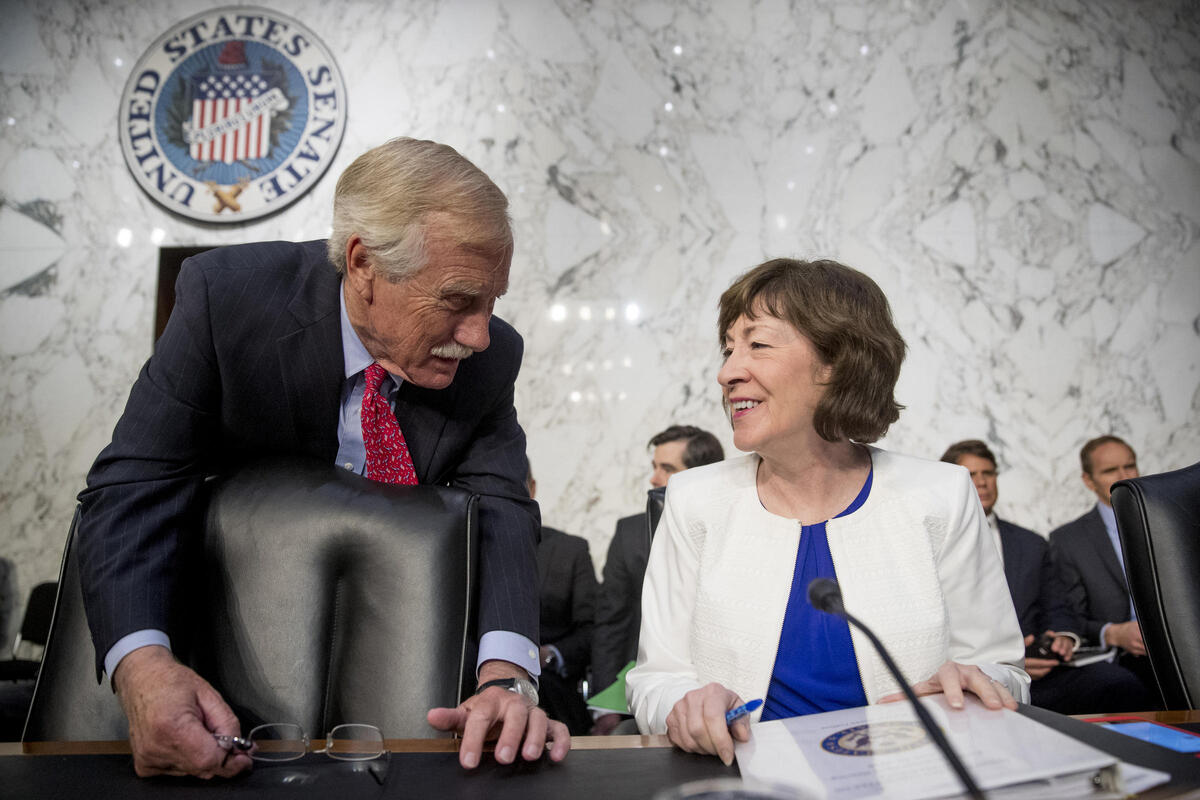
U.S. Senators Susan Collins and Angus King are advocating for an extension of tax credits under the Affordable Care Act (ACA), set to expire on December 31, 2023. Their support follows a recent deal that ended the longest government shutdown in U.S. history, but prospects for a breakthrough appear increasingly bleak.
Concerns are mounting among Republican lawmakers regarding the future of these subsidies, which cost approximately $35 billion annually and support over 20 million Americans, including around 55,000 residents in Maine. Without an extension, premiums are expected to more than double on average, significantly impacting those who rely on these financial aids.
Senator Collins, who is seeking reelection in 2026, emphasized the potential political ramifications for her party. More than half of ACA enrollees are in districts represented by Republicans. As chair of the Senate Appropriations Committee, Collins was instrumental in crafting the government funding deal but now faces pressure to deliver on the extension of ACA tax credits.
King, an independent who caucuses with Democrats, has faced criticism for aligning with Republicans on a stopgap funding plan that postponed discussions about the ACA subsidies. His spokesperson, Matthew Felling, stated that King remains committed to protecting Maine residents from planned price hikes set to take effect on January 1, 2024. Felling reiterated that King co-sponsored legislation in January aimed at permanently extending the ACA tax credits.
During a visit to Central Aroostook Ambulance Services in Blaine, Maine, Collins suggested that lawmakers may need to initially agree on a six-month extension of the tax credits. She also mentioned the importance of avoiding a “cliff” that would disqualify individuals earning just above the federal poverty limit from receiving assistance. The current cap restricts eligibility to those earning no more than 400% of the federal poverty guidelines, which translates to roughly $128,600 for a family of four.
Collins noted that various proposals, including a “Trump Health Freedom Account” from U.S. Senator Rick Scott of Florida, could be part of the discussion. She stated, “As many ideas as can be brought to the table helps to advance the process, but I think we need to make sure we know the implications.”
Despite some positive signs, including a planned Zoom call with bipartisan congressional members, the likelihood of a straightforward extension of the subsidies seems to be diminishing. A recent Senate Finance Committee hearing displayed partisan tensions, with only Senator Thom Tillis of North Carolina voicing support for extending the subsidies in their current form.
On Capitol Hill, Senator Shelley Moore Capito of West Virginia indicated that partisan votes on separate bills are more likely than reaching a consensus on a comprehensive package. “We’re going to settle on a package of our own,” she remarked, highlighting the challenges ahead for lawmakers seeking to extend critical health care support.
As discussions continue, the stakes remain high for millions of Americans who depend on ACA subsidies, making the resolution of this issue a crucial priority for Congress in the coming weeks.

Tottenville Falls Short in PSAL 4A Title Game Against Erasmus

Shark Teeth Study Reveals Urgent Clues to Prevent Extinction

Church Members Rally Together After Thanksgiving Fire Devastation

U.S. Investment in Canadian Energy Firms Surges Despite Low Oil Prices

Nick Jonas Unveils New Solo Album ‘Sunday Best’ Set for February Release

Researchers Urge Label Changes for Low-Alcohol Drinks to Aid Pregnant Women

Wedding Cookie Table Community Aims for World’s Largest Cookie Exchange

Mayor Appoints Alan Wong as New Supervisor for District 4

UK Report Reveals Growing Role of AI in University Research Assessments

Urgent Update: Tom Aspinall’s Vision Deteriorates After UFC 321

MIT Scientists Uncover Surprising Genomic Loops During Cell Division

University of Hawaiʻi Joins $25.6M AI Project to Enhance Disaster Monitoring

AI Disruption: AWS Faces Threat as Startups Shift Cloud Focus

Time Crystals Revolutionize Quantum Computing Potential

Honeywell Forecasts Record Business Jet Deliveries Over Next Decade

Discover the Full Map of Pokémon Legends: Z-A’s Lumiose City

GOP Faces Backlash as Protests Surge Against Trump Policies

Parenthood Set to Depart Hulu: What Fans Need to Know
-
 Top Stories1 month ago
Urgent Update: Tom Aspinall’s Vision Deteriorates After UFC 321
-
 Health1 month ago
MIT Scientists Uncover Surprising Genomic Loops During Cell Division
-
Science4 weeks ago
University of Hawaiʻi Joins $25.6M AI Project to Enhance Disaster Monitoring
-
 Top Stories1 month ago
AI Disruption: AWS Faces Threat as Startups Shift Cloud Focus
-
 Science2 months ago
Time Crystals Revolutionize Quantum Computing Potential
-
 World2 months ago
Honeywell Forecasts Record Business Jet Deliveries Over Next Decade
-
 Entertainment1 month ago
Discover the Full Map of Pokémon Legends: Z-A’s Lumiose City
-
 Top Stories2 months ago
GOP Faces Backlash as Protests Surge Against Trump Policies
-
 Entertainment2 months ago
Parenthood Set to Depart Hulu: What Fans Need to Know
-

 Politics2 months ago
Judge Signals Dismissal of Chelsea Housing Case Citing AI Flaws
-

 Sports2 months ago
Yoshinobu Yamamoto Shines in Game 2, Leading Dodgers to Victory
-

 Health2 months ago
Maine Insurers Cut Medicare Advantage Plans Amid Cost Pressures