
World
Trump Administration Unveils Environmental Rollbacks Amid Global Summit

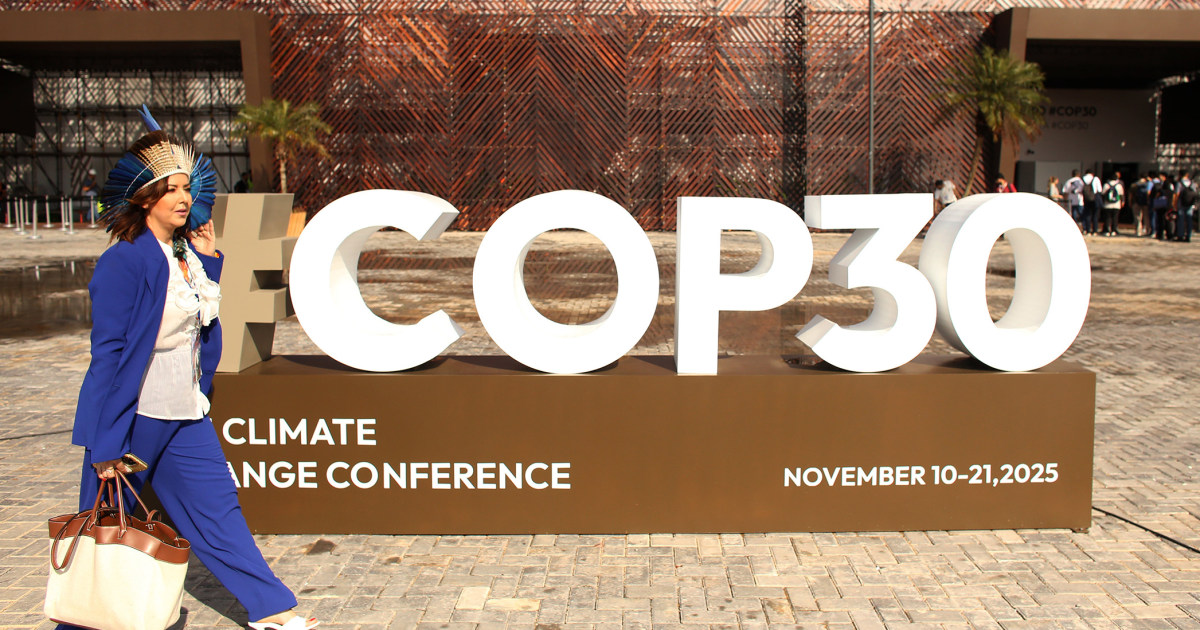
As representatives from nearly 200 nations concluded discussions at the United Nations’ COP30 climate summit in Belém, Brazil, the Trump administration announced significant rollbacks of environmental protections in the United States. This week, the U.S. not only refrained from sending a delegation to the summit but also revealed a series of proposals aimed at expanding fossil fuel drilling and weakening existing environmental laws.
The COP30 summit, which ended on December 15, 2023, sought to create a framework for phasing out fossil fuels, enhancing climate action, and mitigating global warming. The absence of the U.S.—one of the largest emitters of greenhouse gases—was notable and raised concerns among environmental advocates. Instead of participating in the global dialogue, the Trump administration introduced plans to permit new oil drilling off the coasts of California and Florida, marking a significant policy shift after decades of restrictions.
Jessie Ritter, associate vice president for waters and coasts at the National Wildlife Federation, criticized the proposals, stating, “These rules double down on the administration’s refusal to confront the climate crisis in a serious way and, in fact, move us in the opposite direction.” The White House characterized the announcement as a step toward achieving President Trump’s goal of “American energy dominance.”
White House spokesperson Taylor Rogers asserted, “President Trump is reversing government overreach, restoring energy security, and protecting American jobs by rolling back excessive, burdensome regulations and creating new opportunities to ‘DRILL, BABY, DRILL.’” The administration’s stance has drawn both support and opposition, reflecting deep divisions on environmental policy.
The proposal to open approximately 1.27 billion acres of U.S. coastal waters for oil drilling received bipartisan backlash. While the American Petroleum Institute, a key trade association for the oil and gas sector, praised the initiative as a “historic step,” Florida Senator Rick Scott expressed his commitment to maintain the current moratorium on drilling, emphasizing the need to protect Florida’s tourism and environment.
In a statement on social media, Scott wrote, “I have been speaking to @SecretaryBurgum and made my expectations clear that this moratorium must remain in place.” The California Governor, Gavin Newsom, also voiced strong opposition, declaring that Trump’s proposal to exploit California’s coastal resources “is dead in the water.”
Simultaneously, the Trump administration proposed changes to the Clean Water Act of 1972, aiming to reduce protections for many small streams and wetlands. This revision would narrow the definition of what constitutes “waters of the United States,” potentially leaving only about 19% of the nation’s wetlands under federal protection, according to Jon Devine, head of the water policy team at the Natural Resources Defense Council.
Wetlands play a critical role in flood mitigation and water quality. Devine warned that the proposed changes could leave many areas more vulnerable to flooding caused by climate change: “Many of the places that we already have in the U.S. that are increasingly flood-prone due to climate change are going to be even more in harm’s way.”
Additionally, the administration announced a series of rules that would weaken the Endangered Species Act of 1973. These changes would simplify the process for removing species from the protected list and complicate the addition of new species and habitats. Critics argue that these measures prioritize short-term economic interests over long-standing environmental protections.
Ritter noted that the cumulative impact of these proposals could be profound. “These decisions prioritize short-term gain, often for a few industries and special interests, at the expense of things that have been widely bipartisan and important issues for people for decades,” she said.
The implications of these environmental rollbacks may not be immediately visible, but experts warn that the potential long-term consequences could affect all Americans. “It’s hubris to think that we can have these massive negative effects on our streams and wetlands, our animals, our coastal waters, without impacts to humans,” Ritter concluded.
As the global community grapples with climate change, the Trump administration’s actions signal a stark departure from collaborative efforts to address environmental challenges, raising concerns about the future of U.S. leadership on climate issues.

Japan’s PM Takaichi Vows Urgent Fiscal Management Amid Rate Trends

Bitcoin Plummets Below $88K Amid Tether Concerns and Warnings

Tottenville Falls Short in PSAL 4A Title Game Against Erasmus

Shark Teeth Study Reveals Urgent Clues to Prevent Extinction

Church Members Rally Together After Thanksgiving Fire Devastation

U.S. Investment in Canadian Energy Firms Surges Despite Low Oil Prices

Nick Jonas Unveils New Solo Album ‘Sunday Best’ Set for February Release

Researchers Urge Label Changes for Low-Alcohol Drinks to Aid Pregnant Women

Wedding Cookie Table Community Aims for World’s Largest Cookie Exchange

Urgent Update: Tom Aspinall’s Vision Deteriorates After UFC 321

MIT Scientists Uncover Surprising Genomic Loops During Cell Division

University of Hawaiʻi Joins $25.6M AI Project to Enhance Disaster Monitoring

AI Disruption: AWS Faces Threat as Startups Shift Cloud Focus

Time Crystals Revolutionize Quantum Computing Potential

Honeywell Forecasts Record Business Jet Deliveries Over Next Decade

Discover the Full Map of Pokémon Legends: Z-A’s Lumiose City

GOP Faces Backlash as Protests Surge Against Trump Policies

Parenthood Set to Depart Hulu: What Fans Need to Know
-
 Top Stories1 month ago
Urgent Update: Tom Aspinall’s Vision Deteriorates After UFC 321
-
 Health1 month ago
MIT Scientists Uncover Surprising Genomic Loops During Cell Division
-
Science4 weeks ago
University of Hawaiʻi Joins $25.6M AI Project to Enhance Disaster Monitoring
-
 Top Stories1 month ago
AI Disruption: AWS Faces Threat as Startups Shift Cloud Focus
-
 Science2 months ago
Time Crystals Revolutionize Quantum Computing Potential
-
 World2 months ago
Honeywell Forecasts Record Business Jet Deliveries Over Next Decade
-
 Entertainment1 month ago
Discover the Full Map of Pokémon Legends: Z-A’s Lumiose City
-
 Entertainment2 months ago
Parenthood Set to Depart Hulu: What Fans Need to Know
-
 Top Stories2 months ago
GOP Faces Backlash as Protests Surge Against Trump Policies
-

 Politics2 months ago
Judge Signals Dismissal of Chelsea Housing Case Citing AI Flaws
-

 Sports2 months ago
Yoshinobu Yamamoto Shines in Game 2, Leading Dodgers to Victory
-

 Health2 months ago
Maine Insurers Cut Medicare Advantage Plans Amid Cost Pressures