
World
Los Angeles Startup Inversion Aims for Speedy Orbital Cargo Transport

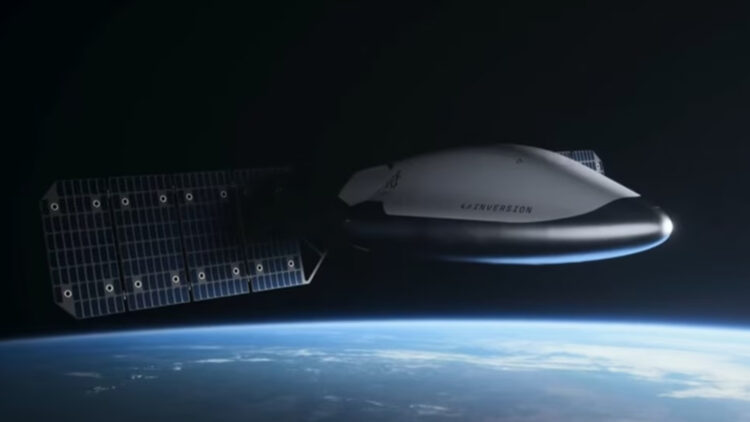
A small aerospace startup based in Los Angeles, known as Inversion, is developing a spacecraft named Arc, designed to transport cargo to any location on Earth in approximately one hour. This innovative project aims to establish a new orbital transport network that leverages advancements in space technology, robotics, and artificial intelligence, positioning itself as a competitor to well-known figures like Elon Musk.
Inversion’s Arc is envisioned as a compact spacecraft, approximately 2.4 meters tall and 1.2 meters wide. Unlike traditional aircraft that require extensive runways, Arc will remain in orbit as a delivery capsule, ready to deploy when needed. Upon activation, it will descend through the atmosphere and land safely on various surfaces, including soil, snow, or water, utilizing parachute technology.
The primary objective of the Arc spacecraft is to expedite deliveries, especially in high-stakes situations where traditional shipping methods are inadequate. In a world marked by conflict and humanitarian crises, the ability to deliver essential supplies quickly could prove vital. Inversion believes that Arc could revolutionize logistics by providing a new model centered around orbital infrastructure, enabling rapid transportation to nearly any location on the globe in under an hour.
Progress and Future Plans
Inversion, which launched formally in October 2025, has made notable strides in its development process. The team, comprised of 25 employees with expertise in space engineering, built an initial prototype named Ray for about $1 million. This cost-effective approach suggests that advanced orbital transport systems can be developed without the extensive budgets typically associated with aerospace projects.
The company plans to conduct testing of the Arc spacecraft in 2026. These tests will be crucial in determining if Arc can successfully navigate the full mission profile, which includes launching, orbiting, reentering the atmosphere, and executing a controlled landing while transporting cargo.
Challenges Ahead
Despite its ambitious goals, Inversion faces several challenges, including regulatory approvals, safety inspections, and flight tests. Potential clients will weigh factors like cost, reliability, and safety when considering whether to utilize Arc or stick with existing transportation methods.
The excitement surrounding Inversion’s plans signals a potential shift in the logistics industry. If successful, Arc may provide an alternative transportation option when conventional means, such as trucks, ships, and planes, are unable to meet urgent delivery demands. As trials commence, the industry will be closely watching to see if 2026 becomes the year that orbital transport transforms cargo delivery as we know it.

Japan’s PM Takaichi Vows Urgent Fiscal Management Amid Rate Trends

Bitcoin Plummets Below $88K Amid Tether Concerns and Warnings

Tottenville Falls Short in PSAL 4A Title Game Against Erasmus

Shark Teeth Study Reveals Urgent Clues to Prevent Extinction

Church Members Rally Together After Thanksgiving Fire Devastation

U.S. Investment in Canadian Energy Firms Surges Despite Low Oil Prices

Nick Jonas Unveils New Solo Album ‘Sunday Best’ Set for February Release

Researchers Urge Label Changes for Low-Alcohol Drinks to Aid Pregnant Women

Wedding Cookie Table Community Aims for World’s Largest Cookie Exchange

Urgent Update: Tom Aspinall’s Vision Deteriorates After UFC 321

MIT Scientists Uncover Surprising Genomic Loops During Cell Division

University of Hawaiʻi Joins $25.6M AI Project to Enhance Disaster Monitoring

AI Disruption: AWS Faces Threat as Startups Shift Cloud Focus

Time Crystals Revolutionize Quantum Computing Potential

Honeywell Forecasts Record Business Jet Deliveries Over Next Decade

Discover the Full Map of Pokémon Legends: Z-A’s Lumiose City

GOP Faces Backlash as Protests Surge Against Trump Policies

Parenthood Set to Depart Hulu: What Fans Need to Know
-
 Top Stories1 month ago
Urgent Update: Tom Aspinall’s Vision Deteriorates After UFC 321
-
 Health1 month ago
MIT Scientists Uncover Surprising Genomic Loops During Cell Division
-
Science4 weeks ago
University of Hawaiʻi Joins $25.6M AI Project to Enhance Disaster Monitoring
-
 Top Stories1 month ago
AI Disruption: AWS Faces Threat as Startups Shift Cloud Focus
-
 Science2 months ago
Time Crystals Revolutionize Quantum Computing Potential
-
 World2 months ago
Honeywell Forecasts Record Business Jet Deliveries Over Next Decade
-
 Entertainment1 month ago
Discover the Full Map of Pokémon Legends: Z-A’s Lumiose City
-
 Top Stories2 months ago
GOP Faces Backlash as Protests Surge Against Trump Policies
-
 Entertainment2 months ago
Parenthood Set to Depart Hulu: What Fans Need to Know
-

 Politics2 months ago
Judge Signals Dismissal of Chelsea Housing Case Citing AI Flaws
-

 Sports2 months ago
Yoshinobu Yamamoto Shines in Game 2, Leading Dodgers to Victory
-

 Health2 months ago
Maine Insurers Cut Medicare Advantage Plans Amid Cost Pressures