
Science
3D Printing Revolutionizes Food Production and Nutrition

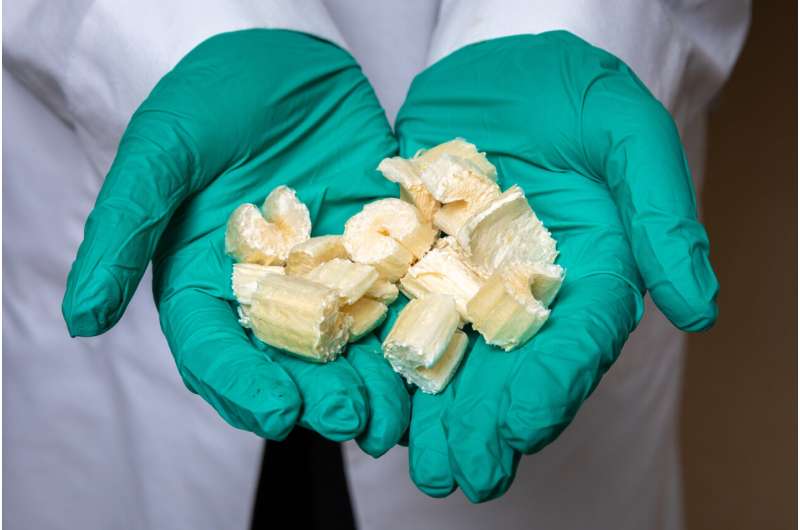
The future of food may be transformed by 3D printing, a technology that promises to enhance production efficiency and nutritional value. At the forefront of this innovation is Ali Ubeyitogullari, an assistant professor of food engineering at the University of Arkansas. His research aims to integrate food science with advancements in 3D printing to address the critical issues of food waste and nutrition.
Ubeyitogullari’s journey into food engineering began at the Middle East Technical University in Ankara, where he discovered his passion for the field. Initially indifferent to the family business of olive farming in Antioch, Turkey, he found the concept of 3D food printing intriguing and engaging. Now, he is focused on pushing the boundaries of food science, exploring how this technology can make food production more sustainable and health-oriented.
Innovative Approaches to Food Waste
The implications of 3D printing for food production are significant, particularly in mitigating waste. In the United States, approximately 30% to 40% of food is lost annually due to overproduction and surplus. Traditional methods often overlook imperfect produce, such as oddly shaped carrots, which are less likely to be purchased by consumers. Ubeyitogullari advocates for the use of such produce in 3D printing, where it can be processed into a “bioink.” This material can then be used to create visually appealing food items, potentially enticing children to consume more vegetables.
Ubeyitogullari’s lab is already experimenting with 3D printing cookie doughs and other formulations. While the technology is still developing, its potential to reshape how food is produced and presented is evident. “We work at the intersection of food engineering and human health to improve people’s diets,” Ubeyitogullari explains.
The flexibility of 3D printing also offers solutions for individuals with dietary restrictions. For instance, people suffering from dysphagia, a condition affecting an estimated 300,000 to 700,000 Americans, often struggle with swallowing. By using 3D printing, food can be customized to maintain its original shape while being made softer for easier consumption, restoring the sensory experience of eating.
Enhancing Nutrition Through 3D Printing
Another critical focus of Ubeyitogullari’s work is improving the bioavailability of bioactive compounds found in fruits and vegetables. These compounds play a vital role in reducing disease risks and promoting overall health. Unfortunately, their effectiveness is often limited due to low absorption rates in the gut. Ubeyitogullari’s research involves encapsulating these compounds in a protective matrix, using common food-grade ingredients to enhance their stability and absorption.
In collaboration with postdoctoral researchers, Ubeyitogullari is also exploring innovative uses for sorghum flour. This gluten-free ingredient is rich in protein and fiber and possesses anti-inflammatory properties. By developing a 3D printable gel from sorghum protein, Ubeyitogullari aims to create healthier food products that meet modern dietary needs.
As 3D printing technology continues to evolve, it raises questions about public perception. Many consumers still associate processed foods with negative connotations. Ubeyitogullari acknowledges these concerns but believes that education and familiarity will pave the way for acceptance. He likens the introduction of 3D printing in the kitchen to the initial reception of microwaves, which faced skepticism yet are now commonplace.
Looking ahead, Ubeyitogullari envisions a future where individuals could use their smartphones to order customized meals that cater to their nutritional needs. This forward-thinking approach illustrates the transformative potential of 3D printing in the food industry, promising not only to enhance production efficiency but also to improve public health.
In summary, the research led by Ali Ubeyitogullari at the University of Arkansas signifies a pivotal shift in how we approach food production and nutrition. By harnessing the capabilities of 3D printing, there lies the potential to reduce waste, improve dietary options, and create a more sustainable food system for all.

Philadelphia Parks Launch Free Earth Month Events Starting April 1

Bradford’s Fish Fry Fridays Serve Community with Delicious Dinners

Trump Faces Growing Challenges Amid Rising Tensions with Iran

Scientists Probe the Universe’s Missing Topological Defects

Samsung Galaxy Watch 9 to Feature Larger 435mAh Battery

UConn Huskies Aim to Defend Title in 2026 NCAA Women’s Tournament

U.S. Littoral Combat Ships Dock in Malaysia Amid Regional Tensions

Healthy Choice Wellness Reports Quarterly Earnings, Shares Rise

Urgent News: Charles M. Payment Passes Away at 78 in Duluth

University of Hawaiʻi Joins $25.6M AI Project to Enhance Disaster Monitoring

Major Grant Enhances Cancer Care and Research in Hawaiʻi

Joleen Chaney, Beloved Journalist, Passes Leaving Lasting Legacy

San Francisco’s SFO to Welcome 16 Airlines with Nonstop Flights to Europe in 2026

Goldman Sachs Unveils 2026 Catalyst Playbook for Biotech Investors

Discover Top Business Smartphones for Professionals in 2026

Urgent Update: Tom Aspinall’s Vision Deteriorates After UFC 321

Texas Roadhouse Honors Veterans with Free Meal Vouchers

CD Projekt Red Confirms No Release for The Witcher 4 in 2026
-
Science9 months ago
University of Hawaiʻi Joins $25.6M AI Project to Enhance Disaster Monitoring
-
 Health8 months ago
Major Grant Enhances Cancer Care and Research in Hawaiʻi
-
 Top Stories9 months ago
Joleen Chaney, Beloved Journalist, Passes Leaving Lasting Legacy
-
 World7 months ago
San Francisco’s SFO to Welcome 16 Airlines with Nonstop Flights to Europe in 2026
-
 Business8 months ago
Goldman Sachs Unveils 2026 Catalyst Playbook for Biotech Investors
-
 Business7 months ago
Discover Top Business Smartphones for Professionals in 2026
-
 Top Stories9 months ago
Urgent Update: Tom Aspinall’s Vision Deteriorates After UFC 321
-
 Lifestyle9 months ago
Texas Roadhouse Honors Veterans with Free Meal Vouchers
-
 Entertainment8 months ago
CD Projekt Red Confirms No Release for The Witcher 4 in 2026
-

 Top Stories10 months ago
AI Disruption: AWS Faces Threat as Startups Shift Cloud Focus
-

 Health10 months ago
MIT Scientists Uncover Surprising Genomic Loops During Cell Division
-

 Entertainment10 months ago
Discover the Full Map of Pokémon Legends: Z-A’s Lumiose City