
Business
Maine’s Housing Market Divides: Coastal Prices Soar, Rural Balance Grows

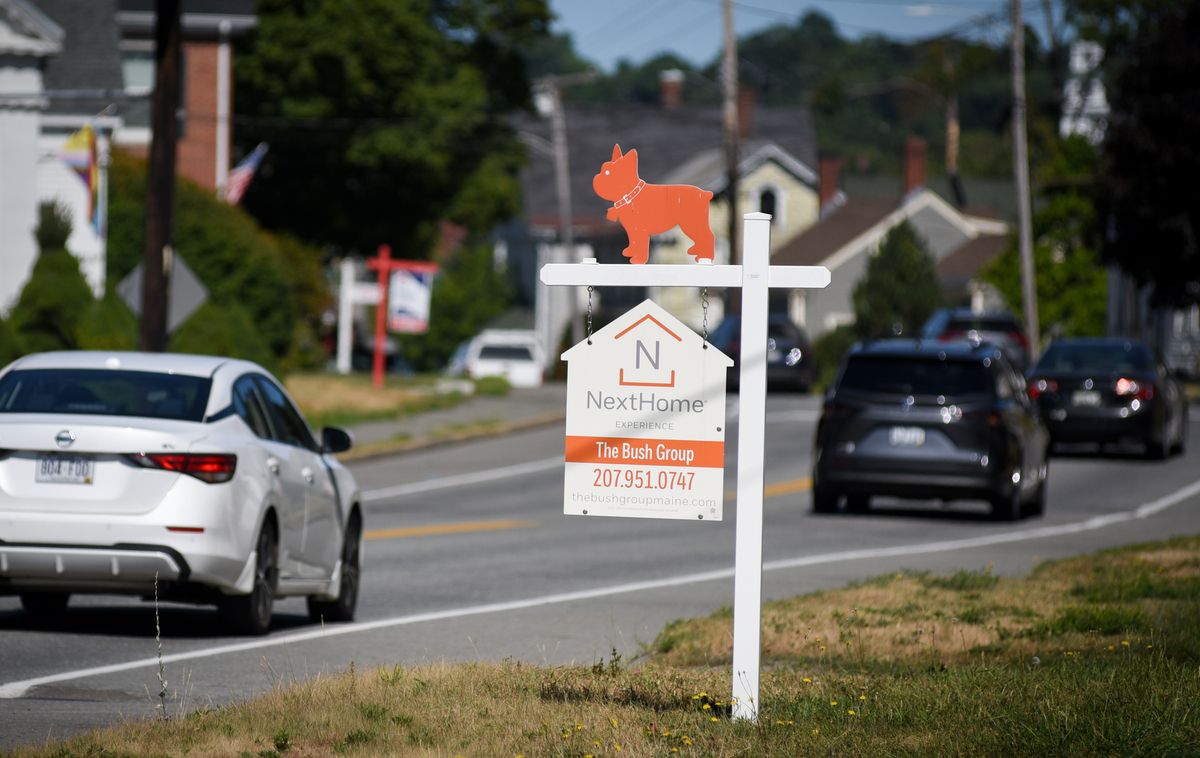
The housing market in Maine has become distinctly bifurcated, with stark contrasts between the southern coastal regions and the central and northern parts of the state. Data from Maine Listings reveals that homes in areas like Greater Portland are significantly more expensive and scarce compared to properties in towns such as Dover-Foxcroft. This divergence highlights not only the challenges faced by buyers in different regions but also reflects broader shifts in market dynamics.
In the Greater Portland area, single-family homes often remain on the market for only a few days, reflecting a highly competitive environment. In contrast, central and northern Maine are experiencing a cooling trend, offering prospective buyers more options and a sense of relief after the intense housing frenzy that characterized the pandemic years. For those looking to purchase in these less populated areas, the recent market changes provide a much-needed reprieve from the skyrocketing prices and limited availability seen previously.
Matt Pouliot, broker and owner of Pouliot Real Estate based in Augusta, noted the existence of “two Maines,” one urban and one rural, with the coastal regions continuing to attract buyers due to job opportunities and desirable locations. He explained, “You have these two Maines that play — the urban and rural and one and the waterfront and not waterfront.” This ongoing demand for southern and coastal properties presents challenges for families with limited budgets.
According to Julia Bassett Schwerin, a broker at Advisors Living Real Estate in Cape Elizabeth, the tight market in southern Maine can be attributed to the concentration of job opportunities. She elaborated, “The places where the jobs are [are] the urban centers and people like to be near the beaches, and that’s a big draw for the southernmost two counties.” This trend is prompting buyers to consider various living arrangements, including multi-family homes, to help manage costs.
As the winter months approach, the pace of property transactions in Maine is expected to slow down further, with sales typically picking up again in the spring. Both Pouliot and Schwerin anticipate that market conditions will remain stable in the near term, suggesting a gradual return to balance. “Getting ourselves back to a balanced market is going to be slow and gradual, but I think there are signs that we’re going in that direction,” Schwerin stated.
Market Inventory and Pricing Trends
Market inventory serves as a critical indicator of housing availability, reflecting how many homes are for sale at any given time. A balanced market typically has about six months of inventory, according to Schwerin. As of last month, Maine had slightly over three months of inventory, a significant improvement from the fewer than two months available during the pandemic’s peak.
However, inventory levels vary significantly across the state. For instance, Washington County boasts more than six months of inventory, indicating a balanced market, while Cumberland, Sagadahoc, York, and Androscoggin counties remain in a seller’s market with only about two months of inventory.
In terms of pricing, the median sales price for a single-family home in Maine stood at $402,500 last month. In contrast, areas with higher demand, such as Cumberland and York counties, report average prices of $580,000 and $525,000, respectively. Meanwhile, more affordable options are found in Aroostook County, where the median property cost is around $167,500.
Days on Market and Buyer Strategies
The average number of days a property remains on the market can also reflect demand levels. Homes in high-demand areas like Cumberland and Androscoggin counties are typically sold within two weeks, while properties in Washington and Piscataquis counties may remain unsold for over 40 days. The statewide average is currently 18 days, an improvement from the less than a week average seen in the summer of 2021.
As the market evolves, buyers are encouraged to manage their expectations realistically. Pouliot advises first-time homebuyers to understand that the availability of larger homes at affordable prices has diminished compared to previous years. “Not everyone is going to start with a 2,200-square-foot four bedroom, two bathroom colonial like you could in 2004,” he explained.
For those determined to live in southern or coastal Maine, creativity may be essential. Strategies like purchasing multi-family homes to generate rental income can help families navigate the challenging landscape. As the winter season approaches, the housing market in Maine will continue to reflect these regional disparities, with a focus on balancing housing availability and affordability for prospective buyers.

Church Members Rally Together After Thanksgiving Fire Devastation

U.S. Investment in Canadian Energy Firms Surges Despite Low Oil Prices

Nick Jonas Unveils New Solo Album ‘Sunday Best’ Set for February Release

Researchers Urge Label Changes for Low-Alcohol Drinks to Aid Pregnant Women

Wedding Cookie Table Community Aims for World’s Largest Cookie Exchange

Mayor Appoints Alan Wong as New Supervisor for District 4

UK Report Reveals Growing Role of AI in University Research Assessments

Mayor Lurie Appoints Alan Wong as New District 4 Supervisor

South Korea Strengthens FX Oversight in Urgent Market Stabilization

Urgent Update: Tom Aspinall’s Vision Deteriorates After UFC 321

MIT Scientists Uncover Surprising Genomic Loops During Cell Division

University of Hawaiʻi Joins $25.6M AI Project to Enhance Disaster Monitoring

AI Disruption: AWS Faces Threat as Startups Shift Cloud Focus

Time Crystals Revolutionize Quantum Computing Potential

Honeywell Forecasts Record Business Jet Deliveries Over Next Decade

Discover the Full Map of Pokémon Legends: Z-A’s Lumiose City

GOP Faces Backlash as Protests Surge Against Trump Policies

Parenthood Set to Depart Hulu: What Fans Need to Know
-
 Top Stories1 month ago
Urgent Update: Tom Aspinall’s Vision Deteriorates After UFC 321
-
 Health1 month ago
MIT Scientists Uncover Surprising Genomic Loops During Cell Division
-
Science4 weeks ago
University of Hawaiʻi Joins $25.6M AI Project to Enhance Disaster Monitoring
-
 Top Stories1 month ago
AI Disruption: AWS Faces Threat as Startups Shift Cloud Focus
-
 Science2 months ago
Time Crystals Revolutionize Quantum Computing Potential
-
 World2 months ago
Honeywell Forecasts Record Business Jet Deliveries Over Next Decade
-
 Entertainment1 month ago
Discover the Full Map of Pokémon Legends: Z-A’s Lumiose City
-
 Top Stories2 months ago
GOP Faces Backlash as Protests Surge Against Trump Policies
-
 Entertainment2 months ago
Parenthood Set to Depart Hulu: What Fans Need to Know
-

 Politics2 months ago
Judge Signals Dismissal of Chelsea Housing Case Citing AI Flaws
-

 Sports2 months ago
Yoshinobu Yamamoto Shines in Game 2, Leading Dodgers to Victory
-

 Health2 months ago
Maine Insurers Cut Medicare Advantage Plans Amid Cost Pressures