
Business
Sequoia’s Roelof Botha Cautions Founders Against High Valuations

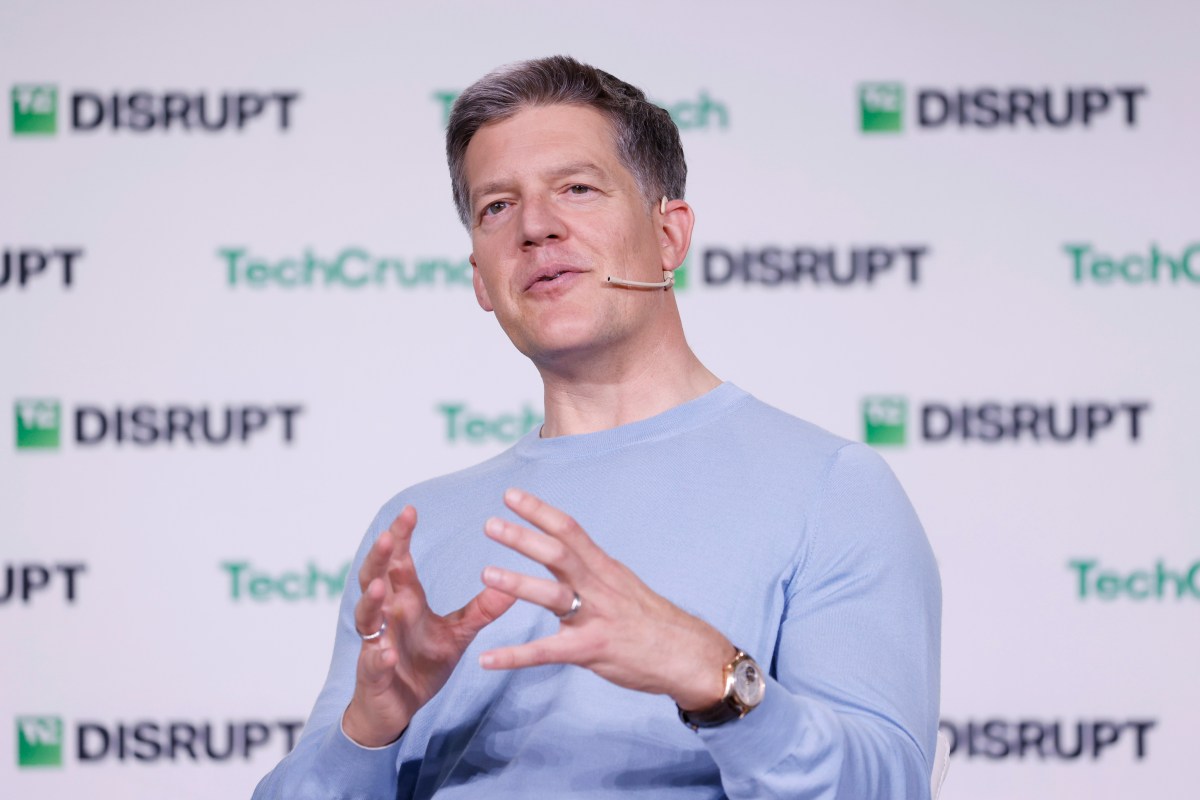
At the recent TechCrunch Disrupt event in San Francisco, Roelof Botha, a prominent figure at Sequoia Capital, expressed significant concerns about startup founders chasing inflated valuations. His remarks came amid a backdrop of evolving industrial policy in the United States, where the government is taking direct equity stakes in American companies, a shift from previous crisis measures.
Botha, who identifies as a “libertarian, free market thinker,” highlighted the implications of government involvement in private enterprise. He remarked, “One of the most dangerous words in the world are: ‘I’m from the government, and I’m here to help.’” His discomfort with government as a co-investor was palpable, reflecting broader anxieties about the future of innovation in the face of competition, particularly from nations like China.
While acknowledging that industrial policy may be necessary due to international competition, he cautioned founders against the risks associated with rapidly rising valuations. Botha noted a striking example from Sequoia’s portfolio where a company’s valuation skyrocketed from $150 million to $6 billion within a year during 2021, only to plummet back down. “The challenge… is you feel as though you’re on this trajectory, and then you end up being successful, but it’s not quite as good as you hoped at one point,” he explained.
The rapid ascent in valuations can lead to a false sense of security among founders, making it tempting to continue raising funds to sustain momentum. Yet, Botha warned that as valuations rise quickly, the risk of a significant downturn increases. “Nothing demoralizes a team quite like watching a paper fortune evaporate,” he stated.
Botha’s advice for navigating these volatile market conditions is twofold. He suggested that if founders do not need to raise capital for at least twelve months, they should focus on building their business, as it will be worth considerably more in a year. Conversely, if a company is within six months of requiring funding, it is prudent to raise capital while it remains available.
To illustrate his point, Botha referenced the myth of Daedalus and Icarus, cautioning against flying too close to the sun. “If you fly too hard, too fast, your wings may melt,” he said, reminding founders to maintain a balanced approach.
During the event, Botha also announced Sequoia’s recent fundraising efforts, which include new seed and venture funds totaling $950 million. He emphasized that despite some structural changes in 2021, the firm remains committed to early-stage investments. Over the past year, Sequoia has backed 20 seed-stage companies, nine of which were funded at incorporation.
Botha described Sequoia’s investment philosophy as “more mammalian than reptilian,” contrasting their selective approach with the high-volume strategies of many firms. He elaborated that Sequoia aims to nurture a small number of promising ventures rather than spreading resources thinly across many investments. “We don’t lay 100 eggs and see what happens,” he remarked, underscoring the importance of focused attention on each investment.
Reflecting on Sequoia’s historical performance, Botha shared that in the past 20 to 25 years, the firm has often failed to recover capital from half of its seed or venture investments. This sobering reality highlights the inherent risks of venture capital, which he described as an industry that can underperform compared to traditional investment vehicles when excluding top firms.
Botha’s perspective on venture capital challenges the notion of it being a distinct asset class. He pointed out that without the top 20 venture firms, the overall industry results would fall short of the returns from investing in an index fund. He noted the proliferation of venture firms—now 3,000 in the United States, tripling since his arrival at Sequoia—has led to market dilution. “Throwing more money into Silicon Valley doesn’t yield more great companies,” he said.
Botha concluded with a call for a more focused investment mindset, reminding attendees that “there are only so many companies that matter.” In a landscape where government involvement and high valuations may tempt founders towards risky paths, this guidance from a seasoned investor could be crucial for emerging startups navigating the complexities of today’s market.

Church Members Rally Together After Thanksgiving Fire Devastation

U.S. Investment in Canadian Energy Firms Surges Despite Low Oil Prices

Nick Jonas Unveils New Solo Album ‘Sunday Best’ Set for February Release

Researchers Urge Label Changes for Low-Alcohol Drinks to Aid Pregnant Women

Wedding Cookie Table Community Aims for World’s Largest Cookie Exchange

Mayor Appoints Alan Wong as New Supervisor for District 4

UK Report Reveals Growing Role of AI in University Research Assessments

Mayor Lurie Appoints Alan Wong as New District 4 Supervisor

South Korea Strengthens FX Oversight in Urgent Market Stabilization

Urgent Update: Tom Aspinall’s Vision Deteriorates After UFC 321

MIT Scientists Uncover Surprising Genomic Loops During Cell Division

University of Hawaiʻi Joins $25.6M AI Project to Enhance Disaster Monitoring

AI Disruption: AWS Faces Threat as Startups Shift Cloud Focus

Time Crystals Revolutionize Quantum Computing Potential

Honeywell Forecasts Record Business Jet Deliveries Over Next Decade

Discover the Full Map of Pokémon Legends: Z-A’s Lumiose City

GOP Faces Backlash as Protests Surge Against Trump Policies

Parenthood Set to Depart Hulu: What Fans Need to Know
-
 Top Stories1 month ago
Urgent Update: Tom Aspinall’s Vision Deteriorates After UFC 321
-
 Health1 month ago
MIT Scientists Uncover Surprising Genomic Loops During Cell Division
-
Science4 weeks ago
University of Hawaiʻi Joins $25.6M AI Project to Enhance Disaster Monitoring
-
 Top Stories1 month ago
AI Disruption: AWS Faces Threat as Startups Shift Cloud Focus
-
 Science2 months ago
Time Crystals Revolutionize Quantum Computing Potential
-
 World2 months ago
Honeywell Forecasts Record Business Jet Deliveries Over Next Decade
-
 Entertainment1 month ago
Discover the Full Map of Pokémon Legends: Z-A’s Lumiose City
-
 Top Stories2 months ago
GOP Faces Backlash as Protests Surge Against Trump Policies
-
 Entertainment2 months ago
Parenthood Set to Depart Hulu: What Fans Need to Know
-

 Politics2 months ago
Judge Signals Dismissal of Chelsea Housing Case Citing AI Flaws
-

 Sports2 months ago
Yoshinobu Yamamoto Shines in Game 2, Leading Dodgers to Victory
-

 Health2 months ago
Maine Insurers Cut Medicare Advantage Plans Amid Cost Pressures