
Health
Cardamom Extract Emerges as Potential Natural Antiviral Treatment

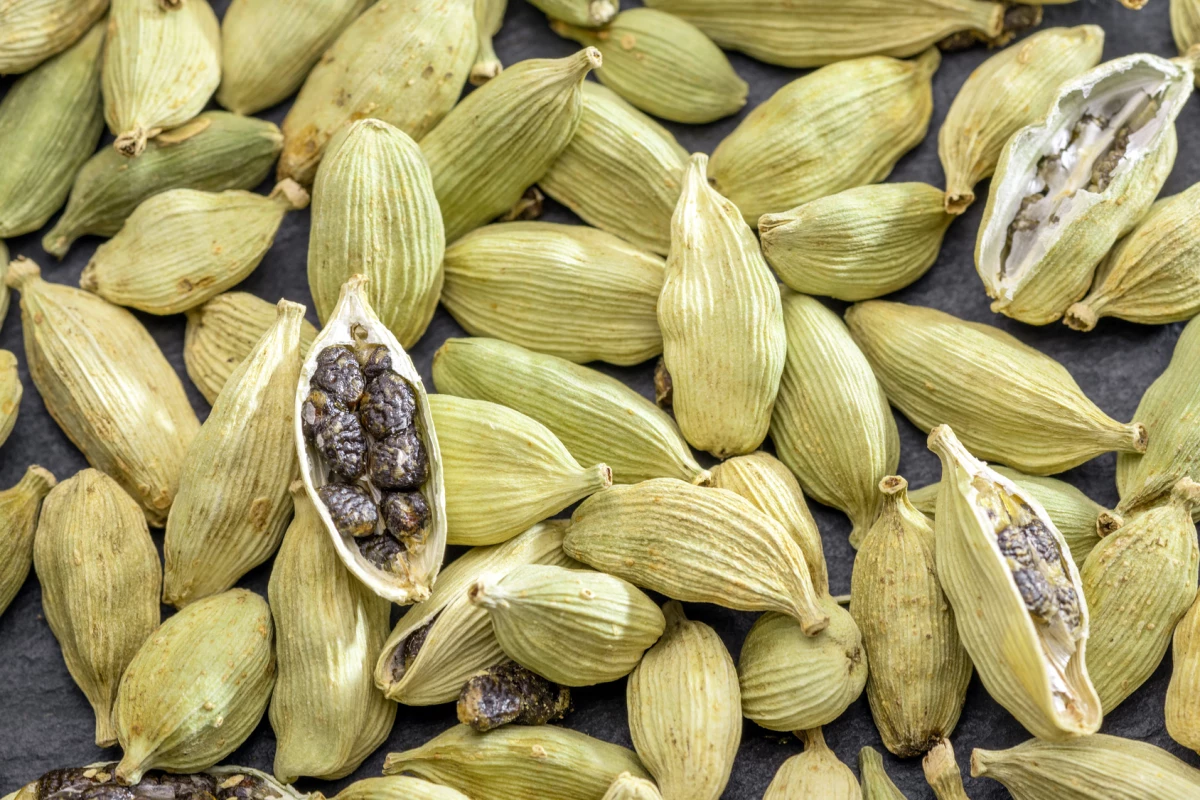
Research from Shinshu University in Japan has revealed that cardamom extract may serve as a promising natural antiviral treatment. The study highlights how compounds found in cardamom seeds can enhance the body’s ability to detect and respond to viral infections, potentially leading to new options for treating colds and flu.
The focus of this research is on type I interferons (IFNs), proteins that act as the body’s primary defense mechanism against viral attacks. When a virus, such as influenza, infiltrates the body, these proteins signal cells to produce hundreds of interferon-stimulated genes (ISGs), which create an “antiviral state” to inhibit viral replication.
Takeshi Kawahara, an Associate Professor at the university’s School of Science and Technology, has been investigating food ingredients that can help prevent viral infections since before the onset of the COVID-19 pandemic. He noted that the global health crisis has amplified interest in the antiviral properties of everyday foods, facilitating further research opportunities.
In the study, researchers utilized human lung epithelial cells, which line the respiratory tract and are critical in defending against airborne pathogens. The team prepared a hot-water extract of cardamom seeds (CSWE) and analyzed its chemical components through gas and liquid chromatography, identifying 1,8-cineole as a significant compound. This compound is known for its anti-inflammatory, antioxidant, and antimicrobial properties, commonly used in traditional medicine.
Upon treating the lung cells with CSWE and 1,8-cineole, the researchers exposed them to synthetic molecules mimicking viral DNA and RNA. The results indicated that CSWE significantly increased the production of IFN-⍺ and IFN-β, both crucial for antiviral defenses. Furthermore, the extract enhanced the expression of ISGs, aiding cells in blocking viral replication. Notably, this effect occurred regardless of whether the viral mimic was DNA or RNA, suggesting that CSWE could activate various immune pathways.
The study demonstrated that the effects of CSWE and its main compound were dose-dependent. Even in the absence of simulated infections, 1,8-cineole elevated the levels of IFN and ISGs, indicating a potential to keep cells in a state of heightened readiness against future infections.
The mechanisms of action differed between the two. The extract’s effects relied on the STING pathway, a natural system within cells that detects viral DNA remnants and prompts IFN production. In contrast, 1,8-cineole enhanced IFN levels by inhibiting a gene named TIPARP, which typically acts to slow down immune responses. This finding suggests that 1,8-cineole could remove the natural “brake” on the immune system.
Importantly, the extract did not activate pathways associated with swelling or tissue damage, indicating its potential to bolster antiviral defenses without triggering harmful inflammation.
Despite promising findings, the study acknowledges limitations. All experiments were conducted using lab-grown cells rather than in actual animals or humans, and the concentrations of cardamom extract used may exceed what is typically achieved through dietary consumption. Furthermore, the research was funded by S&B Foods Inc., which provided the cardamom used in the experiments.
If subsequent studies verify these effects in human subjects, cardamom extract or 1,8-cineole could be developed as a natural immune booster to assist in preventing viral infections or serve as a complementary treatment alongside vaccines and antiviral medications.
Kawahara expressed optimism about the potential applications of cardamom based on the findings. “Historically, cardamom has been recognized for its medicinal properties. Our research suggests it may be utilized as an antiviral agent to prevent a variety of viral infections,” he stated. He hopes that this work will inspire further investigation into the antiviral properties of various food ingredients.
While the research is groundbreaking, it is essential to remember that these findings are preliminary and should not be construed as medical advice. Cardamom tea alone cannot replace vaccines or antiviral medicines. The study was published in the journal Foods, marking an important step in understanding the potential of natural substances in enhancing immune responses.

Urgent: Vehicle Fire Closes Two Lanes on I-215 in Salt Lake City

Knicks Dominate Raptors 116-94, Extend Home Winning Streak

Hallmark’s ‘Christmas at the Catnip Café’ Premieres Tonight

Woman Arrested for Threatening U-Haul Worker with Baton

Japan’s PM Takaichi Vows Urgent Fiscal Management Amid Rate Trends

Bitcoin Plummets Below $88K Amid Tether Concerns and Warnings

Tottenville Falls Short in PSAL 4A Title Game Against Erasmus

Shark Teeth Study Reveals Urgent Clues to Prevent Extinction

Church Members Rally Together After Thanksgiving Fire Devastation

Urgent Update: Tom Aspinall’s Vision Deteriorates After UFC 321

MIT Scientists Uncover Surprising Genomic Loops During Cell Division

University of Hawaiʻi Joins $25.6M AI Project to Enhance Disaster Monitoring

AI Disruption: AWS Faces Threat as Startups Shift Cloud Focus

Time Crystals Revolutionize Quantum Computing Potential

Honeywell Forecasts Record Business Jet Deliveries Over Next Decade

Discover the Full Map of Pokémon Legends: Z-A’s Lumiose City

GOP Faces Backlash as Protests Surge Against Trump Policies

Parenthood Set to Depart Hulu: What Fans Need to Know
-
 Top Stories1 month ago
Urgent Update: Tom Aspinall’s Vision Deteriorates After UFC 321
-
 Health1 month ago
MIT Scientists Uncover Surprising Genomic Loops During Cell Division
-
Science4 weeks ago
University of Hawaiʻi Joins $25.6M AI Project to Enhance Disaster Monitoring
-
 Top Stories1 month ago
AI Disruption: AWS Faces Threat as Startups Shift Cloud Focus
-
 Science2 months ago
Time Crystals Revolutionize Quantum Computing Potential
-
 World2 months ago
Honeywell Forecasts Record Business Jet Deliveries Over Next Decade
-
 Entertainment1 month ago
Discover the Full Map of Pokémon Legends: Z-A’s Lumiose City
-
 Top Stories2 months ago
GOP Faces Backlash as Protests Surge Against Trump Policies
-
 Entertainment2 months ago
Parenthood Set to Depart Hulu: What Fans Need to Know
-

 Politics2 months ago
Judge Signals Dismissal of Chelsea Housing Case Citing AI Flaws
-

 Sports2 months ago
Yoshinobu Yamamoto Shines in Game 2, Leading Dodgers to Victory
-

 Health2 months ago
Maine Insurers Cut Medicare Advantage Plans Amid Cost Pressures