
Health
Congress Faces Stalemate Over Obamacare Subsidies Amid Shutdown

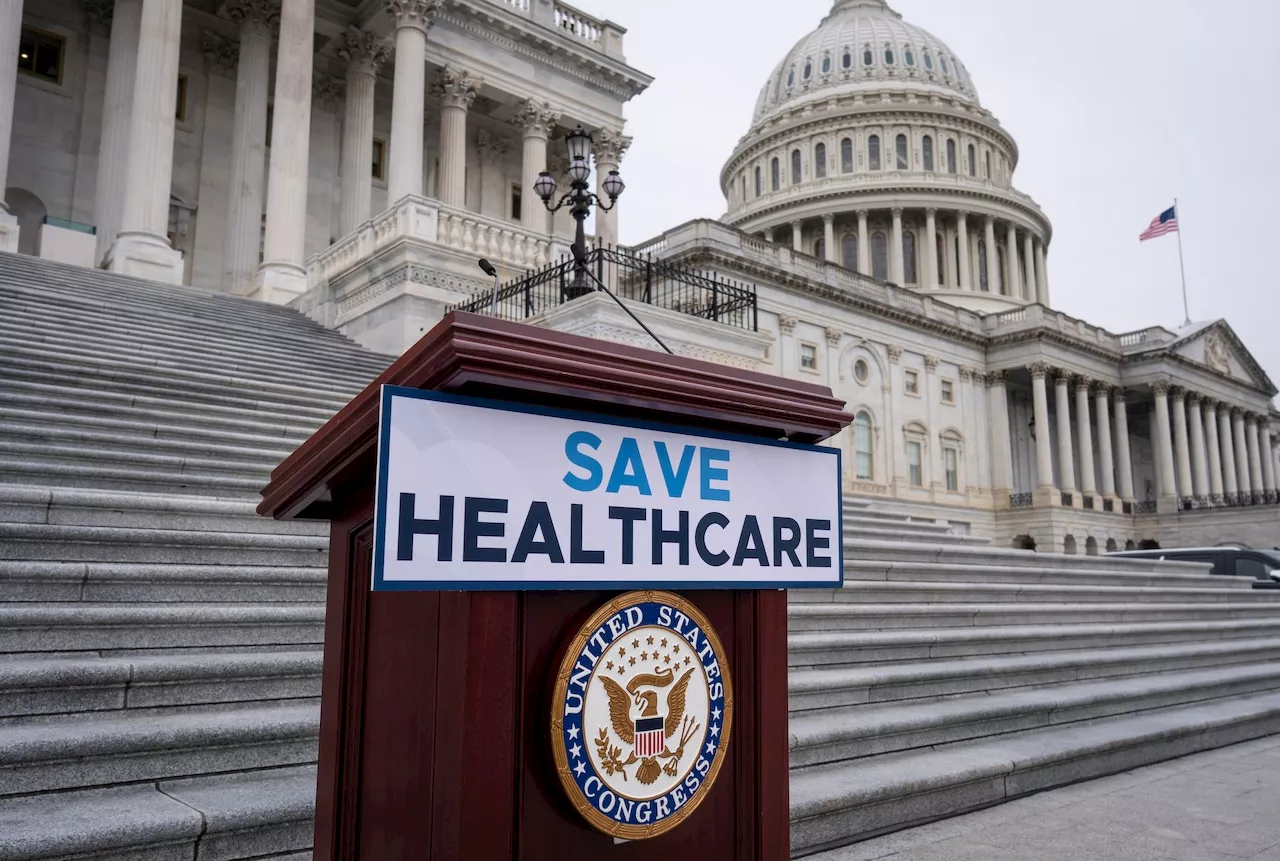
The ongoing government shutdown in the United States has intensified debates surrounding the future of Obamacare subsidies, threatening the health care coverage of millions. As of now, approximately six in ten Americans express significant concern over rising health costs in the coming year, according to a recent poll. With the expiration of tax credits for health insurance under the Affordable Care Act (ACA) set for January 1, 2026, House Democrats are pushing for an extension of these benefits as part of any government funding compromise.
On September 30, 2025, House Democrats gathered on the steps of the Capitol to demand that their Republican counterparts include the extension of health care benefits in negotiations. For over a decade, the ACA has been a contentious issue, with both major political parties wrestling over its future. The tax credits, which aim to make health insurance more affordable for individuals using the ACA marketplaces, are at the heart of the current impasse. In 2021, during the COVID-19 pandemic, Democrats expanded these subsidies, allowing many lower-income individuals to pay no premiums at all while capping costs for higher earners at 8.5% of their income.
If the tax credits lapse, the Kaiser Family Foundation estimates that annual out-of-pocket premiums could skyrocket by an average of $1,016, representing a staggering 114% increase. Democrats successfully extended the subsidies in 2022 for three additional years but failed to make them permanent, leading to the current situation where Republicans are reluctant to negotiate until the government reopens.
Republican leaders assert that they will not endorse a House-passed bill to reopen the government without assurances about the extension of the subsidies. In the meantime, bipartisan discussions are underway regarding potential reforms, but a clear path to compromise remains elusive. Some Republicans, including Senator Josh Hawley of Missouri, advocate for extending the subsidies, arguing that many individuals relying on the ACA exchanges do not have alternative options.
Conversely, others in the Republican Party, including Senator Rick Scott of Florida, have expressed a desire to overhaul the ACA entirely rather than merely extending the subsidies. Scott emphasized that the real issue lies not with the expiring credits but with the overall cost of health care. This sentiment has been echoed by conservative think tanks like the Cato Institute, which have criticized the subsidies as enabling potential fraud.
As the November 1 open enrollment date approaches, lawmakers are feeling increasing pressure to find a resolution. Senator Jeanne Shaheen of New Hampshire has been actively seeking areas of compromise, suggesting that Congress could consider extending enrollment dates for the ACA as negotiations stall on subsidy extensions.
With various factions within Congress proposing different solutions, including potential income limits and gradual phase-outs of subsidies, the future of health care funding remains uncertain. While some lawmakers express a willingness to negotiate on the subsidies, the divided positions of both parties pose significant challenges to reaching an agreement, further complicating an already tense political landscape.
As the situation develops, the ongoing discussions highlight the critical intersection of health care policy and government funding, underscoring the urgent need for a resolution that addresses the health care costs affecting millions of Americans.

Urgent: Vehicle Fire Closes Two Lanes on I-215 in Salt Lake City

Knicks Dominate Raptors 116-94, Extend Home Winning Streak

Hallmark’s ‘Christmas at the Catnip Café’ Premieres Tonight

Woman Arrested for Threatening U-Haul Worker with Baton

Japan’s PM Takaichi Vows Urgent Fiscal Management Amid Rate Trends

Bitcoin Plummets Below $88K Amid Tether Concerns and Warnings

Tottenville Falls Short in PSAL 4A Title Game Against Erasmus

Shark Teeth Study Reveals Urgent Clues to Prevent Extinction

Church Members Rally Together After Thanksgiving Fire Devastation

Urgent Update: Tom Aspinall’s Vision Deteriorates After UFC 321

MIT Scientists Uncover Surprising Genomic Loops During Cell Division

University of Hawaiʻi Joins $25.6M AI Project to Enhance Disaster Monitoring

AI Disruption: AWS Faces Threat as Startups Shift Cloud Focus

Time Crystals Revolutionize Quantum Computing Potential

Honeywell Forecasts Record Business Jet Deliveries Over Next Decade

Discover the Full Map of Pokémon Legends: Z-A’s Lumiose City

GOP Faces Backlash as Protests Surge Against Trump Policies

Parenthood Set to Depart Hulu: What Fans Need to Know
-
 Top Stories1 month ago
Urgent Update: Tom Aspinall’s Vision Deteriorates After UFC 321
-
 Health1 month ago
MIT Scientists Uncover Surprising Genomic Loops During Cell Division
-
Science4 weeks ago
University of Hawaiʻi Joins $25.6M AI Project to Enhance Disaster Monitoring
-
 Top Stories1 month ago
AI Disruption: AWS Faces Threat as Startups Shift Cloud Focus
-
 Science2 months ago
Time Crystals Revolutionize Quantum Computing Potential
-
 World2 months ago
Honeywell Forecasts Record Business Jet Deliveries Over Next Decade
-
 Entertainment1 month ago
Discover the Full Map of Pokémon Legends: Z-A’s Lumiose City
-
 Top Stories2 months ago
GOP Faces Backlash as Protests Surge Against Trump Policies
-
 Entertainment2 months ago
Parenthood Set to Depart Hulu: What Fans Need to Know
-

 Politics2 months ago
Judge Signals Dismissal of Chelsea Housing Case Citing AI Flaws
-

 Sports2 months ago
Yoshinobu Yamamoto Shines in Game 2, Leading Dodgers to Victory
-

 Health2 months ago
Maine Insurers Cut Medicare Advantage Plans Amid Cost Pressures