
Health
Surge in E-Bike and E-Scooter Injuries Among Children Raises Alarms

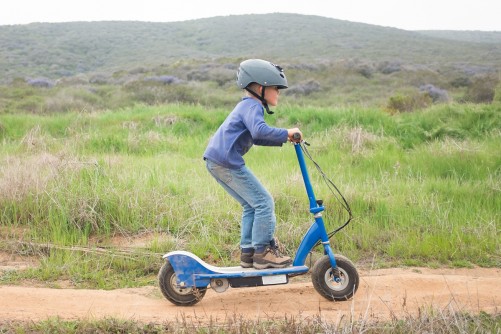
Emergency departments across the United States report a significant increase in injuries among children using electric bikes (e-bikes) and electric scooters (e-scooters). At Penn State Health Children’s Hospital, medical professionals have treated more children for e-scooter and e-bike related injuries in 2025 than in the previous three years combined. This alarming trend raises critical safety concerns for parents and guardians.
According to Dr. Bryanna Emr, pediatric trauma medical director at Penn State Health, the majority of serious injuries occur when children are struck by vehicles while riding in high-traffic areas. Many accidents happen when children are commuting to school or riding after dark, making them less visible to drivers. “A lot of riders have headphones in or they’re trying to send a message on their phone, and they’re distracted,” Emr explains. “They’re not paying attention, and just for those 10 seconds, they don’t see the car coming.”
The risk is compounded by the speed of these vehicles, which can reach over 20 miles per hour. Emr notes that children can travel much faster on e-bikes and e-scooters than on traditional bicycles, resulting in more severe injuries. The most common injuries include life-threatening head trauma, such as brain bleeding and skull fractures, as well as broken ribs, fractured legs, and bruised internal organs. Additionally, collisions with other riders or stationary objects, along with tumbles over potholes, contribute to the growing number of cases.
One particular concern with e-scooters is their small wheels, which struggle to navigate bumps effectively. Emr points out a less frequent but hazardous issue where e-scooter batteries can overheat and catch fire, posing a risk of burns.
In response to the rising injury rates, parents can take several precautionary measures. Understanding the legal framework is crucial; in Pennsylvania, e-scooters and e-bikes are prohibited on sidewalks, and e-scooters cannot operate on public roadways. The American Academy of Pediatrics advises that children under the age of 16 should not operate such vehicles, a sentiment echoed by Emr, who warns that even some 16-year-olds may not be ready for the responsibility.
Parents should ensure their children are mature enough to avoid distractions, wear appropriate protective gear like helmets, and understand the rules of the road. “It’s basically like operating a small motorcycle,” Emr states, emphasizing the need for safety education.
Legislation is also in the works. A bill introduced in the Pennsylvania Senate in September 2025 aims to restrict children under 16 from operating e-scooters, mandate helmet use for riders aged 16 and 17, and implement a statewide speed limit. It would also limit riders to one per e-scooter and require them to follow the same traffic rules as cyclists.
Wearing helmets is essential for safety. Research published in JAMA Surgery indicates that e-bike riders without helmets are nearly twice as likely to sustain head injuries compared to those who wear them. Emr recommends helmets that provide substantial coverage, similar to motorcycle helmets.
Before each ride, parents should check that brakes and other parts are functioning correctly. Visibility is another key factor; using lights on the vehicles and wearing reflective clothing can make a significant difference, especially at night.
Staying alert is critical. Parents should advise their children to refrain from using headphones or looking at their phones while riding. Additionally, if a child experiences a crash, even a minor one, it is important to watch for signs of concussion or other injuries for at least 24 hours. Emr advises seeking medical evaluation if symptoms such as ongoing headaches, nausea, or vision changes occur.
Ultimately, while e-bikes and e-scooters may seem appealing, they carry a heightened risk of injury. “They look like a lot of fun,” Emr states, “but they come with a lot more responsibility and a higher risk of injury than people realize.”

Urgent: Vehicle Fire Closes Two Lanes on I-215 in Salt Lake City

Knicks Dominate Raptors 116-94, Extend Home Winning Streak

Hallmark’s ‘Christmas at the Catnip Café’ Premieres Tonight

Woman Arrested for Threatening U-Haul Worker with Baton

Japan’s PM Takaichi Vows Urgent Fiscal Management Amid Rate Trends

Bitcoin Plummets Below $88K Amid Tether Concerns and Warnings

Tottenville Falls Short in PSAL 4A Title Game Against Erasmus

Shark Teeth Study Reveals Urgent Clues to Prevent Extinction

Church Members Rally Together After Thanksgiving Fire Devastation

Urgent Update: Tom Aspinall’s Vision Deteriorates After UFC 321

MIT Scientists Uncover Surprising Genomic Loops During Cell Division

University of Hawaiʻi Joins $25.6M AI Project to Enhance Disaster Monitoring

AI Disruption: AWS Faces Threat as Startups Shift Cloud Focus

Time Crystals Revolutionize Quantum Computing Potential

Honeywell Forecasts Record Business Jet Deliveries Over Next Decade

Discover the Full Map of Pokémon Legends: Z-A’s Lumiose City

GOP Faces Backlash as Protests Surge Against Trump Policies

Parenthood Set to Depart Hulu: What Fans Need to Know
-
 Top Stories1 month ago
Urgent Update: Tom Aspinall’s Vision Deteriorates After UFC 321
-
 Health1 month ago
MIT Scientists Uncover Surprising Genomic Loops During Cell Division
-
Science4 weeks ago
University of Hawaiʻi Joins $25.6M AI Project to Enhance Disaster Monitoring
-
 Top Stories1 month ago
AI Disruption: AWS Faces Threat as Startups Shift Cloud Focus
-
 Science2 months ago
Time Crystals Revolutionize Quantum Computing Potential
-
 World2 months ago
Honeywell Forecasts Record Business Jet Deliveries Over Next Decade
-
 Entertainment1 month ago
Discover the Full Map of Pokémon Legends: Z-A’s Lumiose City
-
 Top Stories2 months ago
GOP Faces Backlash as Protests Surge Against Trump Policies
-
 Entertainment2 months ago
Parenthood Set to Depart Hulu: What Fans Need to Know
-

 Politics2 months ago
Judge Signals Dismissal of Chelsea Housing Case Citing AI Flaws
-

 Sports2 months ago
Yoshinobu Yamamoto Shines in Game 2, Leading Dodgers to Victory
-

 Health2 months ago
Maine Insurers Cut Medicare Advantage Plans Amid Cost Pressures