
Lifestyle
Artist James Magee’s Hill Faces Uncertain Future After His Death

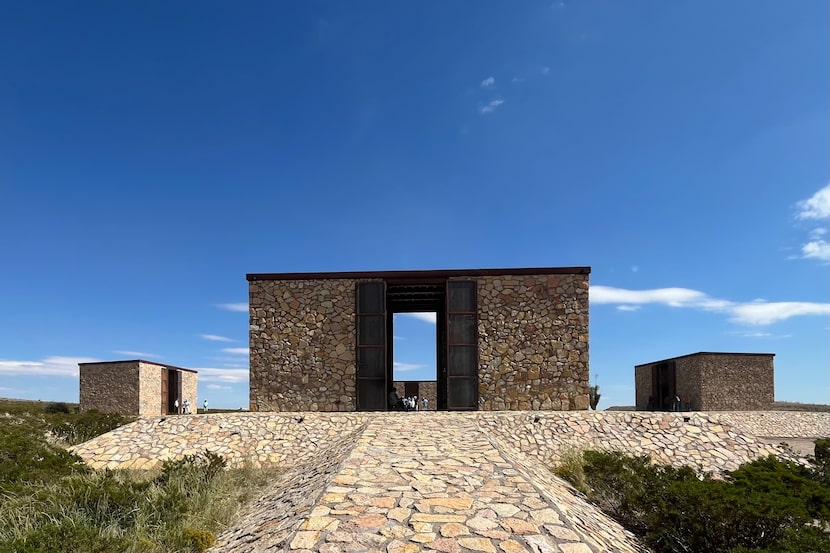
The future of the Hill, an extraordinary art installation in West Texas created by the late artist James Magee, is under consideration following his death in 2022 at the age of 79. Located about 70 miles east of El Paso, the Hill is a unique blend of art and architecture, characterized by its four stone structures and industrial installations. Despite its significance, the site remains relatively unknown, described by a New York Times writer as “the most important artwork most people have never heard of.”
Reaching the Hill requires a deliberate effort, as visitors must traverse a winding dirt road that can be challenging in inclement weather. As they approach, the remarkable structures rise on the horizon, evoking a sense of ancient mystery. Each building, crafted from local stone and featuring abstract installations, conveys a spiritual essence, reflecting Magee’s multifaceted artistic vision.
Magee dedicated nearly four decades to this project, yet it remains unfinished. Friends and colleagues are now grappling with decisions about preserving and sharing his legacy. Jed Morse, chief curator of the Nasher Sculpture Center and a friend of Magee, described the Hill as a “monastic retreat for the postindustrial age.” As the complexities of Magee’s artistic identity unfold, the challenge lies in determining how best to honor his work.
The artist embodied multiple personas—James Magee, painter Annabel Livermore, and writer Horace Mayfield—each contributing to a diverse portfolio. This multiplicity poses questions for Magee’s heirs about which aspects to preserve and promote. According to Morse, “Jim wanted to explore the incredible variety of the experience of life,” and this artistic diversity complicates the preservation effort.
Negotiations in the final years of Magee’s life led to a decision to make the Hill accessible to the public, although with specific restrictions on crowds and photography. His sister, Susan Wente, emphasized Magee’s desire to share his work, stating, “We want to now take it and share it with the world.”
Magee’s life journey was as eclectic as his art. Originally from Fremont, Michigan, he moved to El Paso in the early 1980s after a train derailment left him stranded. His connection to the region deepened as he became involved in the community, not only as an artist but also as a philanthropist. He established initiatives that enriched the local culture, such as a fund for placing fresh flowers in the chapel of the University Medical Center of El Paso.
Despite health challenges, including the amputation of both legs due to complications from HIV/AIDS, Magee maintained a vigorous involvement in his art and the community. Chris Cummings, board chair of the Cornudas Mountain Foundation, noted Magee’s ability to connect with people, fostering a unique bond that inspired many to support him.
Magee began acquiring land in the Chihuahuan Desert soon after arriving in El Paso, aiming to create a secluded space for his art. Over the years, he expanded the surrounding area to preserve the Hill’s viewshed. The site is devoid of modern infrastructure, making it a true retreat from civilization. Magee constructed the four distinctive buildings using local materials, employing simple techniques familiar to the laborers who occasionally assisted him.
While three buildings are complete, the fourth remains a work in progress, with Magee’s ambitious plans left unfinished at his passing. Morse explained that the artist had envisioned elaborate features for this structure, including a glass floor that could be raised and lowered. The unfinished nature of this building presents a dilemma for preservation efforts.
To address this, Gary Cunningham, an architect and friend of Magee, recommended covering the incomplete area with plywood, allowing for visitor access while maintaining a clear distinction from Magee’s original vision. This solution was implemented in the fall, along with the installation of one of Magee’s larger works.
The artist’s workshop, situated in a repurposed auto body shop in El Paso, reflects his creative process, housing both completed and in-progress works alongside an array of materials. Plans are underway to open the workshop to the public, preserving sections as Magee left them while also creating spaces for showcasing his various artistic personas.
In addition to the Hill, El Museo Livermore, dedicated to Livermore’s work, will remain open to the public. This small museum features a series of evocative paintings that exemplify Magee’s poetic and theatrical approach to art.
To sustain Magee’s legacy, the El Paso Community Foundation, which oversees the Cornudas Mountain Foundation, plans to sell some of the homes Magee acquired for himself and Livermore. Immediate goals include improving access to the Hill and maintaining El Museo Livermore. However, funding remains a challenge, with an estimated annual cost of $500,000, of which the foundation currently covers 70%.
As the community works to honor Magee’s legacy, Eric Pearson, president of the El Paso Community Foundation, expressed a commitment to preserving the Hill for both local enjoyment and global recognition. “He left us with a legacy that we want to protect not only for El Paso to enjoy, but for people around the world to be exposed to,” Pearson stated. The journey of preserving Magee’s vision continues, as those close to him strive to ensure that his remarkable contributions to art and culture endure.

Hallmark’s ‘Christmas at the Catnip Café’ Premieres Tonight

Woman Arrested for Threatening U-Haul Worker with Baton

Japan’s PM Takaichi Vows Urgent Fiscal Management Amid Rate Trends

Bitcoin Plummets Below $88K Amid Tether Concerns and Warnings

Tottenville Falls Short in PSAL 4A Title Game Against Erasmus

Shark Teeth Study Reveals Urgent Clues to Prevent Extinction

Church Members Rally Together After Thanksgiving Fire Devastation

U.S. Investment in Canadian Energy Firms Surges Despite Low Oil Prices

Nick Jonas Unveils New Solo Album ‘Sunday Best’ Set for February Release

Urgent Update: Tom Aspinall’s Vision Deteriorates After UFC 321

MIT Scientists Uncover Surprising Genomic Loops During Cell Division

University of Hawaiʻi Joins $25.6M AI Project to Enhance Disaster Monitoring

AI Disruption: AWS Faces Threat as Startups Shift Cloud Focus

Time Crystals Revolutionize Quantum Computing Potential

Honeywell Forecasts Record Business Jet Deliveries Over Next Decade

Discover the Full Map of Pokémon Legends: Z-A’s Lumiose City

GOP Faces Backlash as Protests Surge Against Trump Policies

Parenthood Set to Depart Hulu: What Fans Need to Know
-
 Top Stories1 month ago
Urgent Update: Tom Aspinall’s Vision Deteriorates After UFC 321
-
 Health1 month ago
MIT Scientists Uncover Surprising Genomic Loops During Cell Division
-
Science4 weeks ago
University of Hawaiʻi Joins $25.6M AI Project to Enhance Disaster Monitoring
-
 Top Stories1 month ago
AI Disruption: AWS Faces Threat as Startups Shift Cloud Focus
-
 Science2 months ago
Time Crystals Revolutionize Quantum Computing Potential
-
 World2 months ago
Honeywell Forecasts Record Business Jet Deliveries Over Next Decade
-
 Entertainment1 month ago
Discover the Full Map of Pokémon Legends: Z-A’s Lumiose City
-
 Top Stories2 months ago
GOP Faces Backlash as Protests Surge Against Trump Policies
-
 Entertainment2 months ago
Parenthood Set to Depart Hulu: What Fans Need to Know
-

 Politics2 months ago
Judge Signals Dismissal of Chelsea Housing Case Citing AI Flaws
-

 Sports2 months ago
Yoshinobu Yamamoto Shines in Game 2, Leading Dodgers to Victory
-

 Health2 months ago
Maine Insurers Cut Medicare Advantage Plans Amid Cost Pressures