
Politics
Johnson’s Historic Oath: A Turning Point for the Supreme Court

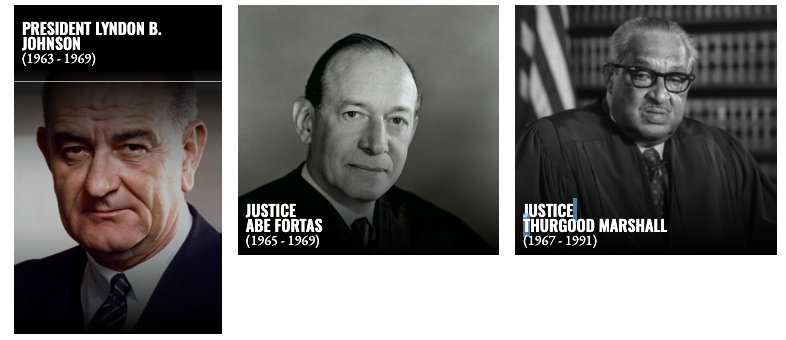
On November 22, 1963, Lyndon B. Johnson was sworn in as the 36th President of the United States following the assassination of President John F. Kennedy. This pivotal moment not only marked a significant transition in leadership but also set the stage for important changes in the U.S. Supreme Court. During his presidency, Johnson would appoint two influential Justices: Abe Fortas and Thurgood Marshall.
President Johnson took the oath of office aboard Air Force One at Dallas Love Field Airport, just hours after Kennedy’s death. The ceremony was attended by a small group, including Lady Bird Johnson and several members of Kennedy’s administration. This somber backdrop underscored the gravity of the moment, as the nation grappled with the shock of losing a leader.
The appointments made by President Johnson would have lasting implications for the Supreme Court. Abe Fortas, who had previously served as an advisor to Kennedy, was appointed in 1965. His judicial philosophy leaned toward expanding civil rights and civil liberties, reflecting the progressive values of the Johnson administration. Fortas became an advocate for the Warren Court’s legacy, which aimed to address social injustices.
In 1967, Johnson appointed Thurgood Marshall, the first African American Justice to serve on the Supreme Court. Marshall’s appointment was a historic achievement, symbolizing a significant step forward in the fight for racial equality. As a former civil rights lawyer, Marshall’s presence on the Court reinforced the importance of justice and equality under the law.
These appointments occurred during a time of considerable social change in the United States. The Civil Rights Movement was gaining momentum, and the Supreme Court was becoming a critical arena for addressing issues related to race, equality, and individual rights. Johnson’s appointments reflected his commitment to these causes and aimed to shape the Court’s direction for years to come.
The legacy of Johnson’s presidency and his Supreme Court appointments is still felt today. The decisions made during this era have had a profound impact on American law and society. As the nation reflects on this historical moment, the significance of November 22, 1963, continues to resonate, marking a turning point in the judicial landscape of the United States.

Church Members Rally Together After Thanksgiving Fire Devastation

U.S. Investment in Canadian Energy Firms Surges Despite Low Oil Prices

Nick Jonas Unveils New Solo Album ‘Sunday Best’ Set for February Release

Researchers Urge Label Changes for Low-Alcohol Drinks to Aid Pregnant Women

Wedding Cookie Table Community Aims for World’s Largest Cookie Exchange

Mayor Appoints Alan Wong as New Supervisor for District 4

UK Report Reveals Growing Role of AI in University Research Assessments

Mayor Lurie Appoints Alan Wong as New District 4 Supervisor

South Korea Strengthens FX Oversight in Urgent Market Stabilization

Urgent Update: Tom Aspinall’s Vision Deteriorates After UFC 321

MIT Scientists Uncover Surprising Genomic Loops During Cell Division

University of Hawaiʻi Joins $25.6M AI Project to Enhance Disaster Monitoring

AI Disruption: AWS Faces Threat as Startups Shift Cloud Focus

Time Crystals Revolutionize Quantum Computing Potential

Honeywell Forecasts Record Business Jet Deliveries Over Next Decade

Discover the Full Map of Pokémon Legends: Z-A’s Lumiose City

Parenthood Set to Depart Hulu: What Fans Need to Know

GOP Faces Backlash as Protests Surge Against Trump Policies
-
 Top Stories1 month ago
Urgent Update: Tom Aspinall’s Vision Deteriorates After UFC 321
-
 Health1 month ago
MIT Scientists Uncover Surprising Genomic Loops During Cell Division
-
Science4 weeks ago
University of Hawaiʻi Joins $25.6M AI Project to Enhance Disaster Monitoring
-
 Top Stories1 month ago
AI Disruption: AWS Faces Threat as Startups Shift Cloud Focus
-
 Science2 months ago
Time Crystals Revolutionize Quantum Computing Potential
-
 World2 months ago
Honeywell Forecasts Record Business Jet Deliveries Over Next Decade
-
 Entertainment1 month ago
Discover the Full Map of Pokémon Legends: Z-A’s Lumiose City
-
 Entertainment2 months ago
Parenthood Set to Depart Hulu: What Fans Need to Know
-
 Top Stories2 months ago
GOP Faces Backlash as Protests Surge Against Trump Policies
-

 Politics2 months ago
Judge Signals Dismissal of Chelsea Housing Case Citing AI Flaws
-

 Sports2 months ago
Yoshinobu Yamamoto Shines in Game 2, Leading Dodgers to Victory
-

 Health2 months ago
Maine Insurers Cut Medicare Advantage Plans Amid Cost Pressures