
Politics
New York’s Mayoral Race Heats Up with Early Voting Surge

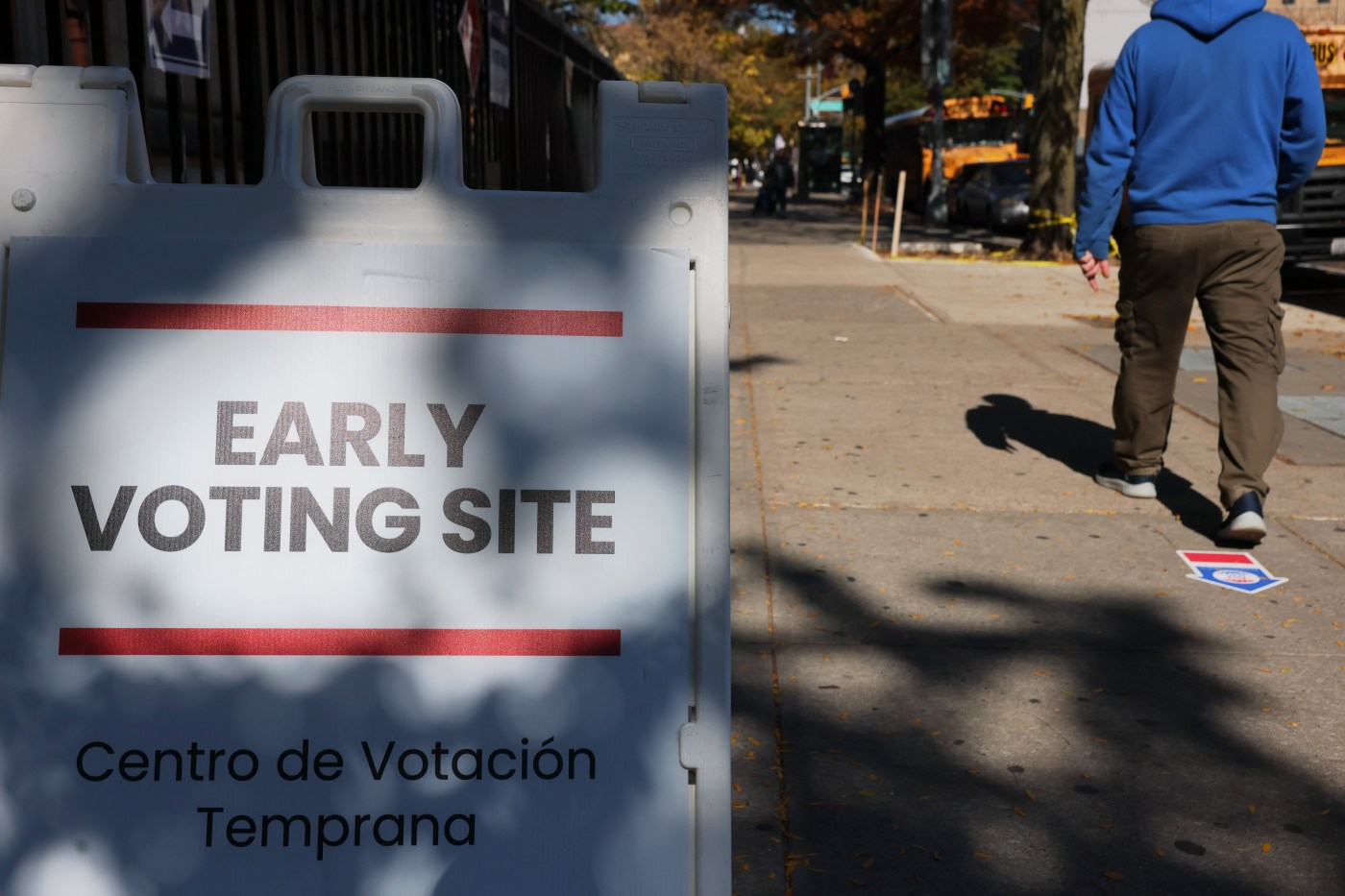
Early voting in New York has witnessed an impressive surge, with over twice the number of ballots cast compared to the same period during the June primary. This uptick sets the stage for a competitive mayoral race between former governor Andrew Cuomo and Zohran Mamdani, as the city prepares for Election Day on November 7, 2025. The current trend suggests that voter participation could exceed 2 million, a milestone not reached since the 1960s.
The heightened interest in early voting signals a shift in the political landscape. Cuomo and Mamdani, the primary candidates, are aware that this election could be pivotal in shaping New York’s future. According to the first days of early voting, participation has already surpassed turnout during the early voting phase of the June primary, where Mamdani emerged victorious.
As the election approaches, many observers believe that a larger turnout may favor Cuomo, who has a history of appealing to centrist voters. This demographic is seen as crucial in a general election, contrasting with the more ideologically driven primary voters. A statement from Joe Borelli, the former City Council’s GOP minority leader, encapsulates this sentiment: “I am no fan of Andrew Cuomo, but I also don’t want to light my vote on fire” by choosing a less viable candidate.
Mamdani, positioned on the left of the political spectrum, faces challenges in attracting a broader base. The general election typically draws a different electorate than the primaries, and with Cuomo’s established reputation, he is expected to leverage this in his campaign.
Amidst the unfolding dynamics, some voters express concern over the presence of Curtis Sliwa, a third-party candidate who has not withdrawn from the race. Critics argue that Sliwa’s participation may siphon votes away from the leading candidates. Given the stakes, many voters are encouraged to focus their support on either Cuomo or Mamdani, reinforcing the notion that this election is a binary choice.
The historical context surrounding the election further emphasizes its importance. October 29 marks the anniversary of Superstorm Sandy, which devastated New York City in 2012, resulting in significant loss of life and financial damage estimated at $70 billion. Cuomo’s experience as governor during that crisis stands in stark contrast to Mamdani’s relative inexperience in governance. Observers question whether Mamdani could effectively handle such emergencies, a critical consideration for voters.
As New Yorkers engage in the democratic process, the call to action is clear: exercise the right to vote. With expectations high for voter turnout, the potential for a transformative election looms large. The decision ultimately lies in the hands of the electorate, who will shape the future of New York City through their participation in this critical moment.
As the candidates continue to campaign, the urgency for voters to make their voices heard remains paramount. The next few days are crucial, with early voting continuing until November 5, followed by Election Day on November 7. The outcome of this election will not only determine the mayor but also reflect the aspirations and concerns of the city’s diverse population.

Japan’s PM Takaichi Vows Urgent Fiscal Management Amid Rate Trends

Bitcoin Plummets Below $88K Amid Tether Concerns and Warnings

Tottenville Falls Short in PSAL 4A Title Game Against Erasmus

Shark Teeth Study Reveals Urgent Clues to Prevent Extinction

Church Members Rally Together After Thanksgiving Fire Devastation

U.S. Investment in Canadian Energy Firms Surges Despite Low Oil Prices

Nick Jonas Unveils New Solo Album ‘Sunday Best’ Set for February Release

Researchers Urge Label Changes for Low-Alcohol Drinks to Aid Pregnant Women

Wedding Cookie Table Community Aims for World’s Largest Cookie Exchange

Urgent Update: Tom Aspinall’s Vision Deteriorates After UFC 321

MIT Scientists Uncover Surprising Genomic Loops During Cell Division

University of Hawaiʻi Joins $25.6M AI Project to Enhance Disaster Monitoring

AI Disruption: AWS Faces Threat as Startups Shift Cloud Focus

Time Crystals Revolutionize Quantum Computing Potential

Honeywell Forecasts Record Business Jet Deliveries Over Next Decade

Discover the Full Map of Pokémon Legends: Z-A’s Lumiose City

GOP Faces Backlash as Protests Surge Against Trump Policies

Parenthood Set to Depart Hulu: What Fans Need to Know
-
 Top Stories1 month ago
Urgent Update: Tom Aspinall’s Vision Deteriorates After UFC 321
-
 Health1 month ago
MIT Scientists Uncover Surprising Genomic Loops During Cell Division
-
Science4 weeks ago
University of Hawaiʻi Joins $25.6M AI Project to Enhance Disaster Monitoring
-
 Top Stories1 month ago
AI Disruption: AWS Faces Threat as Startups Shift Cloud Focus
-
 Science2 months ago
Time Crystals Revolutionize Quantum Computing Potential
-
 World2 months ago
Honeywell Forecasts Record Business Jet Deliveries Over Next Decade
-
 Entertainment1 month ago
Discover the Full Map of Pokémon Legends: Z-A’s Lumiose City
-
 Top Stories2 months ago
GOP Faces Backlash as Protests Surge Against Trump Policies
-
 Entertainment2 months ago
Parenthood Set to Depart Hulu: What Fans Need to Know
-

 Politics2 months ago
Judge Signals Dismissal of Chelsea Housing Case Citing AI Flaws
-

 Sports2 months ago
Yoshinobu Yamamoto Shines in Game 2, Leading Dodgers to Victory
-

 Health2 months ago
Maine Insurers Cut Medicare Advantage Plans Amid Cost Pressures