
Politics
Protests Erupt Against Professor Michael Ben-Gad at University

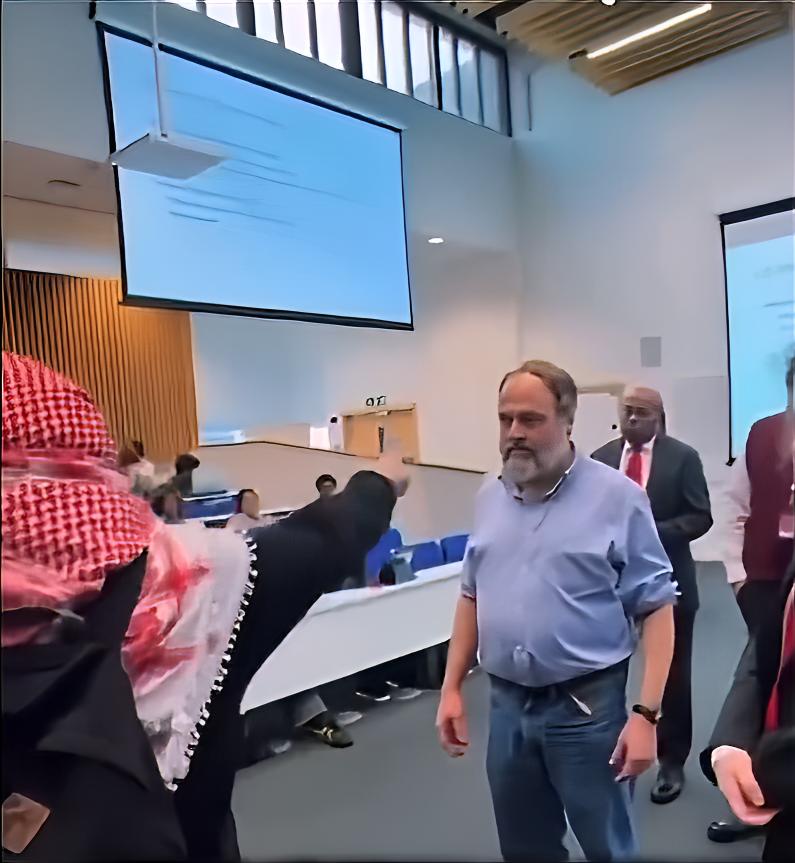
Protests have erupted outside City St George’s University in London against Professor Michael Ben-Gad, a noted economist and member of the faculty, following a campaign targeting his academic freedom and personal history. The recent unrest coincided with the rise of a group calling itself “City Action for Palestine,” which has publicly condemned Ben-Gad for his service in the Israel Defense Forces (IDF) during the early 1980s.
The protests featured professionally produced footage aired by Iranian and Turkish state television, which highlighted disruptions during one of Ben-Gad’s lectures. Demonstrators have accused him of being a “terrorist” and “war criminal” due to his Israeli background, his academic credentials from the Hebrew University of Jerusalem, and his previous roles at the University of Haifa and the Bank of Israel. The protests have grown increasingly intense, demanding his immediate dismissal and an apology to Arab and Muslim students.
Despite the pressure, Ben-Gad has remained resolute. He rejected offers of paid leave, insisting on continuing his lectures and academic duties. His commitment to his role has garnered support from the university’s administration, including Sir Anthony Finkelstein, the institution’s president, who expressed solidarity with Ben-Gad and reached out to other Israeli scholars at the university.
Academic Freedom and Rising Tensions
This incident has sparked a broader discussion about academic freedom in the UK, particularly in light of the recent protests that have characterized campuses since the violent events of October 7, 2023. While many students, including those from Muslim backgrounds, reportedly do not share the sentiments expressed by the protestors, a minority of academics and activist groups appear to influence the narrative.
Concerns about antisemitism on UK campuses have been highlighted in multiple reports over the past decade. The climate of hostility toward individuals questioning dominant progressive views, such as those surrounding colonialism, gender, and race, has intensified. This has led to an environment where rigorous debate is often stifled, and self-censorship becomes commonplace among academics who fear backlash for their beliefs.
Ben-Gad’s situation echoes previous controversies involving academic figures, including the case of Kathleen Stock, who faced significant backlash for her gender-critical views, resulting in her departure from the University of Sussex. This pattern raises alarm regarding the treatment of scholars who hold unpopular opinions.
Legislative Response and Academic Culture
In response to these escalating tensions, the UK government introduced the Higher Education (Freedom of Speech) Act 2023. The legislation aims to protect free speech at universities and address issues such as political discrimination in hiring practices. Critics argue that while the act is a step forward, further guidance is needed to ensure its effectiveness in fostering a genuinely open academic environment.
The impact of political ideology on hiring and promotion within academia has become a pressing issue. Reports suggest that many leading journals and funding bodies exhibit biases favoring specific ideological perspectives, particularly regarding the Israel-Palestine conflict. This has created a precarious landscape for those who wish to present alternative viewpoints or critiques.
Professors have reported incidents where their academic positions have been challenged based on their perceived alignment with certain political ideologies. This has led to a chilling effect on academic discourse, with many feeling pressured to conform to dominant narratives or risk professional repercussions.
As the situation continues to unfold, the ramifications for academic freedom and the integrity of scholarly debate at institutions like City St George’s University remain to be seen. The case of Michael Ben-Gad serves as a poignant reminder of the challenges faced by academics striving to navigate a landscape increasingly fraught with ideological conflict and intolerance.

Church Members Rally Together After Thanksgiving Fire Devastation

U.S. Investment in Canadian Energy Firms Surges Despite Low Oil Prices

Nick Jonas Unveils New Solo Album ‘Sunday Best’ Set for February Release

Researchers Urge Label Changes for Low-Alcohol Drinks to Aid Pregnant Women

Wedding Cookie Table Community Aims for World’s Largest Cookie Exchange

Mayor Appoints Alan Wong as New Supervisor for District 4

UK Report Reveals Growing Role of AI in University Research Assessments

Mayor Lurie Appoints Alan Wong as New District 4 Supervisor

South Korea Strengthens FX Oversight in Urgent Market Stabilization

Urgent Update: Tom Aspinall’s Vision Deteriorates After UFC 321

MIT Scientists Uncover Surprising Genomic Loops During Cell Division

University of Hawaiʻi Joins $25.6M AI Project to Enhance Disaster Monitoring

AI Disruption: AWS Faces Threat as Startups Shift Cloud Focus

Time Crystals Revolutionize Quantum Computing Potential

Honeywell Forecasts Record Business Jet Deliveries Over Next Decade

Discover the Full Map of Pokémon Legends: Z-A’s Lumiose City

GOP Faces Backlash as Protests Surge Against Trump Policies

Parenthood Set to Depart Hulu: What Fans Need to Know
-
 Top Stories1 month ago
Urgent Update: Tom Aspinall’s Vision Deteriorates After UFC 321
-
 Health1 month ago
MIT Scientists Uncover Surprising Genomic Loops During Cell Division
-
Science4 weeks ago
University of Hawaiʻi Joins $25.6M AI Project to Enhance Disaster Monitoring
-
 Top Stories1 month ago
AI Disruption: AWS Faces Threat as Startups Shift Cloud Focus
-
 Science2 months ago
Time Crystals Revolutionize Quantum Computing Potential
-
 World2 months ago
Honeywell Forecasts Record Business Jet Deliveries Over Next Decade
-
 Entertainment1 month ago
Discover the Full Map of Pokémon Legends: Z-A’s Lumiose City
-
 Top Stories2 months ago
GOP Faces Backlash as Protests Surge Against Trump Policies
-
 Entertainment2 months ago
Parenthood Set to Depart Hulu: What Fans Need to Know
-
 Politics2 months ago
Judge Signals Dismissal of Chelsea Housing Case Citing AI Flaws
-

 Sports2 months ago
Yoshinobu Yamamoto Shines in Game 2, Leading Dodgers to Victory
-

 Health2 months ago
Maine Insurers Cut Medicare Advantage Plans Amid Cost Pressures