
Politics
Understanding Vertical Morality: The Christian MAGA Dilemma

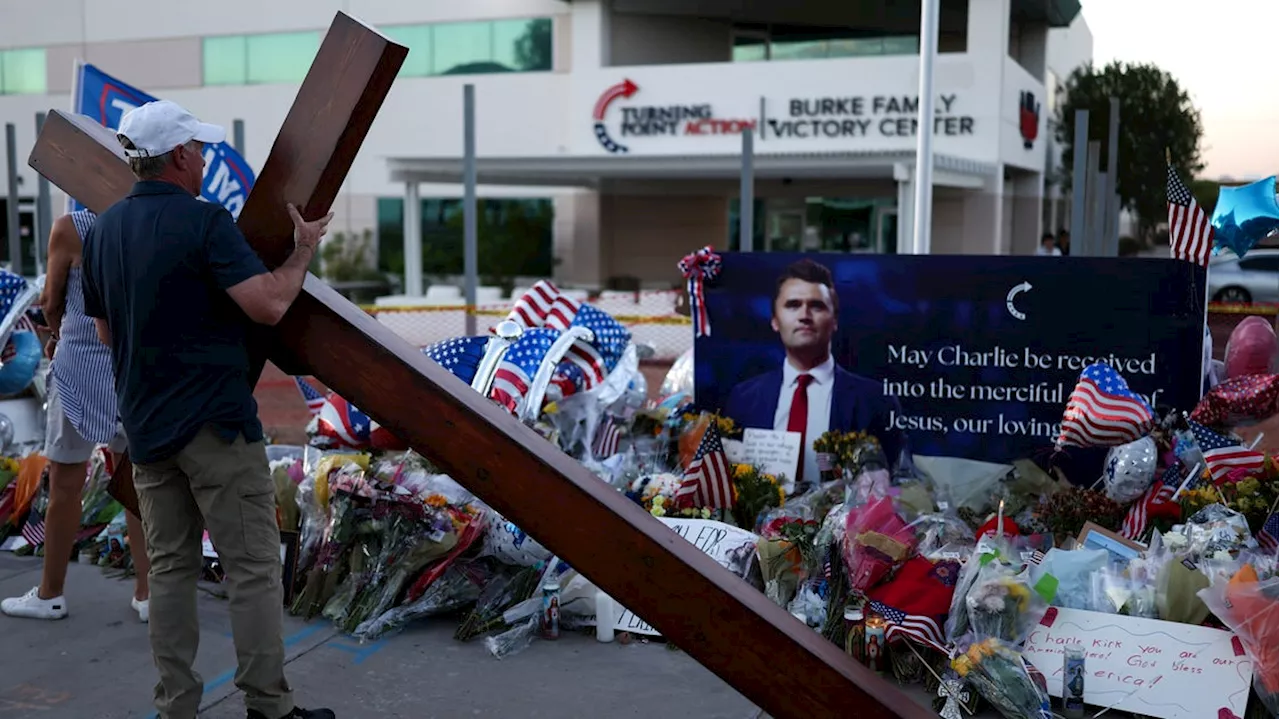
The concept of vertical morality is gaining attention as it seeks to explain the paradox faced by many American Christians who support the MAGA political movement while adhering to teachings of love and mercy attributed to Jesus. This ethical framework suggests that moral behavior is governed by an external authority—often viewed as God—leading to a disconnect between the principles of Christianity and certain political policies.
Many individuals find it perplexing that individuals who profess faith in Jesus, known for his messages of compassion, can endorse policies that marginalize immigrants and demonize LGBTQ communities. This disparity highlights a framework of righteousness that prioritizes adherence to perceived divine commands over empathetic actions towards others.
According to Malynda Hale, executive director of The New Evangelicals, vertical morality dictates that moral behavior is defined by what an external authority deems right or wrong. In a religious context, this authority is often God, while in political realms it may resemble authoritarian leadership. Hale emphasizes that this moral approach can lead to actions justified by a rigid interpretation of divine will, even when such actions contradict the essence of compassion.
Contrasting Vertical and Horizontal Morality
The discussion surrounding vertical morality is accompanied by the contrasting notion of horizontal morality. While vertical morality emphasizes obedience to divine authority, horizontal morality focuses on the well-being of others within communities. Ajoy, a commentator on these ethical perspectives, explains that individuals operating under horizontal morality engage in altruistic behavior based on the needs of those around them, independent of religious justification.
In her analysis, Ajoy points to Matthew 25, where Jesus illustrates that acts of kindness towards those in need are equivalent to serving Him. This teaching reflects the core of horizontal morality, which prioritizes genuine empathy and compassion over mere adherence to rules.
Despite the significance of both frameworks within Christianity, Hale notes that many followers tend to prioritize vertical morality, often neglecting the horizontal aspect that calls for caring for one another. This can lead to justifications for policies that may be harmful to marginalized groups, as evidenced by recent political trends.
The Political Implications of Vertical Morality
The implications of vertical morality on contemporary politics are profound. Ajoy warns that the current climate of conservative Christian nationalism has resulted in a perception of political allies as “good” while opponents are labeled “evil.” This binary view is detrimental, especially when it leads to the justification of divisive and harmful policies.
Levings, a researcher in this field, observes that the emphasis on vertical morality often results in a reliance on Old Testament principles, which can overshadow the more inclusive and compassionate teachings of Jesus. The blend of theonomy—applying ancient laws to modern contexts—has further fueled this trend, creating a political landscape where empathy is frequently sidelined.
As vertical morality continues to influence political discourse, it may desensitize individuals to the suffering of others. The harsh treatment of undocumented immigrants, for instance, is justified through a strict interpretation of laws rather than a compassionate understanding of their circumstances.
Hale articulates that under vertical morality, the worst offense is disobedience to divine law, creating a perspective that can rationalize harsh actions against those deemed as rule-breakers. This stance can lead to a societal acceptance of cruelty, justified by a notion of moral purity that disregards the essence of love and compassion central to Christian teachings.
The consequences of this rigid moral framework extend beyond individual beliefs, shaping public policy and societal attitudes. Ajoy notes that MAGA-aligned Christians often promote harmful narratives about immigrants and marginalized groups, basing such views on a distorted understanding of divine intention.
In conclusion, the framework of vertical morality presents complex challenges for understanding the intersection of faith and politics. As society grapples with these issues, it becomes crucial to examine how these moral perspectives shape not only personal beliefs but also broader social dynamics. By acknowledging the importance of horizontal morality alongside vertical ethics, there is potential for fostering a more inclusive and compassionate society that aligns more closely with the core teachings of Jesus.

Tottenville Falls Short in PSAL 4A Title Game Against Erasmus

Shark Teeth Study Reveals Urgent Clues to Prevent Extinction

Church Members Rally Together After Thanksgiving Fire Devastation

U.S. Investment in Canadian Energy Firms Surges Despite Low Oil Prices

Nick Jonas Unveils New Solo Album ‘Sunday Best’ Set for February Release

Researchers Urge Label Changes for Low-Alcohol Drinks to Aid Pregnant Women

Wedding Cookie Table Community Aims for World’s Largest Cookie Exchange

Mayor Appoints Alan Wong as New Supervisor for District 4

UK Report Reveals Growing Role of AI in University Research Assessments

Urgent Update: Tom Aspinall’s Vision Deteriorates After UFC 321

MIT Scientists Uncover Surprising Genomic Loops During Cell Division

University of Hawaiʻi Joins $25.6M AI Project to Enhance Disaster Monitoring

AI Disruption: AWS Faces Threat as Startups Shift Cloud Focus

Time Crystals Revolutionize Quantum Computing Potential

Honeywell Forecasts Record Business Jet Deliveries Over Next Decade

Discover the Full Map of Pokémon Legends: Z-A’s Lumiose City

GOP Faces Backlash as Protests Surge Against Trump Policies

Parenthood Set to Depart Hulu: What Fans Need to Know
-
 Top Stories1 month ago
Urgent Update: Tom Aspinall’s Vision Deteriorates After UFC 321
-
 Health1 month ago
MIT Scientists Uncover Surprising Genomic Loops During Cell Division
-
Science4 weeks ago
University of Hawaiʻi Joins $25.6M AI Project to Enhance Disaster Monitoring
-
 Top Stories1 month ago
AI Disruption: AWS Faces Threat as Startups Shift Cloud Focus
-
 Science2 months ago
Time Crystals Revolutionize Quantum Computing Potential
-
 World2 months ago
Honeywell Forecasts Record Business Jet Deliveries Over Next Decade
-
 Entertainment1 month ago
Discover the Full Map of Pokémon Legends: Z-A’s Lumiose City
-
 Top Stories2 months ago
GOP Faces Backlash as Protests Surge Against Trump Policies
-
 Entertainment2 months ago
Parenthood Set to Depart Hulu: What Fans Need to Know
-

 Politics2 months ago
Judge Signals Dismissal of Chelsea Housing Case Citing AI Flaws
-

 Sports2 months ago
Yoshinobu Yamamoto Shines in Game 2, Leading Dodgers to Victory
-

 Health2 months ago
Maine Insurers Cut Medicare Advantage Plans Amid Cost Pressures