
Science
Astronomers Conduct First Real Defense Test Against Asteroid Threat

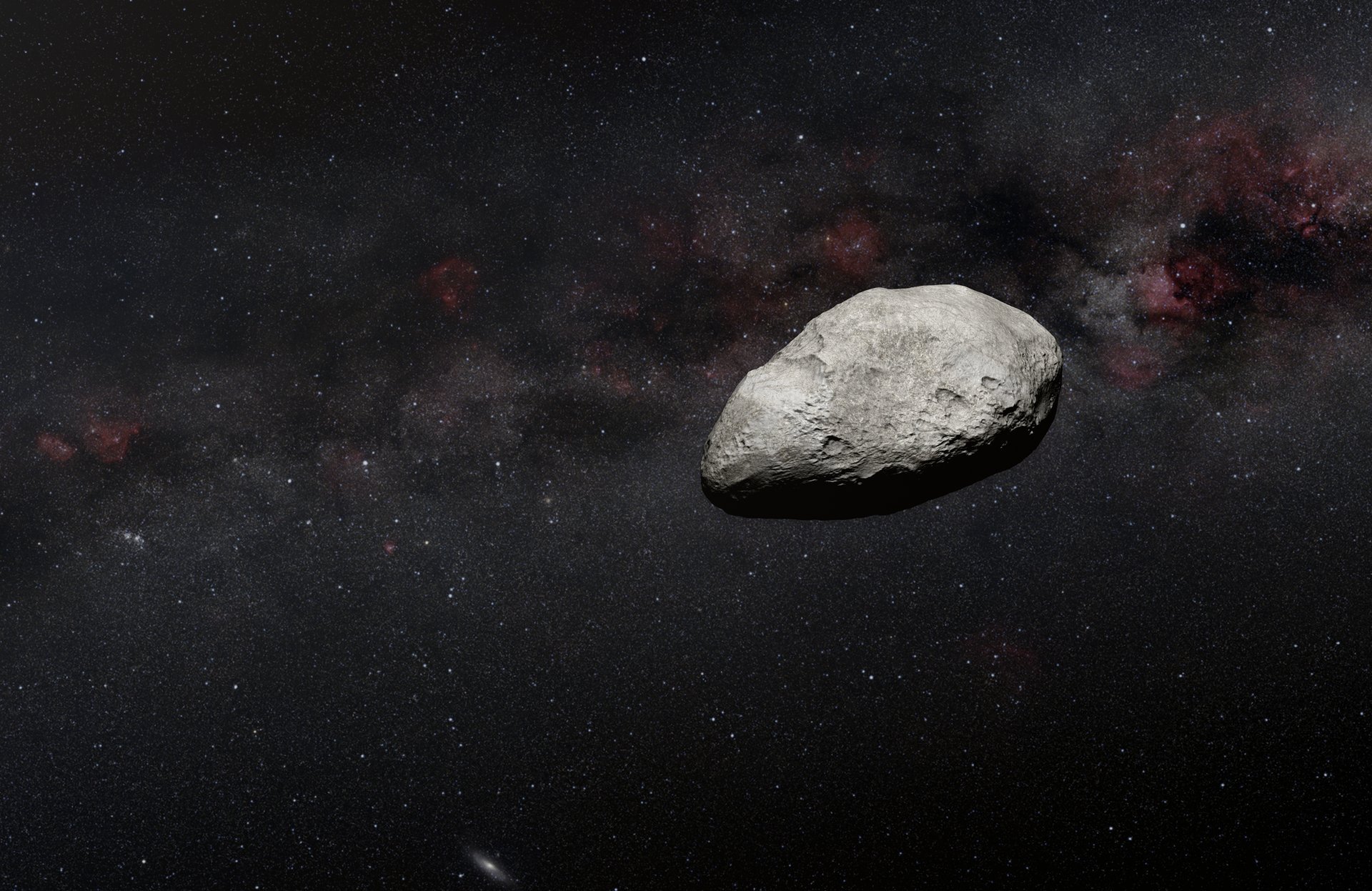
In a significant milestone for planetary defense, astronomers successfully conducted the first real-life test of Earth’s asteroid warning system with the discovery of asteroid 2024 YR4. Detected on December 27, 2024, by the ATLAS survey, the asteroid gained attention in early January 2025 as observations initially indicated an increased chance of impact, a rarity among newly discovered asteroids.
A study led by Maxime Devogèle from the European Space Agency (ESA) delves into the rapid response to this potential threat. The findings, published in a pre-print paper on arXiv, detail the processes of discovery, classification, escalation, and eventual de-escalation of the asteroid’s status. The investigation highlights how the early-warning system functioned as intended, providing crucial insights into future asteroid detection and threat assessment.
The Torino scale, a system established in 1995 by Dr. Richard Binzel of MIT, categorizes asteroids based on their potential impact risk. The scale ranges from 0 (no hazard) to 10 (certain collision). Initially, 2024 YR4 was classified as a Scale 1 (Green), but as additional observations rolled in, its risk assessment escalated to Scale 3 (Orange) by January 27, 2025. This classification indicated a greater than 1% chance of localized destruction.
The uniqueness of 2024 YR4 lies in its trajectory and characteristics. On February 18, 2025, the asteroid reached a 3.1% chance of impact, marking it as the first ever to achieve that level on the Torino scale. While the asteroid’s rating was significant, it did not surpass the historical highest level attributed to asteroid Apophis, which was classified as Scale 4 in 2004.
Following the identification of 2024 YR4, the newly established International Asteroid Warning Network sprang into action. This network, formed in 2014 after the Chelyabinsk event in 2013, was pivotal in coordinating responses to asteroid threats. The high rating of 2024 YR4 prompted a mobilization of astronomers, leading to increased observations and resources, including access to powerful telescopes like the Catalina Sky Survey, Gran Telescopio Canarias, and the Very Large Telescope.
As these advanced instruments focused on 2024 YR4, new insights emerged. The asteroid’s rapid rotation, with a period of just 19.5 minutes, and its classification as either Sq-type or K-type were established, although some debate remains regarding its albedo—reflectivity—based on different observational platforms.
Although the immediate threat of 2024 YR4 has diminished, the planetary defense community faces new concerns. Currently, the asteroid has a ~4% chance of impacting the Moon in 2032, a scenario that could generate debris potentially harmful to satellites in Earth’s orbit.
The successful navigation of the 2024 YR4 incident illustrates the effectiveness of the existing planetary defense protocols. As the international community continues to enhance its understanding of near-Earth objects, the hope is to better prepare for any genuine threats that may arise in the future. The ultimate goal remains to ensure that humanity is better equipped to respond to a potentially catastrophic asteroid impact, moving beyond the fictional portrayals seen in films to a reality where preparedness is paramount.

Church Members Rally Together After Thanksgiving Fire Devastation

U.S. Investment in Canadian Energy Firms Surges Despite Low Oil Prices

Nick Jonas Unveils New Solo Album ‘Sunday Best’ Set for February Release

Researchers Urge Label Changes for Low-Alcohol Drinks to Aid Pregnant Women

Wedding Cookie Table Community Aims for World’s Largest Cookie Exchange

Mayor Appoints Alan Wong as New Supervisor for District 4

UK Report Reveals Growing Role of AI in University Research Assessments

Mayor Lurie Appoints Alan Wong as New District 4 Supervisor

South Korea Strengthens FX Oversight in Urgent Market Stabilization

Urgent Update: Tom Aspinall’s Vision Deteriorates After UFC 321

MIT Scientists Uncover Surprising Genomic Loops During Cell Division

University of Hawaiʻi Joins $25.6M AI Project to Enhance Disaster Monitoring

AI Disruption: AWS Faces Threat as Startups Shift Cloud Focus

Time Crystals Revolutionize Quantum Computing Potential

Honeywell Forecasts Record Business Jet Deliveries Over Next Decade

Discover the Full Map of Pokémon Legends: Z-A’s Lumiose City

GOP Faces Backlash as Protests Surge Against Trump Policies

Parenthood Set to Depart Hulu: What Fans Need to Know
-
 Top Stories1 month ago
Urgent Update: Tom Aspinall’s Vision Deteriorates After UFC 321
-
 Health1 month ago
MIT Scientists Uncover Surprising Genomic Loops During Cell Division
-
Science4 weeks ago
University of Hawaiʻi Joins $25.6M AI Project to Enhance Disaster Monitoring
-
 Top Stories1 month ago
AI Disruption: AWS Faces Threat as Startups Shift Cloud Focus
-
 Science2 months ago
Time Crystals Revolutionize Quantum Computing Potential
-
 World2 months ago
Honeywell Forecasts Record Business Jet Deliveries Over Next Decade
-
 Entertainment1 month ago
Discover the Full Map of Pokémon Legends: Z-A’s Lumiose City
-
 Top Stories2 months ago
GOP Faces Backlash as Protests Surge Against Trump Policies
-
 Entertainment2 months ago
Parenthood Set to Depart Hulu: What Fans Need to Know
-

 Politics2 months ago
Judge Signals Dismissal of Chelsea Housing Case Citing AI Flaws
-

 Sports2 months ago
Yoshinobu Yamamoto Shines in Game 2, Leading Dodgers to Victory
-

 Health2 months ago
Maine Insurers Cut Medicare Advantage Plans Amid Cost Pressures