
Science
Dinosaur Mummies Found with Horse-Like Hooves and Duck Bills

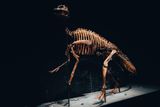
A recent study has revealed fascinating insights into the dinosaur Edmontosaurus annectens, showcasing unique features that include horse-like hooves and duck bills. This research, published in the journal Science, focuses on specimens discovered in Wyoming that have been preserved in a remarkable manner, providing a glimpse into a prehistoric world that existed over 66 million years ago.
These extraordinary fossils are part of what researchers are calling the “mummy zone,” a site where several well-preserved specimens have been found. Unlike typical dinosaur remains characterized by fossilized bones, the E. annectens mummies are encased in a thin layer of clay, offering a rare type of preservation that allows scientists to study details of their anatomy.
Uncovering the Mummification Process
The two notable specimens analyzed in the study include a juvenile around two years old and an early adult estimated to be between five to eight years old. Both were found in the Cretaceous-era Lance Formation. Paleontologists have noted that the bodies of these dinosaurs were remarkably outlined in sediment, a feature that sets them apart from typical fossil finds.
Researchers have determined that the preservation process occurred when a flash flood engulfed the dinosaurs, leading to a biofilm that pulled clay from surrounding sediment to cover their carcasses. While the organic materials eventually degraded, the clay formed a 3D template of the dinosaurs’ shapes. Senior author Paul Sereno, a paleontologist at the University of Chicago, described the clay layer as “so thin you could blow it away,” emphasizing its delicate nature and the unique circumstances that led to this form of preservation.
Unique Anatomical Features
Using advanced imaging techniques such as micro-CT scans and X-ray spectroscopy, researchers detailed several anatomical features of E. annectens. The dinosaur possessed a fleshy crest along its neck and trunk, transitioning into a row of spikes down its tail. Notably, the scales covering its body were small, measuring just 1 to 4 millimeters across, while wrinkles on the ribcage suggest they had thin skin.
Most striking, however, are the hooves of the E. annectens. The research team reconstructed the hooves using CT scans and compared them to 3D images of other duck-billed dinosaur footprints. Each of the three hind toes ended in a wedge-shaped hoof, akin to those of horses, marking a significant discovery in the evolution of hoofed animals. Sereno highlighted these findings, stating, “These duck-billed mummies preserve amazing ‘firsts’—the earliest hooves documented in a land vertebrate and the first confirmed hooved reptile.”
The significance of these findings extends beyond paleontology, offering insights into the evolution of terrestrial vertebrates and their adaptations to environmental changes. This research not only enhances our understanding of E. annectens but also raises questions about the broader implications of dinosaur preservation.
As the study continues to unfold, the discoveries from the “mummy zone” will likely contribute to future research, revealing more about the life and environment of these remarkable dinosaurs. The combination of unique anatomical features and rare preservation methods makes the Edmontosaurus annectens specimens a significant focus for ongoing paleontological study.

Japan’s PM Takaichi Vows Urgent Fiscal Management Amid Rate Trends

Bitcoin Plummets Below $88K Amid Tether Concerns and Warnings

Tottenville Falls Short in PSAL 4A Title Game Against Erasmus

Shark Teeth Study Reveals Urgent Clues to Prevent Extinction

Church Members Rally Together After Thanksgiving Fire Devastation

U.S. Investment in Canadian Energy Firms Surges Despite Low Oil Prices

Nick Jonas Unveils New Solo Album ‘Sunday Best’ Set for February Release

Researchers Urge Label Changes for Low-Alcohol Drinks to Aid Pregnant Women

Wedding Cookie Table Community Aims for World’s Largest Cookie Exchange

Urgent Update: Tom Aspinall’s Vision Deteriorates After UFC 321

MIT Scientists Uncover Surprising Genomic Loops During Cell Division

University of Hawaiʻi Joins $25.6M AI Project to Enhance Disaster Monitoring

AI Disruption: AWS Faces Threat as Startups Shift Cloud Focus

Time Crystals Revolutionize Quantum Computing Potential

Honeywell Forecasts Record Business Jet Deliveries Over Next Decade

Discover the Full Map of Pokémon Legends: Z-A’s Lumiose City

GOP Faces Backlash as Protests Surge Against Trump Policies

Parenthood Set to Depart Hulu: What Fans Need to Know
-
 Top Stories1 month ago
Urgent Update: Tom Aspinall’s Vision Deteriorates After UFC 321
-
 Health1 month ago
MIT Scientists Uncover Surprising Genomic Loops During Cell Division
-
Science4 weeks ago
University of Hawaiʻi Joins $25.6M AI Project to Enhance Disaster Monitoring
-
 Top Stories1 month ago
AI Disruption: AWS Faces Threat as Startups Shift Cloud Focus
-
 Science2 months ago
Time Crystals Revolutionize Quantum Computing Potential
-
 World2 months ago
Honeywell Forecasts Record Business Jet Deliveries Over Next Decade
-
 Entertainment1 month ago
Discover the Full Map of Pokémon Legends: Z-A’s Lumiose City
-
 Top Stories2 months ago
GOP Faces Backlash as Protests Surge Against Trump Policies
-
 Entertainment2 months ago
Parenthood Set to Depart Hulu: What Fans Need to Know
-

 Politics2 months ago
Judge Signals Dismissal of Chelsea Housing Case Citing AI Flaws
-

 Sports2 months ago
Yoshinobu Yamamoto Shines in Game 2, Leading Dodgers to Victory
-

 Health2 months ago
Maine Insurers Cut Medicare Advantage Plans Amid Cost Pressures