
Science
Earth Faces Potential Threat from Taurid Meteor Swarms in 2032, 2036

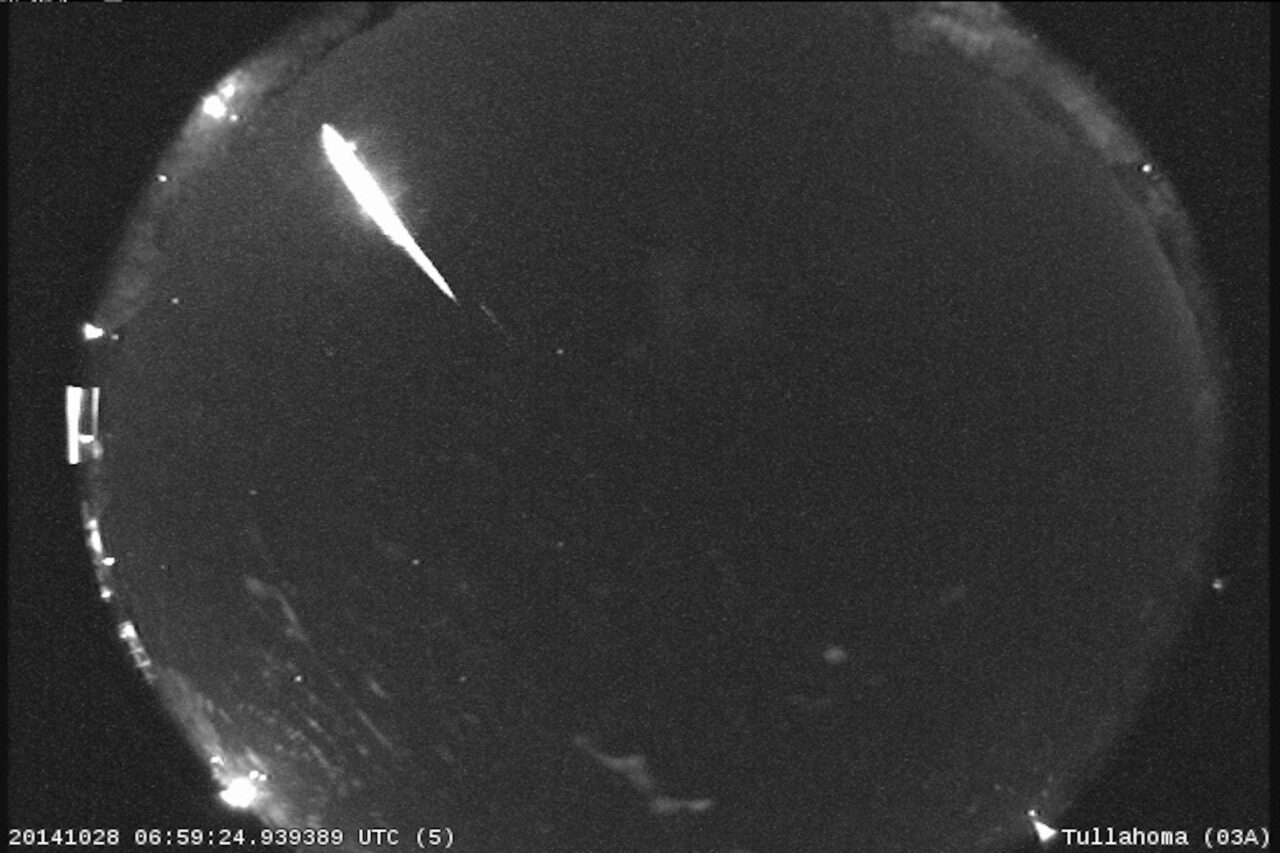
Every autumn, Earth traverses a stream of debris from **Comet Encke**, resulting in spectacular fireballs known as the Taurid meteor shower. This annual event, typically peaking between late October and early November, brings vibrant meteor displays as the planet encounters dense fragments of the comet. However, a new study raises concerns about the potential risk posed by larger fragments during the upcoming years of **2032** and **2036**.
Published in the journal **Acta Astronautica**, the research details the findings of scientists who assessed the hazards associated with these meteors. The study suggests that dense clusters of **Near-Earth Objects** (NEOs) could pose a significant threat if larger pieces were to collide with Earth. The authors argue that while the Taurid meteor shower is an awe-inspiring natural phenomenon, it may also carry a hidden danger.
The Taurid meteor shower originates from **Comet Encke**, which completes an orbit around the Sun approximately every three years. Each time, it leaves behind a trail of dust and rock that Earth intersects twice a year. While the shower typically features smaller particles, every few years, Earth encounters denser clumps that lead to a surge in fireballs visible from the ground.
Researchers utilized observational data and planetary defense modeling to evaluate the risk of air-burst sized NEOs—objects that are small enough to explode in the atmosphere but could still inflict serious damage. They discovered that the likelihood of such events is higher than previously thought.
In particular, the study highlights the possibility of a **Taurid resonant swarm**, consisting of debris influenced by the gravitational pull of **Jupiter**. The Taurid stream has a unique orbital relationship with Jupiter, meaning that some fragments are periodically drawn together, potentially creating clusters capable of increasing impact risks.
Mark Boslough, a researcher at the **University of New Mexico** and lead author of the study, commented on the implications of this theoretical swarm. He noted, “The resonant swarm is theoretical, but there is some evidence that a sparse swarm of small objects exists because bright fireballs and seismic signatures of impacts on the moon have been observed at times that the theory has predicted.”
If this hypothetical swarm does exist, its closest approach to Earth is anticipated in **2032** and **2036**. During these years, the risk of impact from the Taurid meteor shower could elevate, warranting increased observations and preventive measures.
Fortunately, researchers believe there is ample time to monitor these clusters and develop strategies to mitigate any potential damage from a strike. Boslough emphasized the importance of utilizing existing telescopes for targeted surveys during the critical years. He stated, “If we discover the objects with enough warning time, then we can take measures to reduce or eliminate the risk.”
While the average probability of an impact remains extremely low, the researchers acknowledge that an enhanced risk does exist. Boslough added, “The swarm will come from the direction of the sun in 2036, so fireballs will not be seen in our blue skies unless they are extremely bright.”
As the scientific community continues to explore these celestial phenomena, the findings underscore the need for vigilance in monitoring potential threats from near-Earth objects. With advanced technology and proactive observation, humanity may be better prepared to face the cosmic challenges that lie ahead.

Woman Arrested for Threatening U-Haul Worker with Baton

Japan’s PM Takaichi Vows Urgent Fiscal Management Amid Rate Trends

Bitcoin Plummets Below $88K Amid Tether Concerns and Warnings

Tottenville Falls Short in PSAL 4A Title Game Against Erasmus

Shark Teeth Study Reveals Urgent Clues to Prevent Extinction

Church Members Rally Together After Thanksgiving Fire Devastation

U.S. Investment in Canadian Energy Firms Surges Despite Low Oil Prices

Nick Jonas Unveils New Solo Album ‘Sunday Best’ Set for February Release

Researchers Urge Label Changes for Low-Alcohol Drinks to Aid Pregnant Women

Urgent Update: Tom Aspinall’s Vision Deteriorates After UFC 321

MIT Scientists Uncover Surprising Genomic Loops During Cell Division

University of Hawaiʻi Joins $25.6M AI Project to Enhance Disaster Monitoring

AI Disruption: AWS Faces Threat as Startups Shift Cloud Focus

Time Crystals Revolutionize Quantum Computing Potential

Honeywell Forecasts Record Business Jet Deliveries Over Next Decade

Discover the Full Map of Pokémon Legends: Z-A’s Lumiose City

GOP Faces Backlash as Protests Surge Against Trump Policies

Parenthood Set to Depart Hulu: What Fans Need to Know
-
 Top Stories1 month ago
Urgent Update: Tom Aspinall’s Vision Deteriorates After UFC 321
-
 Health1 month ago
MIT Scientists Uncover Surprising Genomic Loops During Cell Division
-
Science4 weeks ago
University of Hawaiʻi Joins $25.6M AI Project to Enhance Disaster Monitoring
-
 Top Stories1 month ago
AI Disruption: AWS Faces Threat as Startups Shift Cloud Focus
-
 Science2 months ago
Time Crystals Revolutionize Quantum Computing Potential
-
 World2 months ago
Honeywell Forecasts Record Business Jet Deliveries Over Next Decade
-
 Entertainment1 month ago
Discover the Full Map of Pokémon Legends: Z-A’s Lumiose City
-
 Top Stories2 months ago
GOP Faces Backlash as Protests Surge Against Trump Policies
-
 Entertainment2 months ago
Parenthood Set to Depart Hulu: What Fans Need to Know
-

 Politics2 months ago
Judge Signals Dismissal of Chelsea Housing Case Citing AI Flaws
-

 Sports2 months ago
Yoshinobu Yamamoto Shines in Game 2, Leading Dodgers to Victory
-

 Health2 months ago
Maine Insurers Cut Medicare Advantage Plans Amid Cost Pressures