
Science
Experts Explore Human-AI Collaboration for Better Diagnoses

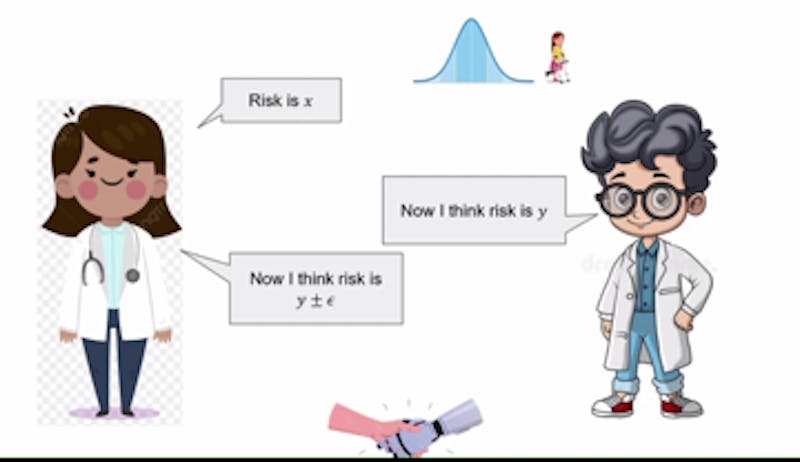
On October 23, 2025, the Whiting School of Engineering’s Department of Computer Science welcomed Aaron Roth, a professor of computer and cognitive science from the University of Pennsylvania, to discuss his research on enhancing collaboration between humans and artificial intelligence (AI). His lecture, titled “Agreement and Alignment for Human-AI Collaboration,” highlighted findings from three academic papers and delved into how AI can assist in critical decision-making processes, particularly in healthcare.
Understanding Human-AI Interaction
With the increasing integration of AI across various sectors, the need to understand its role in human decision-making is crucial. Roth illustrated this need through the example of AI’s potential to aid doctors in diagnosing patients. In this scenario, the AI generates predictions based on various data points, including previous diagnoses and patient symptoms. The physician then evaluates these predictions, drawing from their own expertise.
Should a disagreement arise between the AI’s assessment and the doctor’s judgment, Roth explained that both parties can reassess their positions through a finite number of iterations. This method allows for a synthesis of knowledge, where the AI and doctor integrate their unique insights, ultimately leading to a consensus. Roth referred to this concept as a common prior, where both parties share similar foundational assumptions, even if their specific information differs.
The framework Roth described aligns with what he terms Perfect Bayesian Rationality. In this model, each party is aware of the other’s knowledge base yet lacks complete insight into its specifics. While this model aims for optimal agreement, Roth acknowledged its challenges, such as the difficulty of establishing a common prior and the complexities arising from multi-dimensional topics like hospital diagnostic codes.
The Role of Calibration and Market Dynamics
Roth emphasized the importance of calibration in reaching agreements between AI and human stakeholders. He illustrated this concept using weather forecasting, where calibrating predictions can enhance the accuracy of forecasts. In the context of doctor-AI collaboration, calibration involves the AI refining its predictions based on the doctor’s responses. For example, if an AI estimates a 40% risk associated with a treatment and the physician suggests a 35% risk, the AI’s subsequent assessments would adjust to lie between these two figures, facilitating a quicker consensus.
While the discussion primarily focused on scenarios where both AI and human parties share a common goal, Roth also acknowledged potential conflicts of interest. For instance, if an AI model is developed by a pharmaceutical company, its recommendations may inadvertently favor the company’s products. To mitigate this risk, Roth proposed that doctors consult multiple AI models from various drug companies, encouraging competition among providers. This strategy could lead to more aligned and unbiased AI models, as each company strives to create a model that aligns with physician preferences.
In closing, Roth addressed the notion of real probabilities—those that accurately reflect the complexities of the world. Although precise probabilities are ideal, he noted that in many cases, it suffices to ensure that probabilities are unbiased under specific conditions. By leveraging data effectively, healthcare professionals and AI can collaborate to enhance diagnostic accuracy and treatment decisions.
The exploration of human-AI collaboration remains a critical area of research, particularly as AI continues to permeate various aspects of society. Roth’s insights into agreement and alignment provide a foundation for future advancements in this field.

Shark Teeth Study Reveals Urgent Clues to Prevent Extinction

Church Members Rally Together After Thanksgiving Fire Devastation

U.S. Investment in Canadian Energy Firms Surges Despite Low Oil Prices

Nick Jonas Unveils New Solo Album ‘Sunday Best’ Set for February Release

Researchers Urge Label Changes for Low-Alcohol Drinks to Aid Pregnant Women

Wedding Cookie Table Community Aims for World’s Largest Cookie Exchange

Mayor Appoints Alan Wong as New Supervisor for District 4

UK Report Reveals Growing Role of AI in University Research Assessments

Mayor Lurie Appoints Alan Wong as New District 4 Supervisor

Urgent Update: Tom Aspinall’s Vision Deteriorates After UFC 321

MIT Scientists Uncover Surprising Genomic Loops During Cell Division

University of Hawaiʻi Joins $25.6M AI Project to Enhance Disaster Monitoring

AI Disruption: AWS Faces Threat as Startups Shift Cloud Focus

Time Crystals Revolutionize Quantum Computing Potential

Honeywell Forecasts Record Business Jet Deliveries Over Next Decade

Discover the Full Map of Pokémon Legends: Z-A’s Lumiose City

GOP Faces Backlash as Protests Surge Against Trump Policies

Parenthood Set to Depart Hulu: What Fans Need to Know
-
 Top Stories1 month ago
Urgent Update: Tom Aspinall’s Vision Deteriorates After UFC 321
-
 Health1 month ago
MIT Scientists Uncover Surprising Genomic Loops During Cell Division
-
Science4 weeks ago
University of Hawaiʻi Joins $25.6M AI Project to Enhance Disaster Monitoring
-
 Top Stories1 month ago
AI Disruption: AWS Faces Threat as Startups Shift Cloud Focus
-
 Science2 months ago
Time Crystals Revolutionize Quantum Computing Potential
-
 World2 months ago
Honeywell Forecasts Record Business Jet Deliveries Over Next Decade
-
 Entertainment1 month ago
Discover the Full Map of Pokémon Legends: Z-A’s Lumiose City
-
 Top Stories2 months ago
GOP Faces Backlash as Protests Surge Against Trump Policies
-
 Entertainment2 months ago
Parenthood Set to Depart Hulu: What Fans Need to Know
-

 Politics2 months ago
Judge Signals Dismissal of Chelsea Housing Case Citing AI Flaws
-

 Sports2 months ago
Yoshinobu Yamamoto Shines in Game 2, Leading Dodgers to Victory
-

 Health2 months ago
Maine Insurers Cut Medicare Advantage Plans Amid Cost Pressures