
Science
NTSB Confirms Hull Damage Caused Titan Submersible Implosion

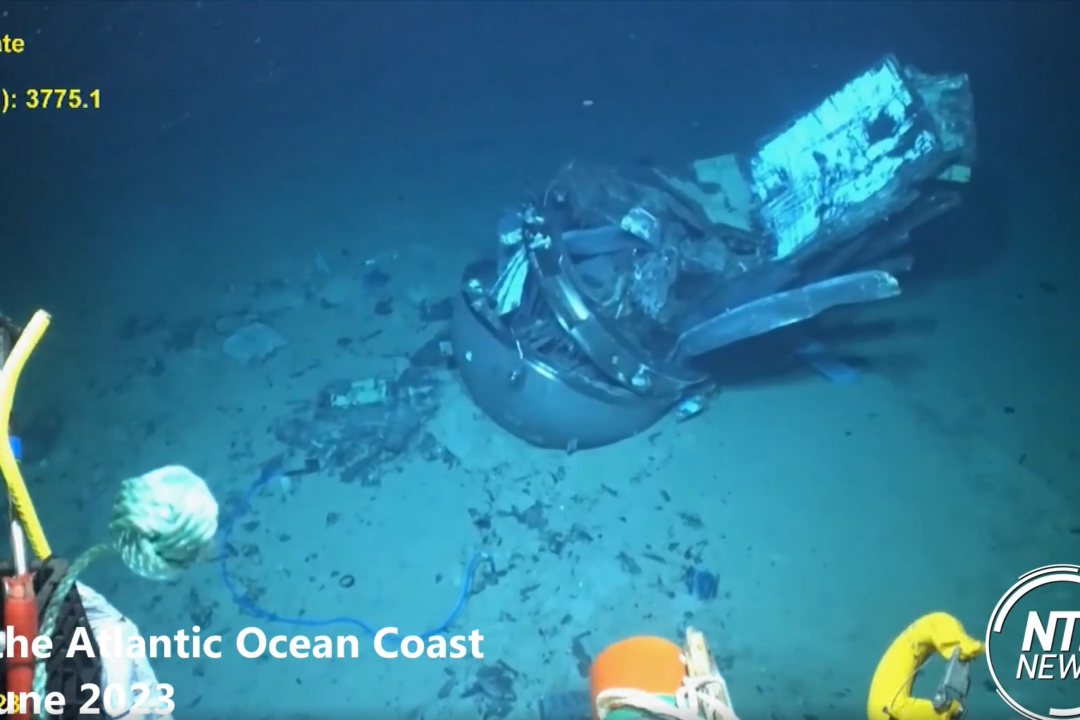
The National Transportation Safety Board (NTSB) has concluded that damage to the hull of the Titan submersible led to its catastrophic implosion during an expedition to the wreckage of the Titanic on June 18, 2023. The incident resulted in the loss of all five individuals aboard the experimental craft, which was designed and built by the private company OceanGate in 2021.
In an official report published on October 15, the NTSB identified the root cause of the hull failure as **OceanGate’s inadequate engineering process**. This process failed to accurately assess the strength and durability of the Titan’s pressure vessel, leading to a tragic outcome during the deep-sea exploration in the North Atlantic Ocean.
The Titan submersible was on a mission to explore the iconic wreck, located approximately 3,800 meters below the ocean’s surface. During its descent, the vessel suffered a structural failure, resulting in an implosion that has raised significant concerns regarding the safety protocols employed in deep-sea exploration.
Investigation Highlights Critical Safety Flaws
The NTSB’s investigation revealed that the engineering practices utilized by OceanGate fell short of industry standards. The report highlighted that the company did not implement sufficient testing or validation to ensure the pressure vessel could withstand the extreme conditions found at such depths.
Furthermore, the NTSB noted that the Titan’s design did not incorporate adequate safety features typically expected in submersibles operating in deep-sea environments. This failure to adhere to established engineering principles has led to calls for stricter regulations and oversight within the rapidly evolving sector of deep-sea exploration.
The incident has prompted discussions about the responsibilities of private companies engaging in high-risk operations. The NTSB has emphasized the need for comprehensive safety measures to protect both crew members and the integrity of exploratory missions.
Reactions from OceanGate and Industry Experts
In response to the NTSB’s findings, OceanGate expressed condolences to the families of the victims and stated that they are committed to enhancing safety measures in their future operations. The company acknowledged the report’s recommendations and has indicated that it will review its engineering processes to prevent similar tragedies in the future.
Industry experts have echoed the NTSB’s concerns, stressing the importance of rigorous testing and compliance with safety standards in deep-sea activities. They argue that as more private entities venture into this domain, there must be a collective effort to prioritize safety and transparency.
As the investigation continues, the implications of this incident are likely to resonate throughout the maritime exploration community. The need for improved engineering practices and regulatory frameworks may shape the future of deep-sea exploration, ensuring that such tragedies are not repeated.

Church Members Rally Together After Thanksgiving Fire Devastation

U.S. Investment in Canadian Energy Firms Surges Despite Low Oil Prices

Nick Jonas Unveils New Solo Album ‘Sunday Best’ Set for February Release

Researchers Urge Label Changes for Low-Alcohol Drinks to Aid Pregnant Women

Wedding Cookie Table Community Aims for World’s Largest Cookie Exchange

Mayor Appoints Alan Wong as New Supervisor for District 4

UK Report Reveals Growing Role of AI in University Research Assessments

Mayor Lurie Appoints Alan Wong as New District 4 Supervisor

South Korea Strengthens FX Oversight in Urgent Market Stabilization

Urgent Update: Tom Aspinall’s Vision Deteriorates After UFC 321

MIT Scientists Uncover Surprising Genomic Loops During Cell Division

University of Hawaiʻi Joins $25.6M AI Project to Enhance Disaster Monitoring

AI Disruption: AWS Faces Threat as Startups Shift Cloud Focus

Time Crystals Revolutionize Quantum Computing Potential

Honeywell Forecasts Record Business Jet Deliveries Over Next Decade

Discover the Full Map of Pokémon Legends: Z-A’s Lumiose City

GOP Faces Backlash as Protests Surge Against Trump Policies

Parenthood Set to Depart Hulu: What Fans Need to Know
-
 Top Stories1 month ago
Urgent Update: Tom Aspinall’s Vision Deteriorates After UFC 321
-
 Health1 month ago
MIT Scientists Uncover Surprising Genomic Loops During Cell Division
-
Science4 weeks ago
University of Hawaiʻi Joins $25.6M AI Project to Enhance Disaster Monitoring
-
 Top Stories1 month ago
AI Disruption: AWS Faces Threat as Startups Shift Cloud Focus
-
 Science2 months ago
Time Crystals Revolutionize Quantum Computing Potential
-
 World2 months ago
Honeywell Forecasts Record Business Jet Deliveries Over Next Decade
-
 Entertainment1 month ago
Discover the Full Map of Pokémon Legends: Z-A’s Lumiose City
-
 Top Stories2 months ago
GOP Faces Backlash as Protests Surge Against Trump Policies
-
 Entertainment2 months ago
Parenthood Set to Depart Hulu: What Fans Need to Know
-

 Politics2 months ago
Judge Signals Dismissal of Chelsea Housing Case Citing AI Flaws
-

 Sports2 months ago
Yoshinobu Yamamoto Shines in Game 2, Leading Dodgers to Victory
-

 Health2 months ago
Maine Insurers Cut Medicare Advantage Plans Amid Cost Pressures