
Science
Research Unveils Secrets of Armenia’s 6,000-Year-Old Dragon Stones

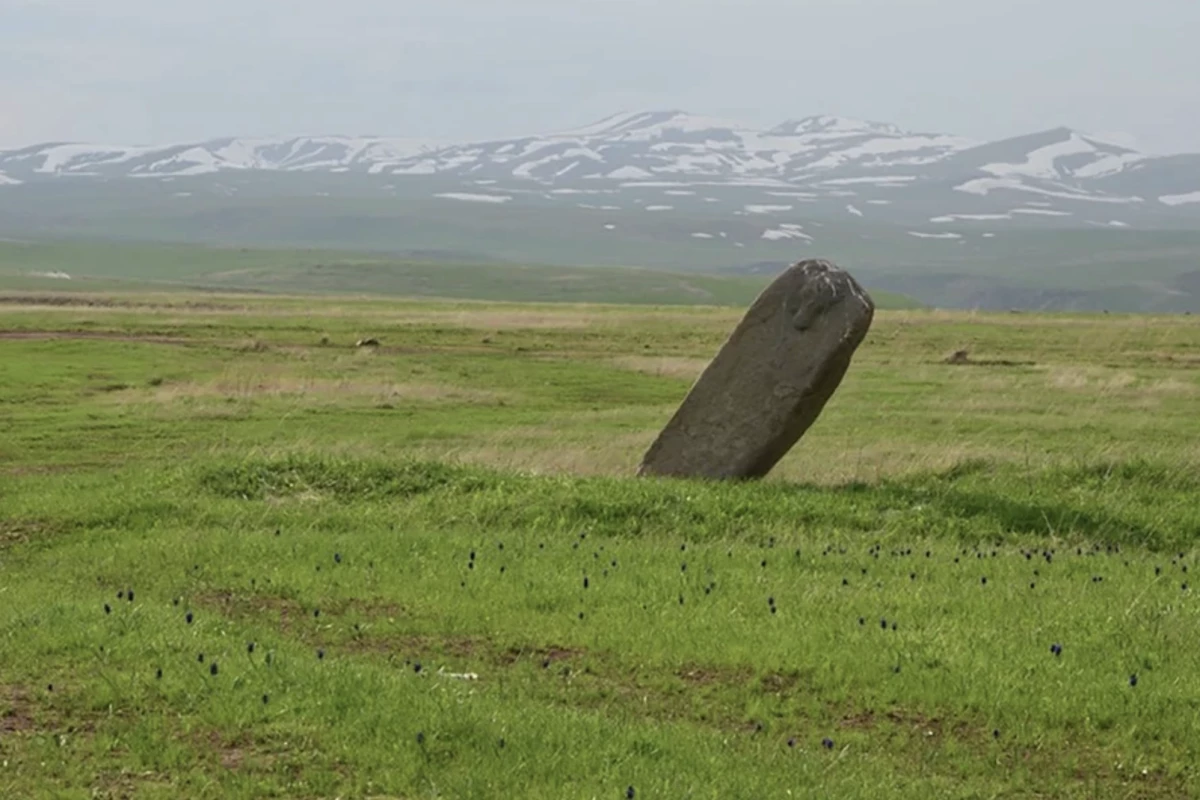
Archaeologists have uncovered new insights into the **6,000-year-old** mystery surrounding Armenia’s **dragon stones**, known locally as **vishaps**. A recent study conducted by researchers from **Yerevan State University** and the **Institute of Archaeology and Ethnography** reveals that these monumental structures were not merely territorial markers or mythological symbols, but rather significant totems of an ancient “water cult” connected to water sources like melting snow streams and springs.
The **dragon stones** are massive carved monoliths located across the high-altitude volcanic slopes of Armenia, often found in areas devoid of ancient settlements. For decades, their purpose has sparked debate among scientists, with this latest research providing the first comprehensive statistical and spatial analysis of **115** known vishaps. The study suggests that these stones were intentionally positioned to reflect a sophisticated understanding of the environment and the importance of water in the lives of early herding communities.
Researchers found that the stones display a remarkable uniformity; each is intricately carved and polished on all sides, except for the “tail” end. This consistent feature suggests that the vishaps were originally erected upright, a detail that has implications for their intended use.
The findings indicate that the vishaps are predominantly located near water sources, such as **alpine springs** and prehistoric irrigation channels. This placement implies that the stones served as markers of significant water points, essential for the survival of herding groups navigating the challenging mountainous terrain.
Insights from the Study
Using advanced techniques including **radiocarbon dating**, elevation mapping, and an assessment of the stones’ typology, researchers established that the vishaps were purposefully distributed across two distinct altitude bands: approximately **1,900 m (6,200 ft)** and **2,700 m (8,900 ft)**. These zones align with different phases of the annual herding cycle and reveal how communities adapted their movements in relation to water availability.
Interestingly, instead of placing these massive stones in lower, more accessible regions, ancient builders transported them to high elevations where they would be more visible. This logistical challenge points to a significant communal effort, suggesting that the construction of these monuments was a coordinated task likely guided by spiritual or cultural motivations.
At the higher elevations, vishaps predominantly feature imagery resembling fish, while those at lower altitudes take the form of cow-hide shapes. This distinction corresponds to the seasonal movements of herders and livestock, further supporting the notion that these monuments were integral to the community’s water-related rituals.
A Deeper Understanding of Cultural Significance
The study emphasizes that the vishaps were not mere decorative objects but rather significant elements of a prehistoric water cult. The researchers argue that the consistent association of the stones with water sources and their elaborate craftsmanship reflect a widespread belief system that revered water as sacred.
According to the study, **radiocarbon dating** from the archaeological site of **Tirinkatar** on **Mount Aragats** indicates that some vishaps date back as far as **4200-4000 BCE**. This timeline places the emergence of this water-focused ritual system well before the construction of prominent megaliths like **Stonehenge**, which began at least **1,000 years later**.
The researchers conclude that the clustering of vishaps at specific altitudes likely correlates with seasonal migration patterns or pilgrimages, reflecting the cultural importance of water in ancient Armenian society. Their findings enhance our understanding of high-altitude archaeological sites and the complex social structures that shaped prehistoric communities in the region.
This research provides a compelling narrative of the dragon stones, uncovering their role as revered markers of an ancient belief system centered around water. As the study reveals, the presence of these monumental stones across Armenia’s alpine landscape is not just a testament to human ingenuity but also a reflection of the deep cultural connections early societies had with their environment.

LAPD’s Jaywalking Crackdown Sparks Outrage and Debate Online

Urgent Arrest: 19-Year-Old Linked to Juvenile Drug Delivery Service

Florida Gators 2026 Football Schedule Finally Unveiled – Key Dates Inside!

New Study Reveals Benefits and Risks of Plant-Based Diets in Children

Community Mourns as S. Chris “Sonny” Nicosia Passes at 86

Wilton Resources Shares Surge 29.5% in Active Trading Session

Research Unveils Secrets of Armenia’s 6,000-Year-Old Dragon Stones

NWSL Considers New Policy for Signing Players Beyond Salary Cap

NTSB Blames Pilot Error in Southwest Airlines Taxiway Incident

Urgent Update: Tom Aspinall’s Vision Deteriorates After UFC 321

University of Hawaiʻi Joins $25.6M AI Project to Enhance Disaster Monitoring

MIT Scientists Uncover Surprising Genomic Loops During Cell Division

AI Disruption: AWS Faces Threat as Startups Shift Cloud Focus

Time Crystals Revolutionize Quantum Computing Potential

Discover the Full Map of Pokémon Legends: Z-A’s Lumiose City

Parenthood Set to Depart Hulu: What Fans Need to Know

GOP Faces Backlash as Protests Surge Against Trump Policies

Judge Signals Dismissal of Chelsea Housing Case Citing AI Flaws
-
 Top Stories1 month ago
Urgent Update: Tom Aspinall’s Vision Deteriorates After UFC 321
-
Science1 month ago
University of Hawaiʻi Joins $25.6M AI Project to Enhance Disaster Monitoring
-
 Health2 months ago
MIT Scientists Uncover Surprising Genomic Loops During Cell Division
-
 Top Stories2 months ago
AI Disruption: AWS Faces Threat as Startups Shift Cloud Focus
-
 Science2 months ago
Time Crystals Revolutionize Quantum Computing Potential
-
 Entertainment2 months ago
Discover the Full Map of Pokémon Legends: Z-A’s Lumiose City
-
 Entertainment2 months ago
Parenthood Set to Depart Hulu: What Fans Need to Know
-
 Top Stories2 months ago
GOP Faces Backlash as Protests Surge Against Trump Policies
-
 Politics2 months ago
Judge Signals Dismissal of Chelsea Housing Case Citing AI Flaws
-

 World2 months ago
Honeywell Forecasts Record Business Jet Deliveries Over Next Decade
-

 Sports2 months ago
Yoshinobu Yamamoto Shines in Game 2, Leading Dodgers to Victory
-

 Health2 months ago
Maine Insurers Cut Medicare Advantage Plans Amid Cost Pressures