
Science
Researchers Identify Nearby Super-Earth as Key Target for Life

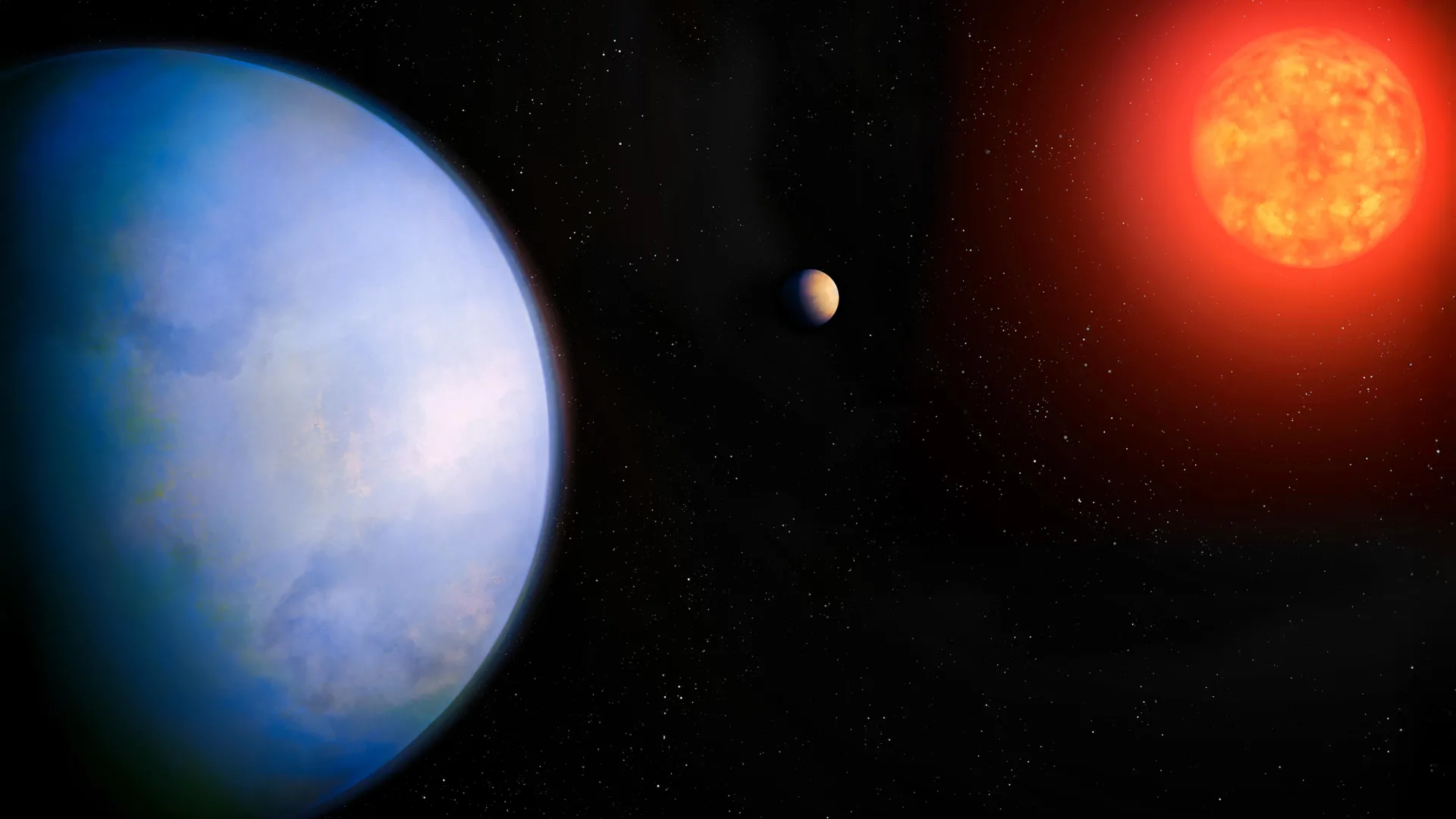
A team of astronomers from the University of California – Irvine has discovered a super-Earth located in the habitable zone of an M-dwarf star, situated approximately 18 light-years from Earth. This planet, designated GJ 251 c, has garnered attention as a prime candidate in the ongoing search for extraterrestrial life, owing to its potential to support liquid water, an essential ingredient for life as we know it.
The findings, published on November 23, 2025, in *The Astronomical Journal*, highlight the significance of this discovery, particularly due to the planet’s proximity to our solar system. Co-author Paul Robertson, an associate professor of physics and astronomy at UC Irvine, noted, “What makes this especially valuable is that its host star is close by. Cosmically speaking, it’s practically next door.”
Characteristics of the Super-Earth
GJ 251 c orbits an M-dwarf star, which is one of the most common types of stars in the galaxy. These stars are known for their significant stellar activity, including starspots and flares, which can complicate the detection of orbiting planets. The gravitational pull of GJ 251 c creates small, measurable shifts in the light emitted by its star, a phenomenon known as radial velocity.
Despite the challenges posed by the star’s activity, the planet’s rocky nature and potential for liquid water render it a compelling target for further study. The research team utilized advanced instruments, including the Habitable-zone Planet Finder and NEID, both of which are designed to detect exoplanets through precise measurements of stellar light.
Future Observations and Implications
The potential for direct imaging of GJ 251 c is promising, especially with the development of the Thirty Meter Telescope (TMT). This next-generation telescope aims to provide the necessary resolution to observe distant exoplanets and assess their characteristics, including the presence of water. Lead author Corey Beard, a data scientist at Design West Technologies and former graduate student in Robertson’s group, emphasized the telescope’s capabilities, stating, “TMT will be the only telescope with sufficient resolution to image exoplanets like this one.”
As the research progresses, the team acknowledges the importance of community engagement and investment in future studies. They hope to inspire further exploration of GJ 251 c, particularly as new observatories come online.
The research received support from various funding sources, including the National Science Foundation and NASA, highlighting the collaborative effort involved in this groundbreaking work. Collaborators from institutions such as Pennsylvania State University, UCLA, and the University of Colorado, Boulder contributed to the study, reflecting a robust network of expertise in the field.
With this discovery, astronomers are one step closer to understanding the potential for life beyond our planet, marking an exciting chapter in the exploration of the universe.

U.S. Investment in Canadian Energy Firms Surges Despite Low Oil Prices

Nick Jonas Unveils New Solo Album ‘Sunday Best’ Set for February Release

Researchers Urge Label Changes for Low-Alcohol Drinks to Aid Pregnant Women

Wedding Cookie Table Community Aims for World’s Largest Cookie Exchange

Mayor Appoints Alan Wong as New Supervisor for District 4

UK Report Reveals Growing Role of AI in University Research Assessments

Mayor Lurie Appoints Alan Wong as New District 4 Supervisor

South Korea Strengthens FX Oversight in Urgent Market Stabilization

U.S. Climate Stance Sparks Global Call for Action and Tariffs

Urgent Update: Tom Aspinall’s Vision Deteriorates After UFC 321

MIT Scientists Uncover Surprising Genomic Loops During Cell Division

University of Hawaiʻi Joins $25.6M AI Project to Enhance Disaster Monitoring

AI Disruption: AWS Faces Threat as Startups Shift Cloud Focus

Time Crystals Revolutionize Quantum Computing Potential

Honeywell Forecasts Record Business Jet Deliveries Over Next Decade

Discover the Full Map of Pokémon Legends: Z-A’s Lumiose City

GOP Faces Backlash as Protests Surge Against Trump Policies

Parenthood Set to Depart Hulu: What Fans Need to Know
-
 Top Stories1 month ago
Urgent Update: Tom Aspinall’s Vision Deteriorates After UFC 321
-
 Health1 month ago
MIT Scientists Uncover Surprising Genomic Loops During Cell Division
-
Science4 weeks ago
University of Hawaiʻi Joins $25.6M AI Project to Enhance Disaster Monitoring
-
 Top Stories1 month ago
AI Disruption: AWS Faces Threat as Startups Shift Cloud Focus
-
 Science2 months ago
Time Crystals Revolutionize Quantum Computing Potential
-
 World2 months ago
Honeywell Forecasts Record Business Jet Deliveries Over Next Decade
-
 Entertainment1 month ago
Discover the Full Map of Pokémon Legends: Z-A’s Lumiose City
-
 Top Stories2 months ago
GOP Faces Backlash as Protests Surge Against Trump Policies
-
 Entertainment2 months ago
Parenthood Set to Depart Hulu: What Fans Need to Know
-

 Politics2 months ago
Judge Signals Dismissal of Chelsea Housing Case Citing AI Flaws
-

 Sports2 months ago
Yoshinobu Yamamoto Shines in Game 2, Leading Dodgers to Victory
-

 Health2 months ago
Maine Insurers Cut Medicare Advantage Plans Amid Cost Pressures