
Science
Researchers Launch Space Experiment to Study Mayonnaise and Soft Matter

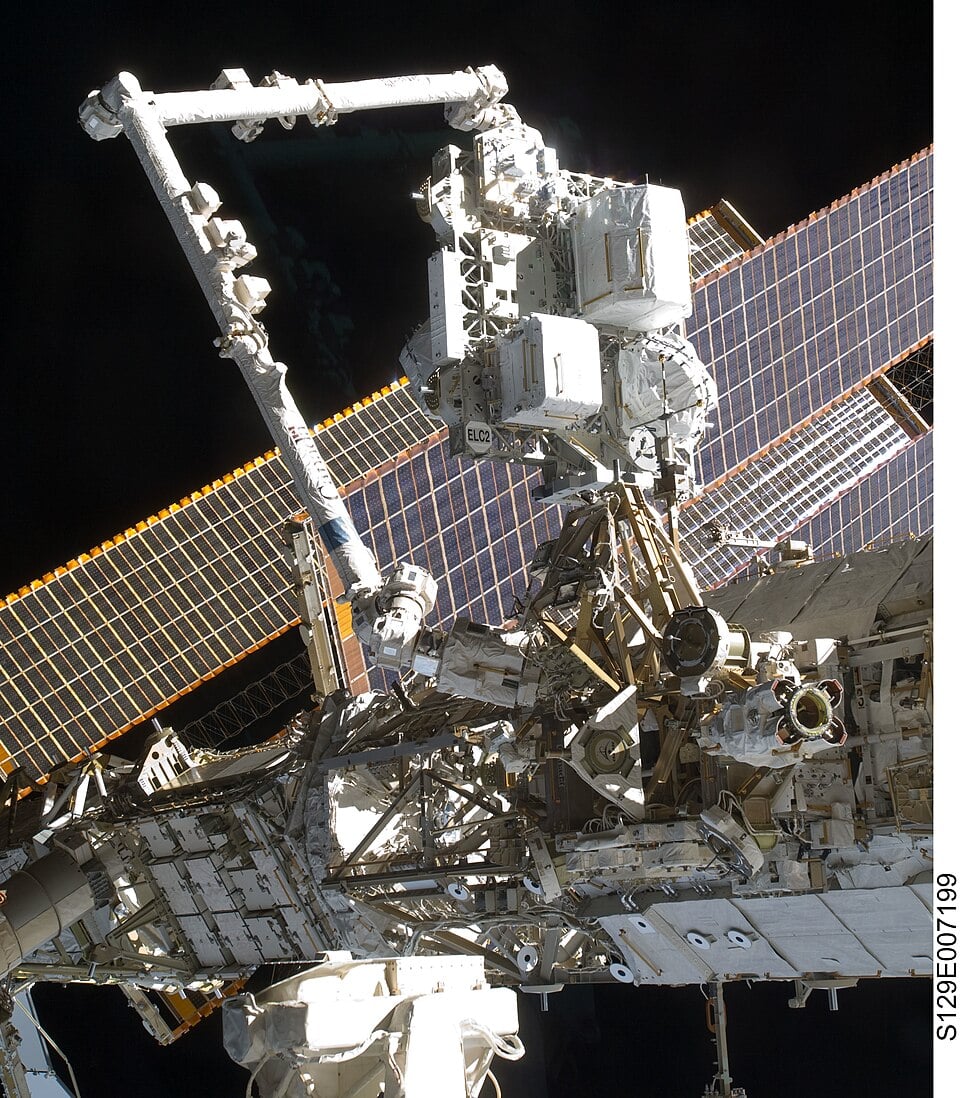
Scientists are investigating the behavior of soft matter in space, focusing on materials like mayonnaise, creams, and gels that undergo gradual changes over time. A team from Politecnico di Milano and Université de Montpellier has established a new experimental facility named COLIS aboard the International Space Station (ISS). This unique laboratory aims to understand how gravity influences the internal structure of these materials, a challenge that has long complicated such studies on Earth.
Soft matter includes substances such as gels, foams, and colloids, which gradually alter their internal organization. On Earth, gravity affects how particles within these materials settle and rearrange, making it difficult to observe their true behavior. The research team, led by physicists Luca Cipelletti from the Laboratoire Charles Coulomb and Roberto Piazza from the Soft Matter laboratory at Politecnico di Milano, is utilizing the microgravity environment of the ISS to eliminate this gravitational influence.
Breakthroughs in Soft Matter Research
COLIS employs advanced optical techniques to analyze materials without disturbing them. Using dynamic light scattering, the facility examines how laser beams pass through samples, revealing minute variations known as speckle patterns. These patterns indicate how gels and other soft materials change over time. Additionally, researchers can carefully heat samples to initiate aging processes in controlled ways, allowing them to observe molecular-level changes.
Early findings from COLIS have already yielded unexpected results. The impact of gravity on soft matter structure appears to be more significant than initially anticipated, affecting material properties even over extended periods. This insight is crucial for various industries. Pharmaceutical companies require drugs that maintain stability for years, cosmetics manufacturers seek creams that do not separate, and food producers need emulsions that stay consistent during distribution and storage.
Understanding how these substances behave in a weightless environment could transform formulation design across these sectors. As COLIS continues its work, it is currently analyzing samples of colloidal nanoparticles, which are particularly well-suited for studying internal reorganization and aging.
Collaboration and Future Implications
The COLIS project is part of the European Space Agency’s “Colloids in Space” program and is supported by both the Italian Space Agency and the French Space Agency. The collaboration represents over 25 years of research and development in the field of soft matter physics.
As scientists delve deeper into the complexities of soft materials in microgravity, the potential applications for this research may extend far beyond basic science. The ability to predict how materials will behave over time could lead to advancements in product stability and quality across multiple industries. By shedding light on the behavior of materials like mayonnaise in space, researchers are not only expanding our understanding of soft matter but also paving the way for innovations that could enhance everyday products on Earth.

Shocking ‘Stranger Things 5’ Twist Revealed: Will Becomes Sorcerer

Financial Advisor Calls 401(k)s ‘Money Jail,’ Urges New Strategies

Regional Income Inequality Insights Offer Solutions for Global Gaps

Susan Lucci Discusses Decision to Keep Long Island Home

Eurozone GDP Surges 0.3% in Q3, Defying Expectations

Dog Park Etiquette Sparks Dispute Over Owner’s Behavior

Charleston County Council Modifies Zoning Plan for Ten Mile Community

Researchers Launch Space Experiment to Study Mayonnaise and Soft Matter

Urgent: Miss Manners Tackles Hostess Dilemmas in Family Gatherings

Urgent Update: Tom Aspinall’s Vision Deteriorates After UFC 321

University of Hawaiʻi Joins $25.6M AI Project to Enhance Disaster Monitoring

MIT Scientists Uncover Surprising Genomic Loops During Cell Division

AI Disruption: AWS Faces Threat as Startups Shift Cloud Focus

Time Crystals Revolutionize Quantum Computing Potential

Parenthood Set to Depart Hulu: What Fans Need to Know

Discover the Full Map of Pokémon Legends: Z-A’s Lumiose City

Honeywell Forecasts Record Business Jet Deliveries Over Next Decade

GOP Faces Backlash as Protests Surge Against Trump Policies
-
 Top Stories1 month ago
Urgent Update: Tom Aspinall’s Vision Deteriorates After UFC 321
-
Science1 month ago
University of Hawaiʻi Joins $25.6M AI Project to Enhance Disaster Monitoring
-
 Health2 months ago
MIT Scientists Uncover Surprising Genomic Loops During Cell Division
-
 Top Stories2 months ago
AI Disruption: AWS Faces Threat as Startups Shift Cloud Focus
-
 Science2 months ago
Time Crystals Revolutionize Quantum Computing Potential
-
 Entertainment2 months ago
Parenthood Set to Depart Hulu: What Fans Need to Know
-
 Entertainment2 months ago
Discover the Full Map of Pokémon Legends: Z-A’s Lumiose City
-
 World2 months ago
Honeywell Forecasts Record Business Jet Deliveries Over Next Decade
-
 Top Stories2 months ago
GOP Faces Backlash as Protests Surge Against Trump Policies
-

 Politics2 months ago
Judge Signals Dismissal of Chelsea Housing Case Citing AI Flaws
-

 Health2 months ago
Maine Insurers Cut Medicare Advantage Plans Amid Cost Pressures
-

 Sports2 months ago
Yoshinobu Yamamoto Shines in Game 2, Leading Dodgers to Victory