
Science
Researchers Unveil First Gap-Free Mung Bean Genome, Unlocking Breeding Insights

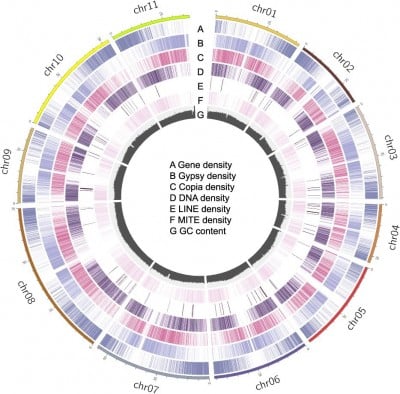
A team of researchers has successfully mapped the first complete telomere-to-telomere (T2T) genome of the mung bean, or Vigna radiata. This groundbreaking achievement provides critical insights into the plant’s domestication and adaptation processes. By employing advanced sequencing technologies, the study reveals how structural variations in the genome have affected key traits such as plant architecture, stress response, and metabolic pathways.
Utilizing a combination of PacBio HiFi, Oxford Nanopore, and Hi-C sequencing technologies, the research team identified significant genetic changes that have occurred throughout the evolution of the mung bean. These changes are crucial for understanding how the species has adapted to different environments and agricultural practices over time.
Key Genetic Discoveries and Implications for Breeding
The comprehensive genome analysis indicates that the amplification of transposable elements has played a pivotal role in reshaping gene expression in the mung bean. Notably, genes associated with fatty acid synthesis, suberin formation, and phenylpropanoid metabolism have experienced strong selection pressure. These findings underline the potential for targeted breeding strategies aimed at enhancing yield and resilience in mung bean cultivation.
The research not only sheds light on the evolutionary history of mung beans but also lays a valuable foundation for future molecular breeding efforts. By understanding the genetic underpinnings of desirable traits, scientists can develop improved varieties that are better suited to withstand environmental challenges and meet the demands of a growing global population.
The work, which represents a significant advancement in plant genomics, is expected to have far-reaching implications for agricultural practices. As the demand for sustainable food sources increases, leveraging such genetic insights will be critical in optimizing crop performance and ensuring food security.
This study highlights the importance of collaboration and innovation in agricultural research, demonstrating how cutting-edge genomic technologies can enhance our understanding of plant evolution and breeding potential. The findings are set to inspire further research into other crops, paving the way for advancements in sustainable agriculture.

Japan’s PM Takaichi Vows Urgent Fiscal Management Amid Rate Trends

Bitcoin Plummets Below $88K Amid Tether Concerns and Warnings

Tottenville Falls Short in PSAL 4A Title Game Against Erasmus

Shark Teeth Study Reveals Urgent Clues to Prevent Extinction

Church Members Rally Together After Thanksgiving Fire Devastation

U.S. Investment in Canadian Energy Firms Surges Despite Low Oil Prices

Nick Jonas Unveils New Solo Album ‘Sunday Best’ Set for February Release

Researchers Urge Label Changes for Low-Alcohol Drinks to Aid Pregnant Women

Wedding Cookie Table Community Aims for World’s Largest Cookie Exchange

Urgent Update: Tom Aspinall’s Vision Deteriorates After UFC 321

MIT Scientists Uncover Surprising Genomic Loops During Cell Division

University of Hawaiʻi Joins $25.6M AI Project to Enhance Disaster Monitoring

AI Disruption: AWS Faces Threat as Startups Shift Cloud Focus

Time Crystals Revolutionize Quantum Computing Potential

Honeywell Forecasts Record Business Jet Deliveries Over Next Decade

Discover the Full Map of Pokémon Legends: Z-A’s Lumiose City

GOP Faces Backlash as Protests Surge Against Trump Policies

Parenthood Set to Depart Hulu: What Fans Need to Know
-
 Top Stories1 month ago
Urgent Update: Tom Aspinall’s Vision Deteriorates After UFC 321
-
 Health1 month ago
MIT Scientists Uncover Surprising Genomic Loops During Cell Division
-
Science4 weeks ago
University of Hawaiʻi Joins $25.6M AI Project to Enhance Disaster Monitoring
-
 Top Stories1 month ago
AI Disruption: AWS Faces Threat as Startups Shift Cloud Focus
-
 Science2 months ago
Time Crystals Revolutionize Quantum Computing Potential
-
 World2 months ago
Honeywell Forecasts Record Business Jet Deliveries Over Next Decade
-
 Entertainment1 month ago
Discover the Full Map of Pokémon Legends: Z-A’s Lumiose City
-
 Top Stories2 months ago
GOP Faces Backlash as Protests Surge Against Trump Policies
-
 Entertainment2 months ago
Parenthood Set to Depart Hulu: What Fans Need to Know
-

 Politics2 months ago
Judge Signals Dismissal of Chelsea Housing Case Citing AI Flaws
-

 Sports2 months ago
Yoshinobu Yamamoto Shines in Game 2, Leading Dodgers to Victory
-

 Health2 months ago
Maine Insurers Cut Medicare Advantage Plans Amid Cost Pressures