
Science
Scientists Unlock Genetic Breakthrough to Triple Wheat Yields

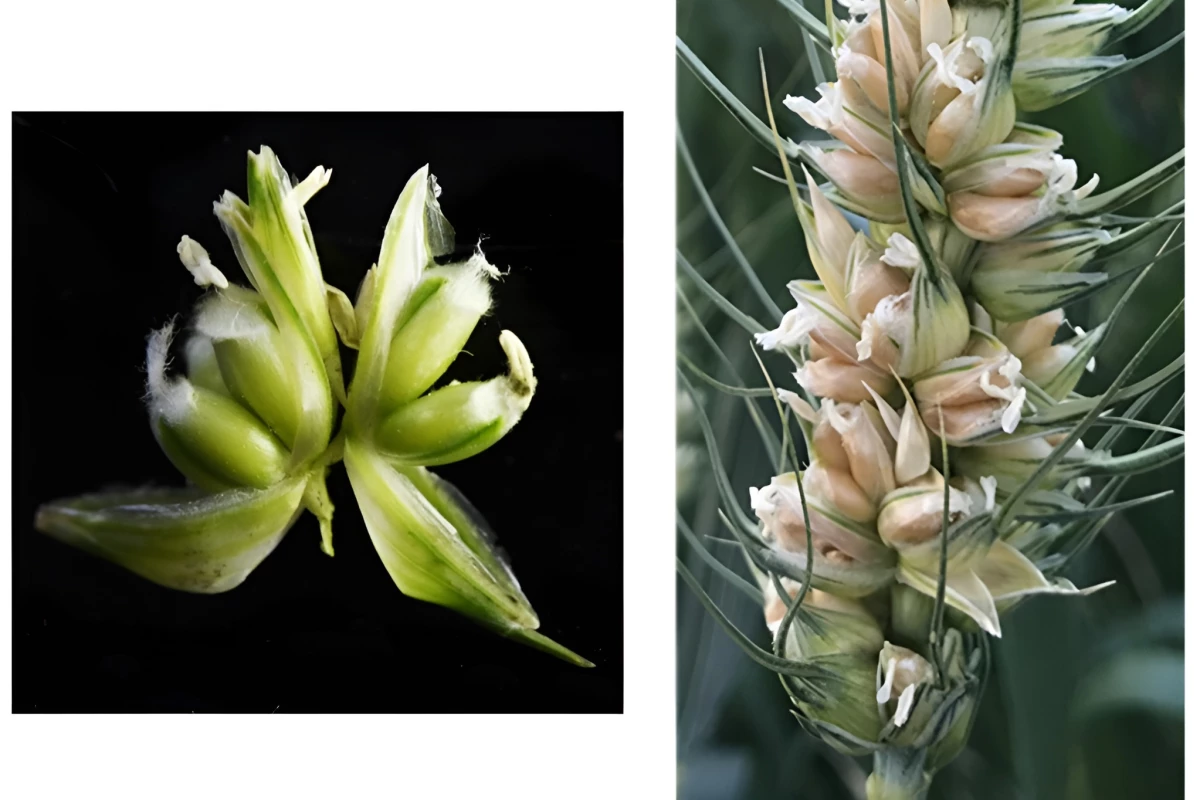
A significant breakthrough in agricultural science could lead to a threefold increase in wheat grain yields without requiring additional land, water, or fertilizer. Researchers from the University of Maryland have identified a genetic mechanism that allows certain mutant wheat plants to produce multiple grains from a single flower, potentially revolutionizing wheat cultivation.
Typically, each “floret” in a standard wheat plant produces one ovary, resulting in a single grain. However, some mutant plants known as MOV (multi-ovary) exhibit the ability to produce up to three ovaries per floret, which allows for potentially three grains instead of just one. Despite the promise of this trait, the underlying genetic cause remained elusive until now.
In a recent study published in the Proceedings of the National Academy of Sciences, the scientists mapped the DNA of MOV wheat and compared it with that of conventional bread wheat. Their research revealed that a dormant gene known as WUSCHEL-D1 (WUS-D1) is activated in MOV wheat. This gene plays a crucial role in enhancing the development of tissues responsible for producing additional female flower parts, such as pistils and ovaries.
Implications for Wheat Breeding
The activation of the WUS-D1 gene presents an exciting opportunity for wheat breeders. By incorporating this genetic insight, researchers aim to develop new wheat varieties that yield a greater number of grains per spike. According to Assoc. Prof. Vijay Tiwari, co-author of the study, “Pinpointing the genetic basis of this trait offers a path for breeders to incorporate it into new wheat varieties, potentially increasing the number of grains per spike and overall yield.”
The implications of this discovery could be significant for global food production, particularly in regions facing food security challenges. By utilizing advanced gene editing techniques, scientists can focus on enhancing this trait, paving the way for more productive and resilient wheat crops.
As the world grapples with the challenges of feeding a growing population, breakthroughs like this in agricultural science underscore the importance of continued research and innovation. The potential to produce more grain with existing resources could have far-reaching effects on global food supply and agricultural sustainability.
This research not only highlights the intersection of genetics and agriculture but also represents a critical step towards ensuring food security in an ever-changing climate. As efforts continue to refine and implement these genetic advancements, the agricultural sector may soon witness a transformative shift in wheat production capabilities.

Tottenville Falls Short in PSAL 4A Title Game Against Erasmus

Shark Teeth Study Reveals Urgent Clues to Prevent Extinction

Church Members Rally Together After Thanksgiving Fire Devastation

U.S. Investment in Canadian Energy Firms Surges Despite Low Oil Prices

Nick Jonas Unveils New Solo Album ‘Sunday Best’ Set for February Release

Researchers Urge Label Changes for Low-Alcohol Drinks to Aid Pregnant Women

Wedding Cookie Table Community Aims for World’s Largest Cookie Exchange

Mayor Appoints Alan Wong as New Supervisor for District 4

UK Report Reveals Growing Role of AI in University Research Assessments

Urgent Update: Tom Aspinall’s Vision Deteriorates After UFC 321

MIT Scientists Uncover Surprising Genomic Loops During Cell Division

University of Hawaiʻi Joins $25.6M AI Project to Enhance Disaster Monitoring

AI Disruption: AWS Faces Threat as Startups Shift Cloud Focus

Time Crystals Revolutionize Quantum Computing Potential

Honeywell Forecasts Record Business Jet Deliveries Over Next Decade

Discover the Full Map of Pokémon Legends: Z-A’s Lumiose City

GOP Faces Backlash as Protests Surge Against Trump Policies

Parenthood Set to Depart Hulu: What Fans Need to Know
-
 Top Stories1 month ago
Urgent Update: Tom Aspinall’s Vision Deteriorates After UFC 321
-
 Health1 month ago
MIT Scientists Uncover Surprising Genomic Loops During Cell Division
-
Science4 weeks ago
University of Hawaiʻi Joins $25.6M AI Project to Enhance Disaster Monitoring
-
 Top Stories1 month ago
AI Disruption: AWS Faces Threat as Startups Shift Cloud Focus
-
 Science2 months ago
Time Crystals Revolutionize Quantum Computing Potential
-
 World2 months ago
Honeywell Forecasts Record Business Jet Deliveries Over Next Decade
-
 Entertainment1 month ago
Discover the Full Map of Pokémon Legends: Z-A’s Lumiose City
-
 Top Stories2 months ago
GOP Faces Backlash as Protests Surge Against Trump Policies
-
 Entertainment2 months ago
Parenthood Set to Depart Hulu: What Fans Need to Know
-

 Politics2 months ago
Judge Signals Dismissal of Chelsea Housing Case Citing AI Flaws
-

 Sports2 months ago
Yoshinobu Yamamoto Shines in Game 2, Leading Dodgers to Victory
-

 Health2 months ago
Maine Insurers Cut Medicare Advantage Plans Amid Cost Pressures