
Science
Understanding Free Radicals: Harmful or Beneficial for Health?

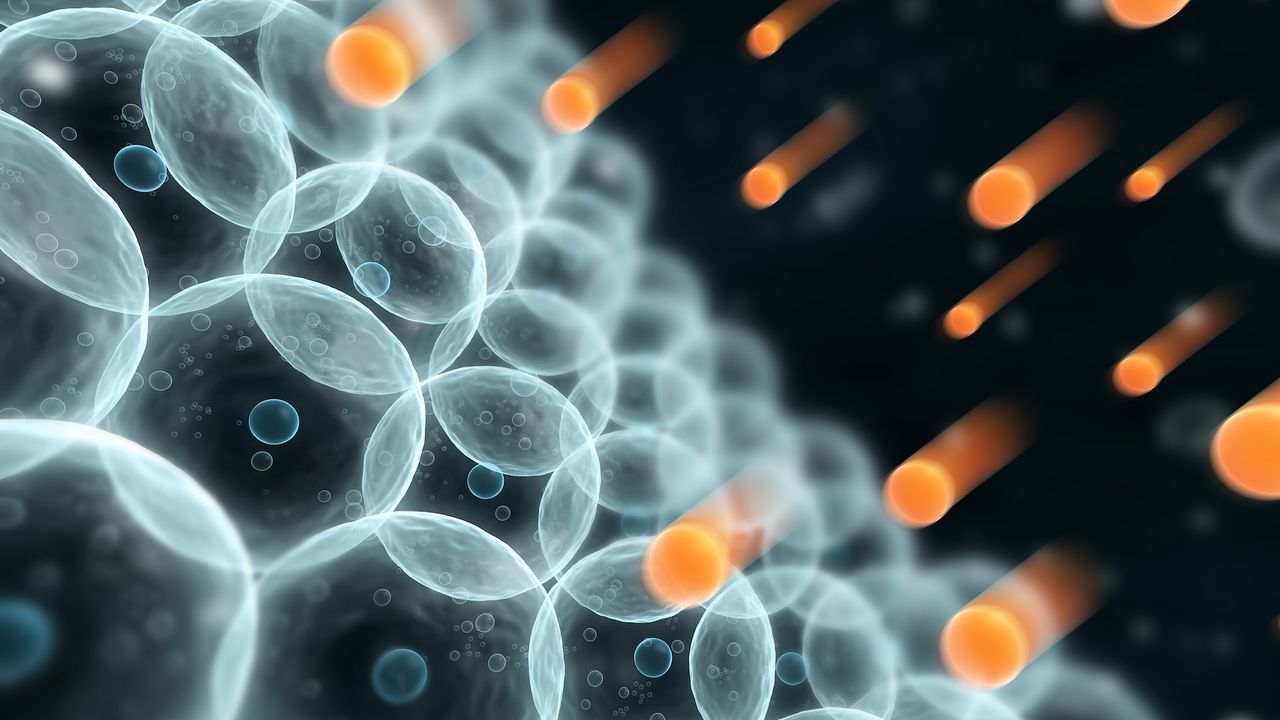
Free radicals, known for their association with numerous health issues including cancer and aging, have sparked debate regarding their role in the body. While high levels of these unstable molecules can indeed cause damage, essential functions also depend on them. Research highlights the complexity of free radicals, suggesting that they may not be entirely detrimental and could even provide health benefits under certain conditions.
At their core, free radicals, often referred to as reactive oxygen species (ROS), possess unpaired electrons. This instability drives them to react aggressively with nearby molecules, potentially harming cell membranes, proteins, and DNA. Michael Murphy, a mitochondrial biologist at the University of Cambridge, explains that when a free radical strips an electron from a stable molecule, it triggers a chain reaction, leaving further unpaired electrons that continue to react with other cellular components.
Despite their harmful potential, the body produces free radicals as part of essential biological processes. Approximately 90% of these radicals are generated by mitochondria, the energy-producing structures within cells. Michael Ristow, a longevity researcher at Charité University Medicine Berlin, notes that this production occurs during respiration, a process that converts glucose and oxygen into energy. While some free radicals are produced during these reactions, the body has evolved various defense mechanisms.
The immune system uses free radicals to combat pathogens, employing them to protect against diseases. In addition, certain enzymes rely on free radical chemistry to facilitate complex biochemical reactions. Murphy states, “Some enzymes use free radical chemistry inside their active sites because that gives them the ability to do chemistry that’s more difficult.”
Antioxidants are a crucial line of defense against excessive free radicals. These molecules, found in many fruits and vegetables, can neutralize reactive particles. The body also utilizes dedicated enzymes to convert harmful free radicals into less damaging substances, such as those involving glutathione, a sulfur-containing molecule that acts like a sponge to soak up free radicals.
Environmental factors can exacerbate free radical levels. For instance, exposure to ultraviolet (UV) light can produce higher levels of free radicals through a different mechanism. Murphy explains that UV rays can excite certain molecules, leading to the conversion of oxygen into a more reactive form that can damage cellular structures.
While high concentrations of free radicals are linked to tissue damage and diseases like cancer, emerging evidence suggests that controlled exposure may be beneficial. This phenomenon is known as hormesis, where low doses of stressors like free radicals can enhance the body’s resilience. Ristow elaborates, “The response to exposure to free radicals on a systemic level is typically increased response capacity against free radicals.”
The benefits of free radicals are particularly evident in the context of exercise. Ristow warns that taking antioxidants before or during exercise can diminish the positive effects of physical activity on health. Research indicates that free radicals may play a role in endurance, recovery, muscle gain, and insulin sensitivity.
The ongoing debate reflects a nuanced understanding of free radicals. While they can indeed cause harm, their role in health is complex and context-dependent. Ristow summarizes, “It’s a balance. But if ROS really were only damaging, then evolution would have ruled them out!”
This article aims to provide a comprehensive overview of the multifaceted role of free radicals in health. It is essential to continue exploring their dual nature to foster a better understanding of human biology and health management.

U.S. Investment in Canadian Energy Firms Surges Despite Low Oil Prices

Nick Jonas Unveils New Solo Album ‘Sunday Best’ Set for February Release

Researchers Urge Label Changes for Low-Alcohol Drinks to Aid Pregnant Women

Wedding Cookie Table Community Aims for World’s Largest Cookie Exchange

Mayor Appoints Alan Wong as New Supervisor for District 4

UK Report Reveals Growing Role of AI in University Research Assessments

Mayor Lurie Appoints Alan Wong as New District 4 Supervisor

South Korea Strengthens FX Oversight in Urgent Market Stabilization

U.S. Climate Stance Sparks Global Call for Action and Tariffs

Urgent Update: Tom Aspinall’s Vision Deteriorates After UFC 321

MIT Scientists Uncover Surprising Genomic Loops During Cell Division

University of Hawaiʻi Joins $25.6M AI Project to Enhance Disaster Monitoring

AI Disruption: AWS Faces Threat as Startups Shift Cloud Focus

Time Crystals Revolutionize Quantum Computing Potential

Honeywell Forecasts Record Business Jet Deliveries Over Next Decade

Discover the Full Map of Pokémon Legends: Z-A’s Lumiose City

GOP Faces Backlash as Protests Surge Against Trump Policies

Parenthood Set to Depart Hulu: What Fans Need to Know
-
 Top Stories1 month ago
Urgent Update: Tom Aspinall’s Vision Deteriorates After UFC 321
-
 Health1 month ago
MIT Scientists Uncover Surprising Genomic Loops During Cell Division
-
Science4 weeks ago
University of Hawaiʻi Joins $25.6M AI Project to Enhance Disaster Monitoring
-
 Top Stories1 month ago
AI Disruption: AWS Faces Threat as Startups Shift Cloud Focus
-
 Science2 months ago
Time Crystals Revolutionize Quantum Computing Potential
-
 World2 months ago
Honeywell Forecasts Record Business Jet Deliveries Over Next Decade
-
 Entertainment1 month ago
Discover the Full Map of Pokémon Legends: Z-A’s Lumiose City
-
 Top Stories2 months ago
GOP Faces Backlash as Protests Surge Against Trump Policies
-
 Entertainment2 months ago
Parenthood Set to Depart Hulu: What Fans Need to Know
-

 Politics2 months ago
Judge Signals Dismissal of Chelsea Housing Case Citing AI Flaws
-

 Sports2 months ago
Yoshinobu Yamamoto Shines in Game 2, Leading Dodgers to Victory
-

 Health2 months ago
Maine Insurers Cut Medicare Advantage Plans Amid Cost Pressures