
Science
Viral Video Misidentified as Comet 3I/ATLAS Revealed as Paramecium

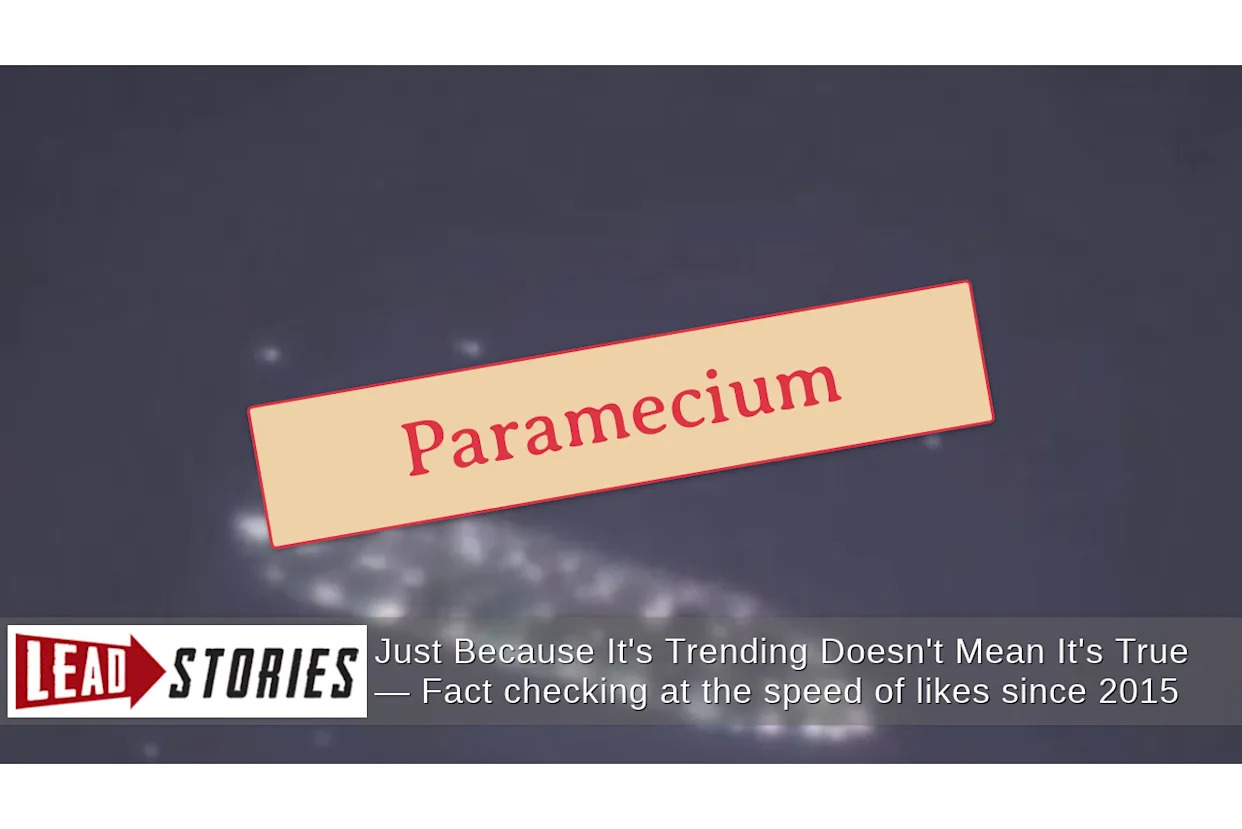
A video circulating on social media claiming to show new footage of the interstellar comet 3I/ATLAS has been debunked as a misidentification. The clip, which was posted on X by the user @BGatesIsaPyscho on October 27, 2025, features a microscopic organism known as a paramecium, not the comet.
The misleading video quickly gained traction, with the original post captioning it as “🚨 New 3I/Atlas Footage just dropped!!” However, a reverse image search conducted on October 29, 2025, revealed no relevant results linking the video to actual astronomical research. Instead, search engines erroneously associated the clip with 3I/ATLAS due to the viral false captions.
To clarify the identity of the organism in the video, Lead Stories contacted Jack A. Gilbert, a microbiologist and professor at the Scripps Institution of Oceanography at the University of California, San Diego. In an email response, Gilbert asserted, “That is a paramecium – freshwater I believe – although better phase contrast, and where it was found, would be ideal for better identification.” His expertise highlights the importance of accurate identification in scientific discourse.
The misinformation surrounding the video coincides with NASA’s inability to provide updates on the interstellar comet due to a lapse in federal funding, as noted on their website. The NASA page, which typically features multimedia content related to 3I/ATLAS, currently displays a notice indicating no updates are available.
On September 4, 2025, the National Optical-Infrared Astronomy Research Laboratory (NOIRLab) released an image of 3I/ATLAS captured by the Gemini Multi-Object Spectrograph at Gemini South in Chile. This image shows the comet moving through a star field, resulting in colorful streaks from the stars due to the comet’s fixed position in the telescope’s view. Such images, unlike the viral video, provide verified and scientifically relevant footage of the comet.
In recent weeks, discussions about 3I/ATLAS have been the focus of multiple investigations by Lead Stories, further emphasizing the need for accurate reporting and verification in the age of viral misinformation. As excitement around astronomical discoveries grows, so too does the responsibility to ensure that information shared with the public is factual and substantiated by credible sources.

Woman Arrested for Threatening U-Haul Worker with Baton

Japan’s PM Takaichi Vows Urgent Fiscal Management Amid Rate Trends

Bitcoin Plummets Below $88K Amid Tether Concerns and Warnings

Tottenville Falls Short in PSAL 4A Title Game Against Erasmus

Shark Teeth Study Reveals Urgent Clues to Prevent Extinction

Church Members Rally Together After Thanksgiving Fire Devastation

U.S. Investment in Canadian Energy Firms Surges Despite Low Oil Prices

Nick Jonas Unveils New Solo Album ‘Sunday Best’ Set for February Release

Researchers Urge Label Changes for Low-Alcohol Drinks to Aid Pregnant Women

Urgent Update: Tom Aspinall’s Vision Deteriorates After UFC 321

MIT Scientists Uncover Surprising Genomic Loops During Cell Division

University of Hawaiʻi Joins $25.6M AI Project to Enhance Disaster Monitoring

AI Disruption: AWS Faces Threat as Startups Shift Cloud Focus

Time Crystals Revolutionize Quantum Computing Potential

Honeywell Forecasts Record Business Jet Deliveries Over Next Decade

Discover the Full Map of Pokémon Legends: Z-A’s Lumiose City

GOP Faces Backlash as Protests Surge Against Trump Policies

Parenthood Set to Depart Hulu: What Fans Need to Know
-
 Top Stories1 month ago
Urgent Update: Tom Aspinall’s Vision Deteriorates After UFC 321
-
 Health1 month ago
MIT Scientists Uncover Surprising Genomic Loops During Cell Division
-
Science4 weeks ago
University of Hawaiʻi Joins $25.6M AI Project to Enhance Disaster Monitoring
-
 Top Stories1 month ago
AI Disruption: AWS Faces Threat as Startups Shift Cloud Focus
-
 Science2 months ago
Time Crystals Revolutionize Quantum Computing Potential
-
 World2 months ago
Honeywell Forecasts Record Business Jet Deliveries Over Next Decade
-
 Entertainment1 month ago
Discover the Full Map of Pokémon Legends: Z-A’s Lumiose City
-
 Top Stories2 months ago
GOP Faces Backlash as Protests Surge Against Trump Policies
-
 Entertainment2 months ago
Parenthood Set to Depart Hulu: What Fans Need to Know
-

 Politics2 months ago
Judge Signals Dismissal of Chelsea Housing Case Citing AI Flaws
-

 Sports2 months ago
Yoshinobu Yamamoto Shines in Game 2, Leading Dodgers to Victory
-

 Health2 months ago
Maine Insurers Cut Medicare Advantage Plans Amid Cost Pressures