
Sports
Davis Cup Faces Future Challenges as Players Seek Changes

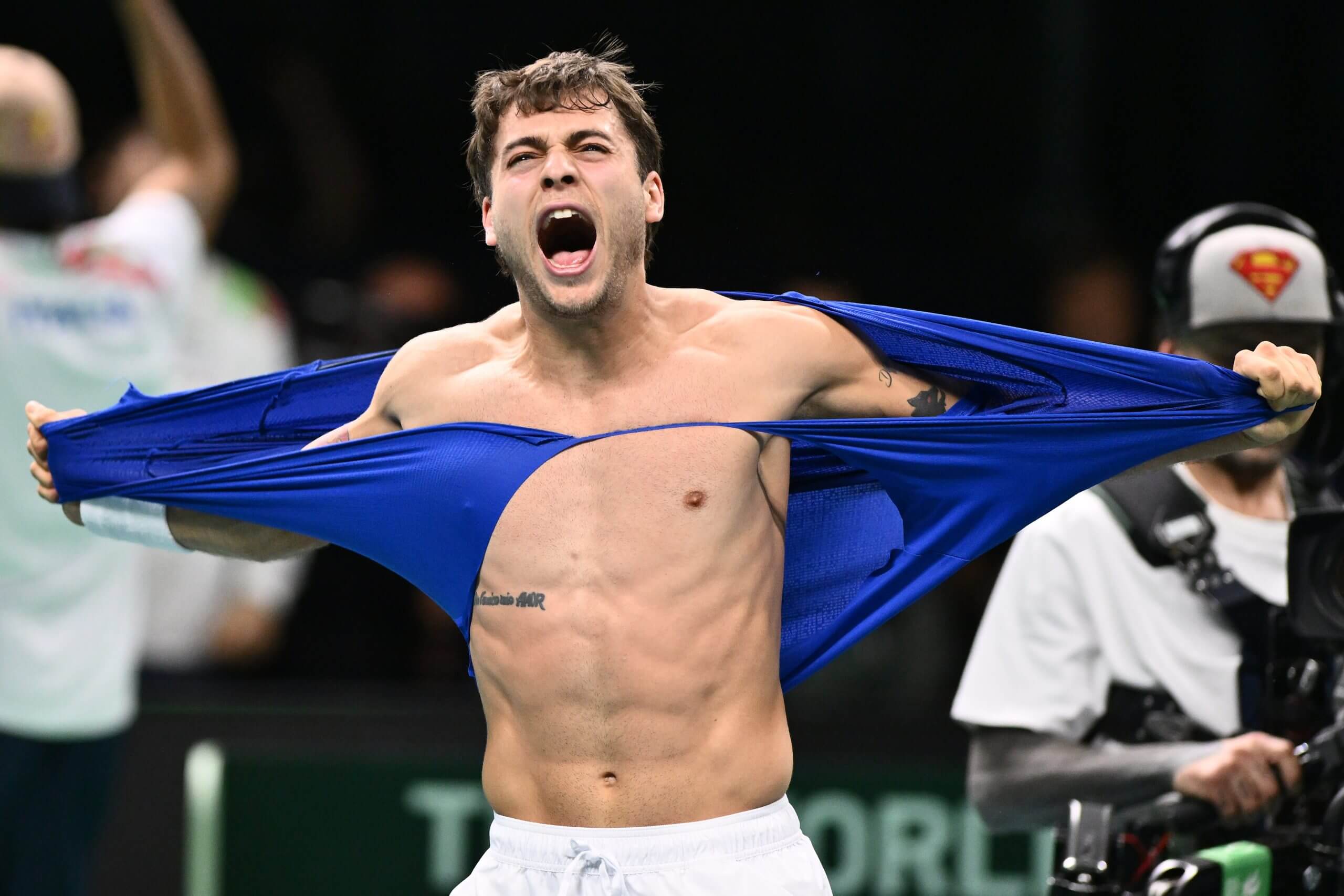
In a thrilling match that captivated over 10,000 fans in Bologna, Italy, Flavio Cobolli secured a dramatic victory over Belgium’s Zizou Bergs, winning a third-set tiebreak 17-15. This victory propelled Italy into its third consecutive Davis Cup final, a moment drenched in national pride reminiscent of the sport’s most prestigious moments. Yet, as the tournament approaches its final stages, significant questions about the future format of the Davis Cup loom large.
Players Call for Redefined Format
The current annual format of the Davis Cup is under scrutiny, with many top players advocating for a less frequent schedule. This sentiment was echoed by the world’s top three male players: Carlos Alcaraz, Jannik Sinner, and Alexander Zverev. Alcaraz, who withdrew from this year’s competition due to a hamstring injury, stated at a recent press conference, “I think playing every year is not as good as it might be if you’re playing every two or three years.” He emphasized that a less frequent schedule could enhance player commitment and the overall significance of the event.
Sinner, who led Italy to victory last year, further articulated the desire for a transformation, suggesting a biennial tournament could create more unique experiences. Zverev, representing Germany, described the current finals format, which assembles eight teams at a single venue, as resembling an exhibition rather than a traditional competition.
The Italian Tennis Federation has taken advantage of its rising status in the sport by hosting the finals from 2025 to 2027. Despite the electric atmosphere surrounding Cobolli’s recent match, many stakeholders believe that the current format does not do justice to the competition’s potential.
Historical Context and Future Possibilities
Historically, the Davis Cup has undergone several transformations. In 2019, the International Tennis Federation (ITF) entered a 25-year contract with Kosmos, a sports and media company led by former footballer Gerard Piqué. This partnership was aimed at revitalizing the tournament with an investment of $3 billion. However, the agreement was dissolved by January 2023 after a series of problematic events, including late finishes and decreased audience engagement.
Subsequently, Piqué filed a lawsuit over what he termed the “unjustified termination” of the contract, though his claims were dismissed in March 2025. Prior to these events, several tennis legends, including Roger Federer and Novak Djokovic, had already expressed concerns regarding the new format, advocating for a model that would allow for less frequent play, akin to the Ryder Cup in golf, which is held every two years.
As the Davis Cup final approaches, the absence of prominent players raises further questions about the tournament’s appeal and viability. Currently, Zverev stands as the only top-10 player participating in this edition. The challenges extend beyond the player roster; logistical concerns related to qualifying matches held at neutral venues have also diluted crowds and travel convenience.
Ross Hutchins, the ITF’s chief executive, is open to discussions regarding the tournament’s future. He stated, “I want the Davis Cup to be the biggest team competition across our sport and potentially across sport in general,” indicating a willingness to adapt based on player feedback. Hutchins, who understands the nuances of player needs due to his past experiences, is at the forefront of addressing these challenges.
The Davis Cup remains a significant event in the tennis calendar, but its current structure is viewed by many as a hindrance to creating memorable moments. As players continue to voice their opinions, the ITF faces a critical juncture in deciding the future of this storied competition. The upcoming final between Italy and Spain will undoubtedly be an exciting showcase, but it also serves as a reminder of the pressing need for reform in the Davis Cup format to ensure its relevance and prestige in the years to come.

Japan’s PM Takaichi Vows Urgent Fiscal Management Amid Rate Trends

Bitcoin Plummets Below $88K Amid Tether Concerns and Warnings

Tottenville Falls Short in PSAL 4A Title Game Against Erasmus

Shark Teeth Study Reveals Urgent Clues to Prevent Extinction

Church Members Rally Together After Thanksgiving Fire Devastation

U.S. Investment in Canadian Energy Firms Surges Despite Low Oil Prices

Nick Jonas Unveils New Solo Album ‘Sunday Best’ Set for February Release

Researchers Urge Label Changes for Low-Alcohol Drinks to Aid Pregnant Women

Wedding Cookie Table Community Aims for World’s Largest Cookie Exchange

Urgent Update: Tom Aspinall’s Vision Deteriorates After UFC 321

MIT Scientists Uncover Surprising Genomic Loops During Cell Division

University of Hawaiʻi Joins $25.6M AI Project to Enhance Disaster Monitoring

AI Disruption: AWS Faces Threat as Startups Shift Cloud Focus

Time Crystals Revolutionize Quantum Computing Potential

Honeywell Forecasts Record Business Jet Deliveries Over Next Decade

Discover the Full Map of Pokémon Legends: Z-A’s Lumiose City

GOP Faces Backlash as Protests Surge Against Trump Policies

Parenthood Set to Depart Hulu: What Fans Need to Know
-
 Top Stories1 month ago
Urgent Update: Tom Aspinall’s Vision Deteriorates After UFC 321
-
 Health1 month ago
MIT Scientists Uncover Surprising Genomic Loops During Cell Division
-
Science4 weeks ago
University of Hawaiʻi Joins $25.6M AI Project to Enhance Disaster Monitoring
-
 Top Stories1 month ago
AI Disruption: AWS Faces Threat as Startups Shift Cloud Focus
-
 Science2 months ago
Time Crystals Revolutionize Quantum Computing Potential
-
 World2 months ago
Honeywell Forecasts Record Business Jet Deliveries Over Next Decade
-
 Entertainment1 month ago
Discover the Full Map of Pokémon Legends: Z-A’s Lumiose City
-
 Top Stories2 months ago
GOP Faces Backlash as Protests Surge Against Trump Policies
-
 Entertainment2 months ago
Parenthood Set to Depart Hulu: What Fans Need to Know
-

 Politics2 months ago
Judge Signals Dismissal of Chelsea Housing Case Citing AI Flaws
-

 Sports2 months ago
Yoshinobu Yamamoto Shines in Game 2, Leading Dodgers to Victory
-

 Health2 months ago
Maine Insurers Cut Medicare Advantage Plans Amid Cost Pressures