
Top Stories
Affine Surges in Popularity as Users Switch from Obsidian Today

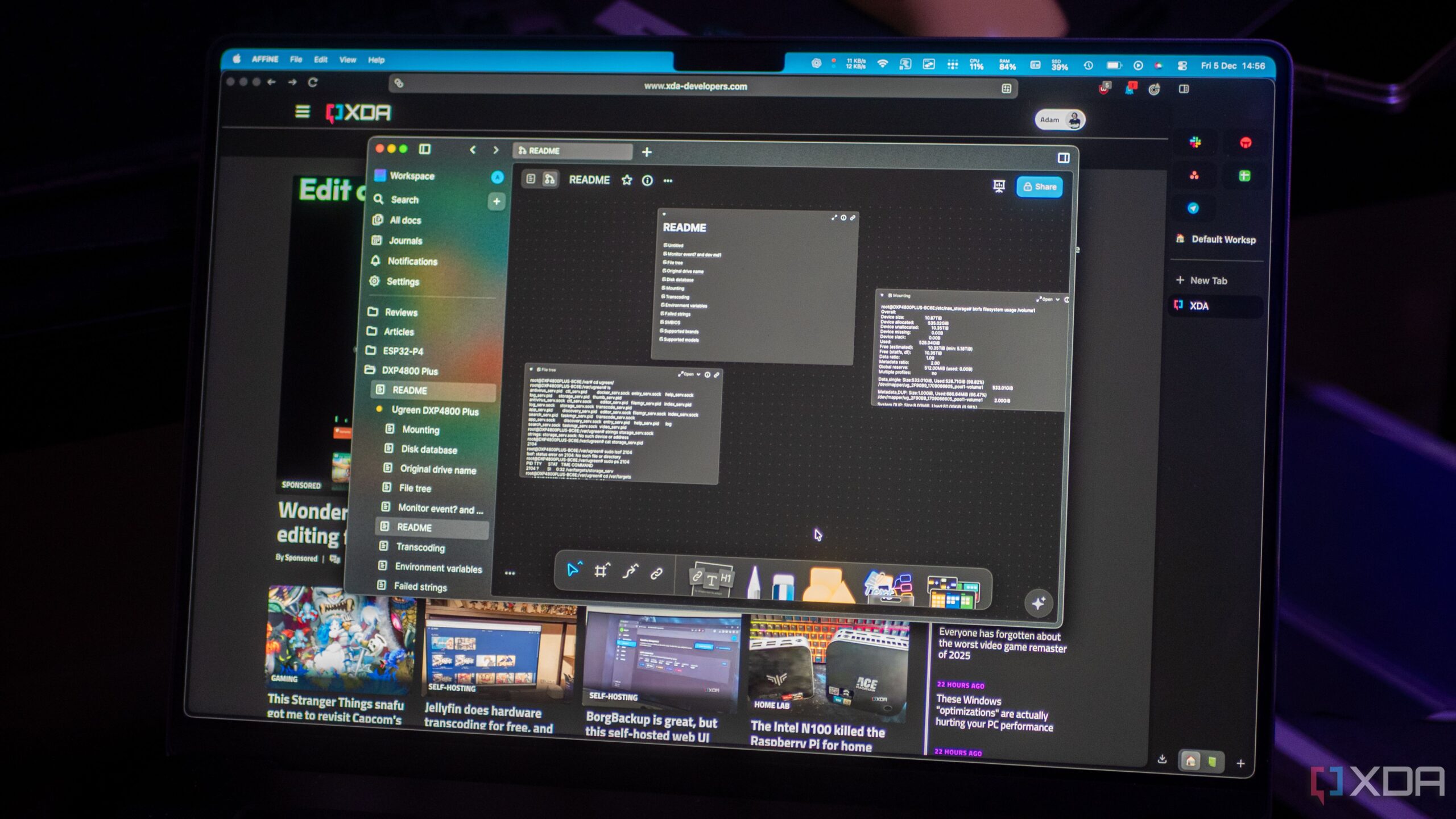
UPDATE: A significant shift in the note-taking landscape is underway as users are rapidly transitioning from Obsidian to Affine, a move sparked by recent user experiences shared at the Maker Faire Shenzhen. This change is happening NOW, with many praising Affine for its innovative approach to note-taking that enhances productivity and synchronization.
Users report a smoother experience in managing their notes across devices, highlighting Affine’s unique features such as its “whiteboard” mode. This allows for easy integration of sketches and templates, making it a versatile tool in today’s fast-paced digital environment. The transition has proven beneficial for those who previously struggled with Obsidian’s reliance on plugins, which many found cumbersome and distracting.
One user, who recently switched to Affine, shared their experience, emphasizing how the application’s architecture allows for seamless note management without the need for extensive plugin configurations. “I can just… write,” they mentioned, reflecting a sentiment echoed by many users prioritizing a streamlined workflow.
Affine operates primarily on Markdown, akin to Obsidian, but diverges significantly in its functionality. Instead of a minimalist interface requiring plugins for advanced features, Affine offers a cohesive workspace where notes can function as documents, whiteboards, or databases without additional setup. This adaptability is attracting users who seek efficiency and simplicity.
The synchronization process in Affine has also garnered attention. Users highlighted its superior handling of note updates, which automatically merge changes made across devices—something many found problematic with Obsidian’s CouchDB setup. “It’s impressive to know that I can just rely on it to work,” one user stated, underscoring Affine’s reliability for those working across multiple devices.
With the self-hosted setup running smoothly on platforms like Docker and Proxmox, users are discovering that Affine offers a straightforward path to maintaining control over their data while enjoying modern collaboration features. The local-first approach resonates particularly well with users concerned about data privacy and accessibility.
As the user community continues to grow, Affine is not without its critiques. Some users have pointed out minor issues, such as the need to adjust import URLs when incorporating templates. Despite this, the overall sentiment remains overwhelmingly positive, with many encouraging others to explore Affine as an alternative to Obsidian.
As more individuals recognize the potential of Affine, the question arises: Is this the future of note-taking? For those feeling bogged down by plugin dependencies or synchronization challenges, the answer may lie in Affine’s user-friendly design.
In conclusion, if you’re an Obsidian user frustrated with your current setup, it’s time to consider switching to Affine. The tool’s unique blend of simplicity and functionality is resonating with an expanding user base, making it a compelling option for anyone looking to enhance their note-taking experience. As the adoption trend continues, Affine could very well redefine how we think about digital note management.

Medicare Launches Urgent AI Pilot Program to Review Care Requests

Google Enhances NotebookLM with Deep Research for Instant Insights

California Quarterback Jaron-Keawe Sagapolutele Commits to Stay

Hong Kong Authorities Criticize Foreign Media Coverage of Fire

Waymo Recalls Self-Driving Vehicles Following School Bus Incidents

Why The Game Awards Deserve a Nickname Like the Oscars

Targeted Alpha Therapy with Astatine Shows Hope for Thyroid Cancer

Affine Surges in Popularity as Users Switch from Obsidian Today

Lacey Chabert Prepares for Holidays with New Christmas Movie

Urgent Update: Tom Aspinall’s Vision Deteriorates After UFC 321

University of Hawaiʻi Joins $25.6M AI Project to Enhance Disaster Monitoring

MIT Scientists Uncover Surprising Genomic Loops During Cell Division

AI Disruption: AWS Faces Threat as Startups Shift Cloud Focus

Time Crystals Revolutionize Quantum Computing Potential

Discover the Full Map of Pokémon Legends: Z-A’s Lumiose City

Parenthood Set to Depart Hulu: What Fans Need to Know

GOP Faces Backlash as Protests Surge Against Trump Policies

Honeywell Forecasts Record Business Jet Deliveries Over Next Decade
-
 Top Stories1 month ago
Urgent Update: Tom Aspinall’s Vision Deteriorates After UFC 321
-
Science1 month ago
University of Hawaiʻi Joins $25.6M AI Project to Enhance Disaster Monitoring
-
 Health2 months ago
MIT Scientists Uncover Surprising Genomic Loops During Cell Division
-
 Top Stories2 months ago
AI Disruption: AWS Faces Threat as Startups Shift Cloud Focus
-
 Science2 months ago
Time Crystals Revolutionize Quantum Computing Potential
-
 Entertainment2 months ago
Discover the Full Map of Pokémon Legends: Z-A’s Lumiose City
-
 Entertainment2 months ago
Parenthood Set to Depart Hulu: What Fans Need to Know
-
 Top Stories2 months ago
GOP Faces Backlash as Protests Surge Against Trump Policies
-
 World2 months ago
Honeywell Forecasts Record Business Jet Deliveries Over Next Decade
-

 Politics2 months ago
Judge Signals Dismissal of Chelsea Housing Case Citing AI Flaws
-

 Health2 months ago
Maine Insurers Cut Medicare Advantage Plans Amid Cost Pressures
-

 Sports2 months ago
Yoshinobu Yamamoto Shines in Game 2, Leading Dodgers to Victory