
Top Stories
U.S. Demands 50-50 Chip Production Split, Taiwan’s TSMC Under Fire

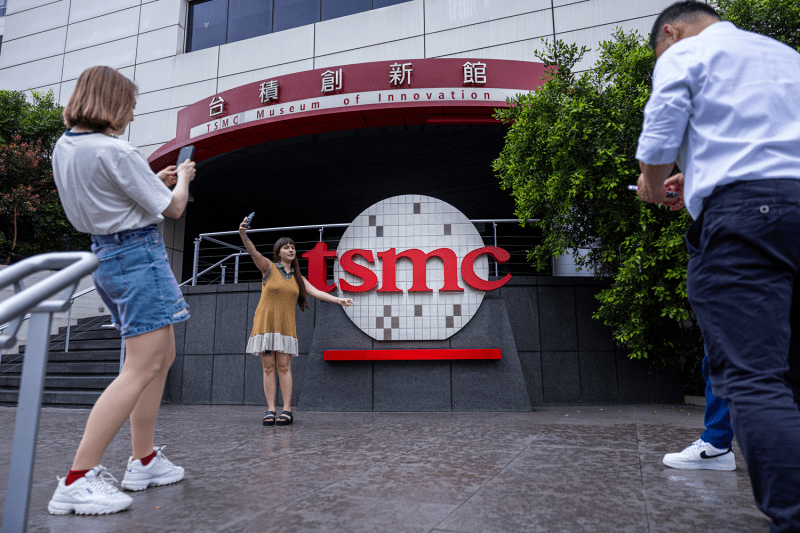
UPDATE: In a stunning announcement, U.S. Commerce Secretary Howard Lutnick declared that the United States cannot guarantee its defense of Taiwan unless the island agrees to a 50-50 split of its semiconductor production with the U.S. This urgent statement, made in late September, sent shockwaves through Taipei and raised critical concerns about Taiwan’s semiconductor giant, TSMC.
The concept of a “silicon shield”—the idea that the global reliance on Taiwan’s chips enhances its security—has now been flipped on its head. Lutnick’s remarks suggest that Taiwan’s dominance in semiconductor production could be perceived as a liability for the U.S., highlighting a worrying shift in Washington’s stance.
The fragility of this “silicon shield” is not just a concern for Beijing or TSMC’s expansion into markets like Arizona, but stems from a troubling lack of alignment between the Taiwanese government and TSMC, which is primarily a private company. Officially, the Taiwanese government holds a mere 7.69 percent of TSMC shares, providing limited influence over the company’s strategic decisions.
President Lai Ching-te‘s administration recognizes TSMC’s crucial role in Taiwan’s survival but has consistently deferred to the company’s business choices. This has led to unprecedented approvals for TSMC’s overseas investments, framed as beneficial to Taiwan only after the decisions have been made.
The current dynamics have sparked intense debate within Taiwan’s political landscape, with the opposition Kuomintang (KMT) party accusing the Lai administration of allowing TSMC to dictate national interests. As U.S. pressure mounts, fears grow that Taiwan’s bargaining power may be eroded, and the integrity of its silicon shield compromised.
While TSMC’s expansion in Arizona was publicly portrayed as a move to enhance Taiwan’s security, many analysts argue it primarily served TSMC’s business goals. The company’s commitment to increase its total investment in the U.S. to $165 billion was framed as a hedge against supply chain risks and U.S. tariffs, not necessarily a strategic defense for Taiwan.
Taipei’s failure to exert influence over TSMC’s decisions leaves a critical gap in Taiwan’s national security strategy. The Taiwanese government has the legal authority to block investments exceeding 1.5 billion new Taiwan dollars (approximately $50 million) if deemed contrary to national interests but has never invoked this power. The fear of straining ties with the U.S. looms large over these decisions, further complicating Taiwan’s geopolitical position.
This misalignment raises serious questions about the future of Taiwan’s semiconductor industry and its national security. As TSMC continues to pursue global expansion, the relationship between the company and the Taiwanese government must evolve. Recent amendments to the Industrial Innovation Act, such as the “N-1” rule limiting advanced chip production overseas, show that Taiwan can implement boundaries. However, without clear guidelines, Taiwan risks being pulled further into U.S. geopolitical strategies that may not align with its own interests.
As the crisis unfolds, the stakes have never been higher for Taiwan. With its semiconductor capabilities under scrutiny and its security at risk, the Taiwanese government must forge a path that balances corporate decisions with national imperatives. The world is watching as Taiwan navigates this complex landscape, and the implications for its future are profound.
The need for transparency and a stronger governmental role in TSMC’s decisions is critical for maintaining both domestic confidence and international credibility. Taiwan’s survival amidst intensifying U.S.-China rivalry hinges on how effectively it can align its semiconductor strategy with national security needs.
Stay tuned for further updates as this situation develops.

Japan’s PM Takaichi Vows Urgent Fiscal Management Amid Rate Trends

Bitcoin Plummets Below $88K Amid Tether Concerns and Warnings

Tottenville Falls Short in PSAL 4A Title Game Against Erasmus

Shark Teeth Study Reveals Urgent Clues to Prevent Extinction

Church Members Rally Together After Thanksgiving Fire Devastation

U.S. Investment in Canadian Energy Firms Surges Despite Low Oil Prices

Nick Jonas Unveils New Solo Album ‘Sunday Best’ Set for February Release

Researchers Urge Label Changes for Low-Alcohol Drinks to Aid Pregnant Women

Wedding Cookie Table Community Aims for World’s Largest Cookie Exchange

Urgent Update: Tom Aspinall’s Vision Deteriorates After UFC 321

MIT Scientists Uncover Surprising Genomic Loops During Cell Division

University of Hawaiʻi Joins $25.6M AI Project to Enhance Disaster Monitoring

AI Disruption: AWS Faces Threat as Startups Shift Cloud Focus

Time Crystals Revolutionize Quantum Computing Potential

Honeywell Forecasts Record Business Jet Deliveries Over Next Decade

Discover the Full Map of Pokémon Legends: Z-A’s Lumiose City

GOP Faces Backlash as Protests Surge Against Trump Policies

Parenthood Set to Depart Hulu: What Fans Need to Know
-
 Top Stories1 month ago
Urgent Update: Tom Aspinall’s Vision Deteriorates After UFC 321
-
 Health1 month ago
MIT Scientists Uncover Surprising Genomic Loops During Cell Division
-
Science4 weeks ago
University of Hawaiʻi Joins $25.6M AI Project to Enhance Disaster Monitoring
-
 Top Stories1 month ago
AI Disruption: AWS Faces Threat as Startups Shift Cloud Focus
-
 Science2 months ago
Time Crystals Revolutionize Quantum Computing Potential
-
 World2 months ago
Honeywell Forecasts Record Business Jet Deliveries Over Next Decade
-
 Entertainment1 month ago
Discover the Full Map of Pokémon Legends: Z-A’s Lumiose City
-
 Top Stories2 months ago
GOP Faces Backlash as Protests Surge Against Trump Policies
-
 Entertainment2 months ago
Parenthood Set to Depart Hulu: What Fans Need to Know
-

 Politics2 months ago
Judge Signals Dismissal of Chelsea Housing Case Citing AI Flaws
-

 Sports2 months ago
Yoshinobu Yamamoto Shines in Game 2, Leading Dodgers to Victory
-

 Health2 months ago
Maine Insurers Cut Medicare Advantage Plans Amid Cost Pressures