
World
Expert Warns Against Military Focus on Venezuela Drug Issues

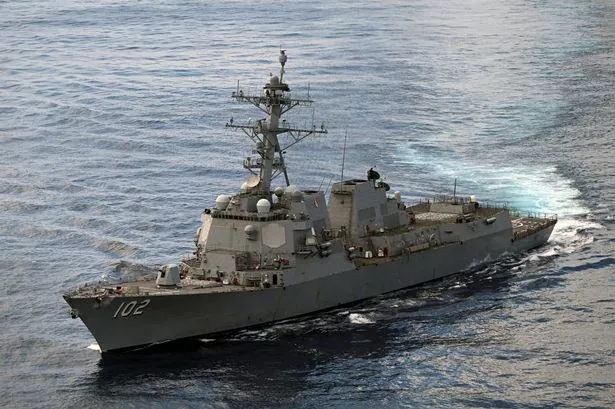
Former officials are questioning the rationale behind the Trump administration’s recent military strategies concerning drug trafficking from Venezuela. Frank Rose, who served as the assistant secretary of state for arms control, verification, and compliance under President Barack Obama, argues that focusing military resources on this issue could divert attention from more pressing national security threats posed by countries such as China, North Korea, Russia, and Iran.
In a statement, Rose criticized President Donald Trump’s decision to deploy U.S. Navy assets to the Caribbean aimed at combating drug smuggling from Venezuela and other Latin American countries. He believes that these resources would be better utilized in the Indo-Pacific and Europe, where they can effectively deter state-level threats.
“We are witnessing a revolution in warfare,” Rose stated in an interview with The Mirror US. He highlighted the changing nature of global conflicts, citing advancements such as drone technology and precision strikes as significant factors reshaping military strategies. Rose emphasized the necessity for the Pentagon to concentrate on threats from state actors rather than pursuing drug traffickers in Latin America.
China’s expanding naval capabilities are a major concern for U.S. security, according to Rose. He noted that the Chinese navy’s shipbuilding efforts are approximately 200% larger than those of the United States. “My priority would be to deploy the U.S. Navy’s available assets to the Indo-Pacific as a deterrent to China,” he said.
Rose argues that the deployment of Navy resources to combat drug trafficking represents a misallocation of military assets. He pointed out that every hour and dollar spent on such operations detracts from preparing to confront more significant national security challenges. “You don’t deter Beijing by chasing cocaine smugglers in the Caribbean,” he asserted.
While acknowledging the seriousness of the drug influx into the U.S., Rose suggested that military intervention is not the appropriate response. He believes that law enforcement and intelligence capabilities should be utilized more effectively to address this problem. Rose expressed concern regarding Trump’s inclination to consider military strikes against Venezuelan installations linked to drug trafficking organizations, allegedly led by Venezuelan President Nicolás Maduro.
The administration’s recent military activities have included successful strikes against vessels in the Gulf of Mexico and the Pacific Ocean, reportedly leading to over 60 fatalities. Despite this, Rose expressed skepticism about the strategic objectives behind these actions. “Honestly, I don’t know what the strategic objective of the deployment is,” he remarked, questioning whether it serves merely as a political message to Maduro.
The deployment of aircraft carrier battle groups is a costly endeavor, especially when used for high-tempo combat operations. With only 11 aircraft carriers currently commissioned, and often less than half available for deployment at any given time, Rose argued for a more strategic approach to military resource allocation. He believes that a significant portion of the U.S. Navy’s assets should be redirected to counter threats from state actors like China, North Korea, Russia, and Iran.
“Let’s keep our war fighters focused on the threats that only they can deter,” Rose concluded, advocating for a clear distinction between military operations and other forms of intervention. He suggested that if law enforcement and intelligence agencies require additional resources, efforts should be made to provide them rather than repurposing military assets. This strategy, he argued, would allow the U.S. military to concentrate on the key threats that demand their unique capabilities.

Urgent: Vehicle Fire Closes Two Lanes on I-215 in Salt Lake City

Knicks Dominate Raptors 116-94, Extend Home Winning Streak

Hallmark’s ‘Christmas at the Catnip Café’ Premieres Tonight

Woman Arrested for Threatening U-Haul Worker with Baton

Japan’s PM Takaichi Vows Urgent Fiscal Management Amid Rate Trends

Bitcoin Plummets Below $88K Amid Tether Concerns and Warnings

Tottenville Falls Short in PSAL 4A Title Game Against Erasmus

Shark Teeth Study Reveals Urgent Clues to Prevent Extinction

Church Members Rally Together After Thanksgiving Fire Devastation

Urgent Update: Tom Aspinall’s Vision Deteriorates After UFC 321

MIT Scientists Uncover Surprising Genomic Loops During Cell Division

University of Hawaiʻi Joins $25.6M AI Project to Enhance Disaster Monitoring

AI Disruption: AWS Faces Threat as Startups Shift Cloud Focus

Time Crystals Revolutionize Quantum Computing Potential

Honeywell Forecasts Record Business Jet Deliveries Over Next Decade

Discover the Full Map of Pokémon Legends: Z-A’s Lumiose City

GOP Faces Backlash as Protests Surge Against Trump Policies

Parenthood Set to Depart Hulu: What Fans Need to Know
-
 Top Stories1 month ago
Urgent Update: Tom Aspinall’s Vision Deteriorates After UFC 321
-
 Health1 month ago
MIT Scientists Uncover Surprising Genomic Loops During Cell Division
-
Science4 weeks ago
University of Hawaiʻi Joins $25.6M AI Project to Enhance Disaster Monitoring
-
 Top Stories1 month ago
AI Disruption: AWS Faces Threat as Startups Shift Cloud Focus
-
 Science2 months ago
Time Crystals Revolutionize Quantum Computing Potential
-
 World2 months ago
Honeywell Forecasts Record Business Jet Deliveries Over Next Decade
-
 Entertainment1 month ago
Discover the Full Map of Pokémon Legends: Z-A’s Lumiose City
-
 Top Stories2 months ago
GOP Faces Backlash as Protests Surge Against Trump Policies
-
 Entertainment2 months ago
Parenthood Set to Depart Hulu: What Fans Need to Know
-

 Politics2 months ago
Judge Signals Dismissal of Chelsea Housing Case Citing AI Flaws
-

 Sports2 months ago
Yoshinobu Yamamoto Shines in Game 2, Leading Dodgers to Victory
-

 Health2 months ago
Maine Insurers Cut Medicare Advantage Plans Amid Cost Pressures