
World
F-35 Takes Flight: F-16s Retire as Air Forces Shift in 2025

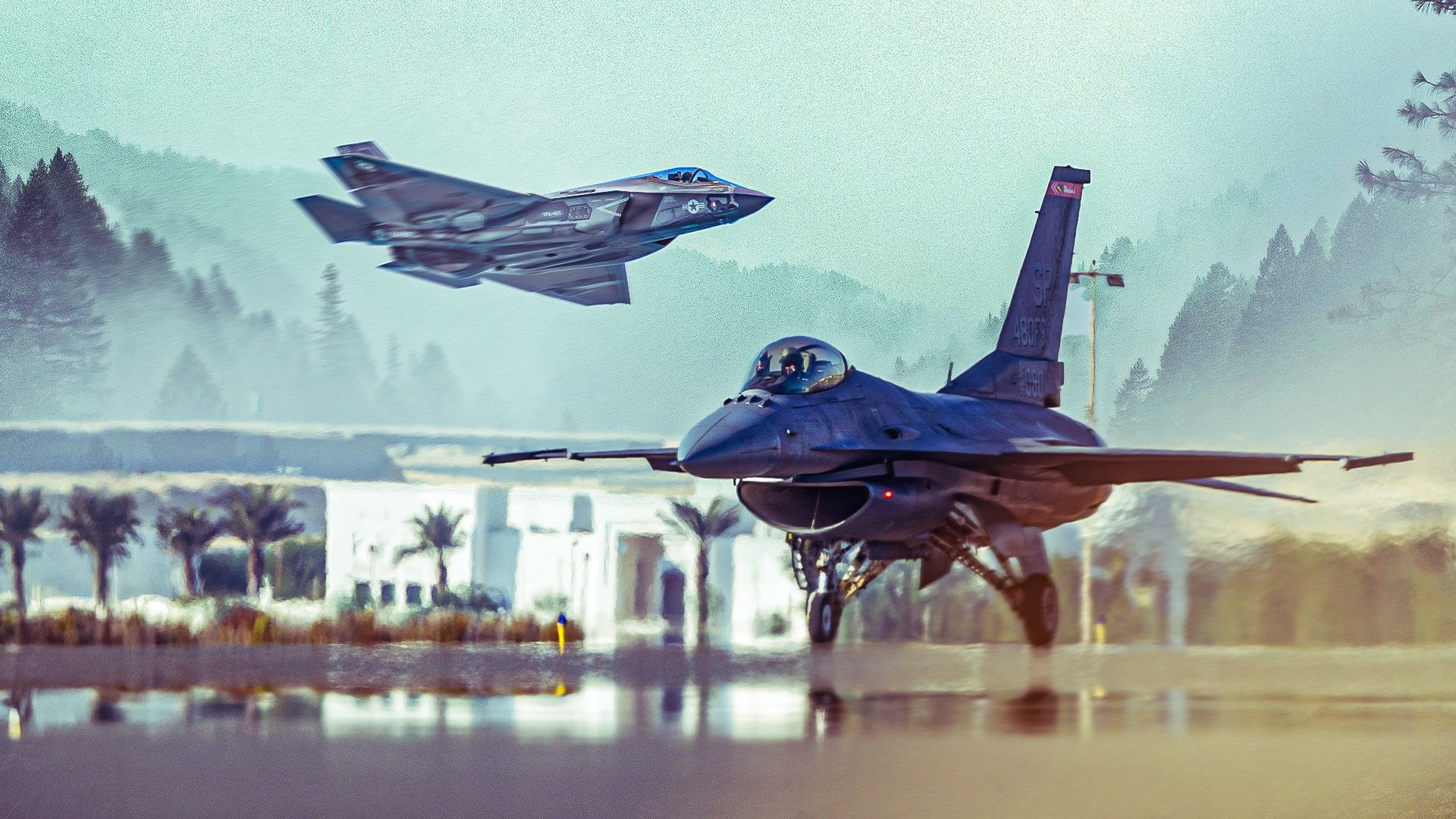
The transition from the F-16 Fighting Falcon to the F-35 Lightning II is accelerating across various branches of the armed forces. As of 2025, the United States Air Force (USAF) is actively retiring F-16s, replacing them with the more advanced F-35s. This trend extends beyond the USAF, as the F-35 also replaces older fighters in the Navy and Marine Corps, while international allies, including the United Kingdom, Italy, Norway, Australia, Japan, and Israel, have adopted the Joint Strike Fighter.
A direct comparison between the F-35 and the F-16 highlights significant generational differences in design and combat strategy. The F-35, often referred to as “Fat Amy,” focuses heavily on stealth, which comes at the expense of top speed. The F-16, known as the “Viper,” boasts a higher maximum speed but lacks the stealth capabilities that allow the F-35 to operate effectively in contested airspace.
Stealth and Combat Capabilities: A New Paradigm
The F-35’s primary advantage lies in its stealth and beyond visual range (BVR) capabilities. Its design assumes that air-to-air engagements will be decided at long distances, where its advanced sensors can detect, track, and neutralize adversaries before they become aware of its presence. This capability renders the F-16’s strengths in close-range dogfighting less relevant in modern conflicts dominated by fifth-generation aircraft.
Specifications for the F-16C/D include:
– **Primary function:** Multirole fighter
– **Thrust:** 27,000 pounds
– **Wingspan:** 32 feet, 8 inches (9.8 meters)
– **Length:** 49 feet, 5 inches (14.8 meters)
– **Height:** 16 feet (4.8 meters)
– **Weight:** 19,700 pounds without fuel (8,936 kilograms)
– **Maximum takeoff weight:** 37,500 pounds (16,875 kilograms)
– **Speed:** 1,500 mph (Mach 2 at altitude)
– **Range:** More than 2,002 miles (1,740 nautical miles)
– **Armament:** One M-61A1 20mm cannon and various air-to-air missiles
In contrast, the F-35 serves as a multirole sensor platform rather than a traditional fighter. It operates as a networked asset, gathering intelligence and sharing it with other aircraft, thereby enhancing the overall effectiveness of allied forces. This capability allows the F-35 to engage targets before they can be detected by older platforms like the F-16.
The F-35 is designed to be the “first-in” aircraft, entering hostile territories to gather crucial intelligence and disable enemy air defenses. The aircraft can carry a reduced munitions load for stealth missions, switching to external armament when stealth is less critical.
Transforming Military Strategy and Global Partnerships
The introduction of the F-35 is reshaping the USAF’s long-standing “high-low” fighter mix, which traditionally involved pairing a high-cost, high-performance aircraft with lower-cost alternatives like the F-16. While the F-16 has served effectively as the lower end of this equation, the F-35 is positioned as a high-end multirole fighter capable of strategic attack, air defense suppression, and close air support.
The F-35 program provides logistical and interoperability benefits, allowing various branches of the U.S. military to streamline maintenance and support across a shared supply chain. On July 2, 2025, Italian Defense Minister Guido Crosetto announced plans for Italy to establish the first F-35 pilot training school outside the United States, further solidifying international collaboration within the program.
Despite its advanced capabilities, the F-35 program has faced scrutiny over its high costs and complex development. Current estimates suggest that the F-35’s total program costs have surpassed those of historical military projects, including the Manhattan Project.
As the global fleet expands, with approximately 3,000 F-35s expected to be deployed, the F-35 is set to enhance collective defense efforts among allied nations. While the United States maintains control over nearly two-thirds of the fleet, partners like Japan, the United Kingdom, and Australia are increasing their investments in stealth technology.
The F-16 remains operational in about twenty-five countries, with over 4,600 units produced. Its historical significance as a versatile fighter has paved the way for multinational cooperation in developing the F-35, which benefits from shared resources, lowering development costs.
As military strategies evolve, the F-35 emerges not only as a cutting-edge fighter but also as a cornerstone of modern air combat, poised to define the future dynamics of aerial warfare against adversaries such as China and Russia. The presence of F-35s within allied air forces sends a clear message of collective resolve and deterrence against potential threats.

Urgent Fire Erupts at Indigo Apartments in NW OKC, Residents Fearful

Arlene Hartman, Beloved Community Figure, Passes Away at 87

Urgent: Vehicle Fire Closes Two Lanes on I-215 in Salt Lake City

Knicks Dominate Raptors 116-94, Extend Home Winning Streak

Hallmark’s ‘Christmas at the Catnip Café’ Premieres Tonight

Woman Arrested for Threatening U-Haul Worker with Baton

Japan’s PM Takaichi Vows Urgent Fiscal Management Amid Rate Trends

Bitcoin Plummets Below $88K Amid Tether Concerns and Warnings

Tottenville Falls Short in PSAL 4A Title Game Against Erasmus

Urgent Update: Tom Aspinall’s Vision Deteriorates After UFC 321

MIT Scientists Uncover Surprising Genomic Loops During Cell Division

University of Hawaiʻi Joins $25.6M AI Project to Enhance Disaster Monitoring

AI Disruption: AWS Faces Threat as Startups Shift Cloud Focus

Time Crystals Revolutionize Quantum Computing Potential

Honeywell Forecasts Record Business Jet Deliveries Over Next Decade

Discover the Full Map of Pokémon Legends: Z-A’s Lumiose City

GOP Faces Backlash as Protests Surge Against Trump Policies

Parenthood Set to Depart Hulu: What Fans Need to Know
-
 Top Stories1 month ago
Urgent Update: Tom Aspinall’s Vision Deteriorates After UFC 321
-
 Health1 month ago
MIT Scientists Uncover Surprising Genomic Loops During Cell Division
-
Science4 weeks ago
University of Hawaiʻi Joins $25.6M AI Project to Enhance Disaster Monitoring
-
 Top Stories1 month ago
AI Disruption: AWS Faces Threat as Startups Shift Cloud Focus
-
 Science2 months ago
Time Crystals Revolutionize Quantum Computing Potential
-
 World2 months ago
Honeywell Forecasts Record Business Jet Deliveries Over Next Decade
-
 Entertainment1 month ago
Discover the Full Map of Pokémon Legends: Z-A’s Lumiose City
-
 Top Stories2 months ago
GOP Faces Backlash as Protests Surge Against Trump Policies
-
 Entertainment2 months ago
Parenthood Set to Depart Hulu: What Fans Need to Know
-

 Politics2 months ago
Judge Signals Dismissal of Chelsea Housing Case Citing AI Flaws
-

 Sports2 months ago
Yoshinobu Yamamoto Shines in Game 2, Leading Dodgers to Victory
-

 Health2 months ago
Maine Insurers Cut Medicare Advantage Plans Amid Cost Pressures