
World
Family of Fire Victim Sues Over Emergency Alert Failures

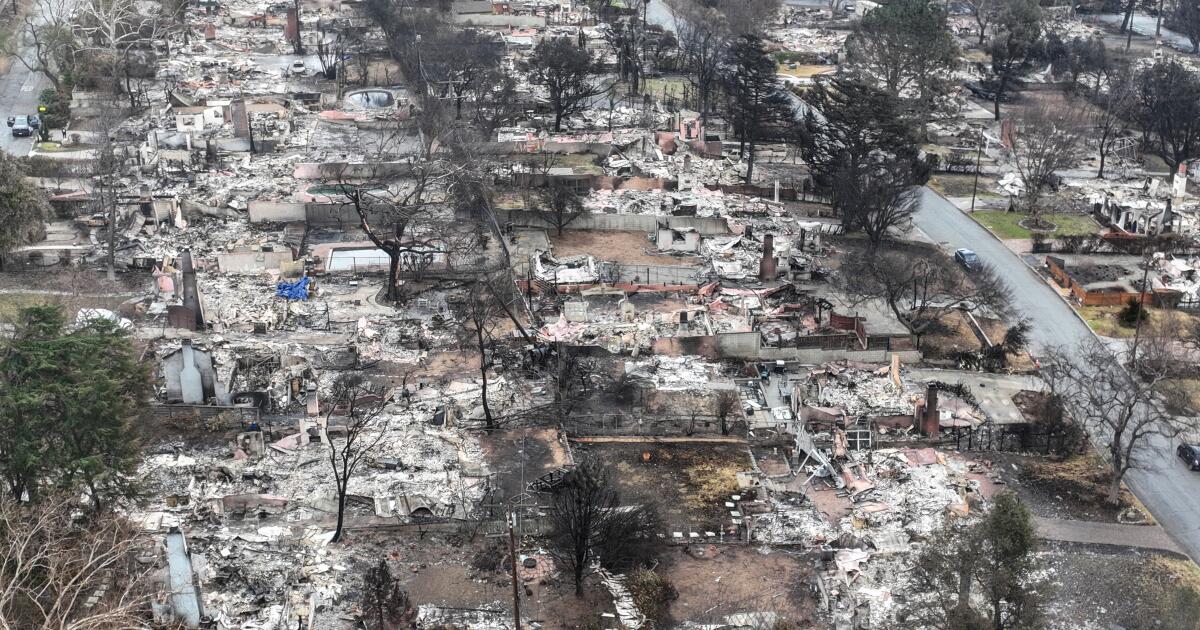
The family of Stacey Darden, a resident of Altadena who died in the devastating Eaton fire, has filed a wrongful death lawsuit against the companies responsible for emergency alerts. The legal action, initiated on January 8, 2024, claims that the alert system in use by Los Angeles County was defective and failed to notify her in time to evacuate.
The lawsuit targets Genasys, the company behind the emergency alert software, asserting that its evacuation zones, known as “polygons,” were improperly designed. This failure allegedly resulted in residents living east of Lake Avenue receiving timely evacuation orders, while those west of the avenue were left without crucial warnings until hours after the fire began. With the lawsuit, the Darden family joins a growing number of plaintiffs who hold Southern California Edison accountable for igniting the fire through its equipment.
Geraldine “Gerry” Darden, Stacey’s sister, expressed the family’s anguish over the situation. “Edison started this fire, and Genasys never warned her that she was in danger,” she stated. “If these companies had done what they were supposed to do, Stacey would be alive today.”
On January 7, 2023, extreme weather conditions fueled multiple fires across the region, including the Eaton fire, which erupted near Eaton Canyon at approximately 18:30. The blaze quickly escalated, driven by powerful winds that spread embers over vast distances, ultimately claiming nineteen lives in Altadena. Reports indicated that residents of west Altadena did not receive electronic evacuation orders until around 03:30 on January 8, significantly delaying their response to the emergency.
At a news conference held at Altadena’s main library, attorney Doug Boxer revealed that Stacey Darden and her sister had been closely monitoring the news for evacuation updates. Despite their vigilance, Darden’s residence at 2528 Marengo Ave., located roughly five blocks west of Lake Avenue, was not included in the initial evacuation order zones. The lawsuit claims that the only alert sent to Darden’s cellphone arrived at 05:43 on January 8, long after she had last used her phone at approximately 03:30.
“This is not a tragedy of bad luck; this is a tragedy of corporate failures,” stated attorney Mikal Watts, highlighting the critical timing issues that contributed to the loss of life. Watts characterized the situation as a case of “digital redlining,” alluding to historical inequalities in alert distribution that left marginalized communities at greater risk during emergencies.
The lawsuit seeks to address the pressing question of why alerts for residents west of Lake Avenue were delayed. Since the fire, local groups have called for answers, emphasizing that the west side of Altadena, which historically has faced socioeconomic challenges, received evacuation notices significantly later than their counterparts on the more affluent east side.
The complaint alleges that Genasys had a contractual obligation to provide a reliable mass notification system for Los Angeles County and that its software was not only defective but also posed an unreasonable danger due to its flawed evacuation zones. The lawsuit argues that these zones did not adequately consider the needs of vulnerable populations, including the elderly and those requiring more time to evacuate.
In response to the scrutiny surrounding the Eaton fire, officials from Genasys have stated that their software functioned as intended during the incident. During a meeting with stockholders in March, Richard Danforth, the CEO of Genasys, asserted, “the system was up and operational.” An after-action report supported by the county, prepared by the McChrystal Group, indicated that the majority of issues related to alert notifications stemmed from human error rather than technical failures.
At the time of the Eaton fire, the Genasys software was new to the county, with limited staff trained to use it effectively. The report emphasized that inadequate training contributed to the delayed response during the emergency.
As the legal proceedings unfold, the Darden family’s pursuit of justice highlights the critical importance of effective emergency management systems and the need for accountability in life-threatening situations.

Tottenville Falls Short in PSAL 4A Title Game Against Erasmus

Shark Teeth Study Reveals Urgent Clues to Prevent Extinction

Church Members Rally Together After Thanksgiving Fire Devastation

U.S. Investment in Canadian Energy Firms Surges Despite Low Oil Prices

Nick Jonas Unveils New Solo Album ‘Sunday Best’ Set for February Release

Researchers Urge Label Changes for Low-Alcohol Drinks to Aid Pregnant Women

Wedding Cookie Table Community Aims for World’s Largest Cookie Exchange

Mayor Appoints Alan Wong as New Supervisor for District 4

UK Report Reveals Growing Role of AI in University Research Assessments

Urgent Update: Tom Aspinall’s Vision Deteriorates After UFC 321

MIT Scientists Uncover Surprising Genomic Loops During Cell Division

University of Hawaiʻi Joins $25.6M AI Project to Enhance Disaster Monitoring

AI Disruption: AWS Faces Threat as Startups Shift Cloud Focus

Time Crystals Revolutionize Quantum Computing Potential

Honeywell Forecasts Record Business Jet Deliveries Over Next Decade

Discover the Full Map of Pokémon Legends: Z-A’s Lumiose City

GOP Faces Backlash as Protests Surge Against Trump Policies

Parenthood Set to Depart Hulu: What Fans Need to Know
-
 Top Stories1 month ago
Urgent Update: Tom Aspinall’s Vision Deteriorates After UFC 321
-
 Health1 month ago
MIT Scientists Uncover Surprising Genomic Loops During Cell Division
-
Science4 weeks ago
University of Hawaiʻi Joins $25.6M AI Project to Enhance Disaster Monitoring
-
 Top Stories1 month ago
AI Disruption: AWS Faces Threat as Startups Shift Cloud Focus
-
 Science2 months ago
Time Crystals Revolutionize Quantum Computing Potential
-
 World2 months ago
Honeywell Forecasts Record Business Jet Deliveries Over Next Decade
-
 Entertainment1 month ago
Discover the Full Map of Pokémon Legends: Z-A’s Lumiose City
-
 Top Stories2 months ago
GOP Faces Backlash as Protests Surge Against Trump Policies
-
 Entertainment2 months ago
Parenthood Set to Depart Hulu: What Fans Need to Know
-

 Politics2 months ago
Judge Signals Dismissal of Chelsea Housing Case Citing AI Flaws
-

 Sports2 months ago
Yoshinobu Yamamoto Shines in Game 2, Leading Dodgers to Victory
-

 Health2 months ago
Maine Insurers Cut Medicare Advantage Plans Amid Cost Pressures