
World
French Artillery Demonstration Highlights Lessons from Ukraine War

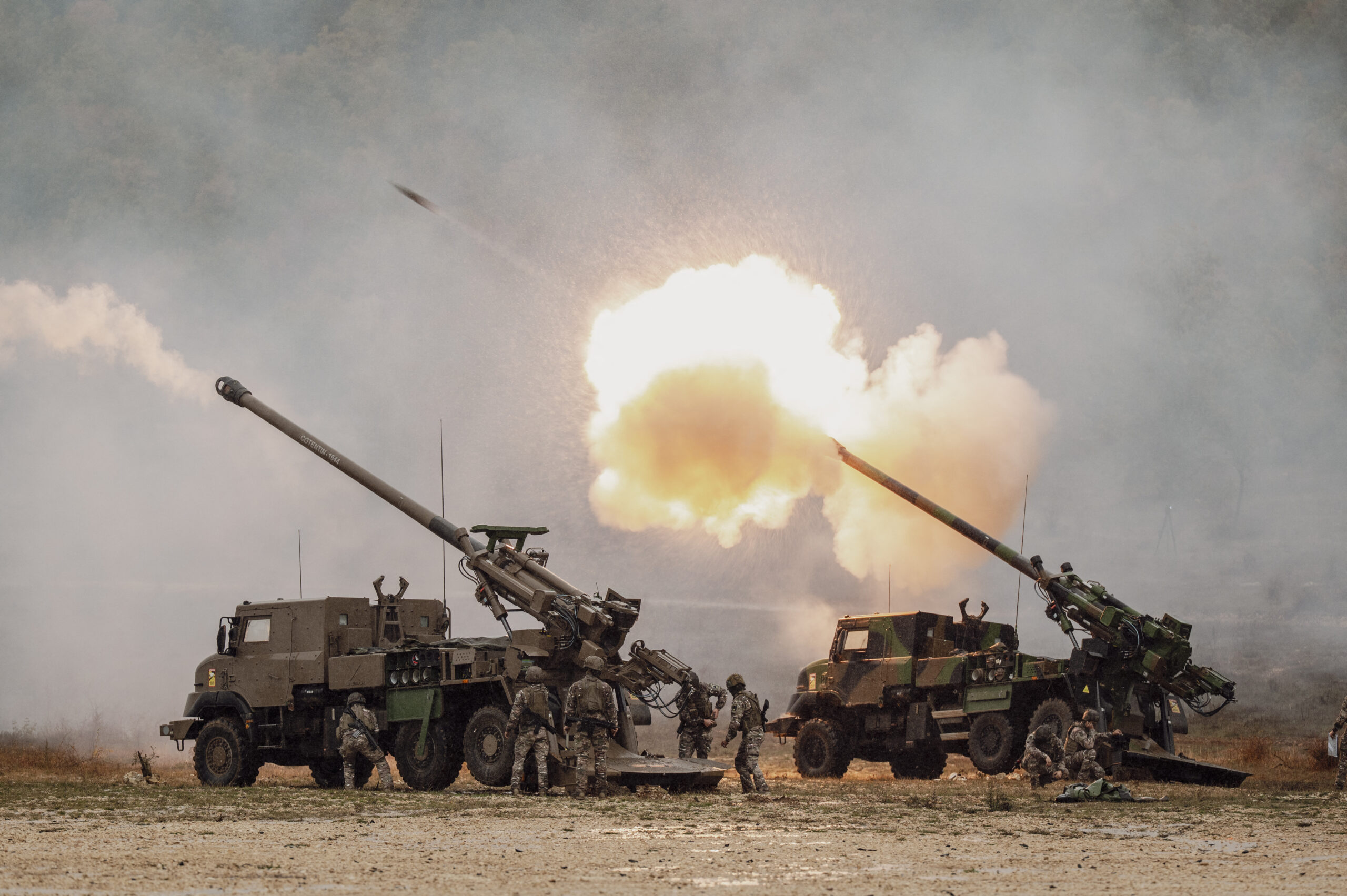
A recent demonstration by the French Army at Camp de Canjuers showcased the evolving dynamics of modern warfare, particularly under challenging weather conditions. On a rainy day in October 2023, the event illustrated that while artillery can still operate in adverse weather, drones are often rendered ineffective. This scenario mirrors lessons learned during the ongoing conflict in Ukraine, where weather has been strategically utilized by Russian forces to limit aerial operations, as highlighted by the Institute for the Study of War.
The demonstration, attended by arms manufacturer KNDS and several foreign military delegations, was initially expected to take place under clear skies, following a predominantly sunny October. However, the downpour grounded helicopters and drones, complicating the logistics of equipment deliveries and making it difficult for civilian flights to approach the nearby Nice airport. Despite these challenges, the event was pivotal in showcasing how the 35th Parachute Artillery Regiment is adapting to the increasing significance of drone warfare.
During the demonstration, Lt. Col. Renaud Durbecq, operations and training chief of the regiment, emphasized the crucial role of artillery in contemporary battlefields. He noted that artillery remains essential for striking targets at greater distances, a capability that drones often cannot match. “Artillery is becoming increasingly important on the battlefield, since our guns are precisely the weapon that allows us to fire at the furthest range,” Durbecq stated, underscoring the continuing relevance of traditional firepower.
In a notable shift towards drone integration, the regiment has increased its drone fleet fivefold compared to the previous year. This includes the Delair DT46 drone, which has an operational range of around 80 kilometers and is utilized for intelligence gathering and target acquisition. Additionally, the regiment has expanded its number of drone pilots and flight hours, reflecting a rapid adaptation to the demands of a drone-dominated environment.
The introduction of six experimental Proteus anti-drone cannons marks another significant step in enhancing the regiment’s counter-drone capabilities. Designed to neutralize threats from enemy drones, these systems were tested shortly before the demonstration. The Proteus uses a 20mm cannon mounted on a truck, combined with advanced technology to detect and eliminate aerial threats.
As the conflict in Ukraine has evolved, it has prompted new tactical innovations that the French Army is keen to adopt. Olivier Fort, a former artillery colonel and current executive at KNDS, discussed strategies such as prepositioning artillery rounds and propellant charges at firing locations to mitigate the risks associated with drone attacks. “These are things that had not been considered previously, but now the omnipresence of drones is forcing them to do this,” Fort explained.
He highlighted that approximately 75% of artillery pieces in Ukraine have been destroyed by remotely operated munitions, emphasizing the need for adaptability in artillery tactics. The vulnerable nature of tracked armored howitzers has led to a reassessment of strategies, with a focus on external loading systems like the Caesar cannon, which mitigates the risk of secondary explosions during drone strikes.
The demonstration in Canjuers also reinforced the necessity for resilience and operational readiness within the French Army. Lt. Col. Durbecq noted that the regiment is preparing for longer engagements by enhancing training and integrating reservists into operational roles. The 35th Parachute Artillery Regiment is also coordinating with other units, such as the 2nd Foreign Parachute Regiment, which is developing mortar support teams to bolster artillery capabilities.
In light of the lessons drawn from the Ukraine conflict, the French Army is not only enhancing its technology but also refining its tactical approaches to ensure effective responses to evolving threats. The emphasis on mobility, camouflage, and counter-drone systems was clearly demonstrated during the rainy exercises at Canjuers.
Durbecq concluded by expressing satisfaction with the current iteration of the Caesar cannon, highlighting its blend of mobility, range, and firepower. “Each system has its advantages and disadvantages,” he acknowledged, while reaffirming the importance of reliability in the field. The evolving nature of warfare requires continuous innovation, and the French Army is poised to adapt to these new challenges as it prepares for future conflicts.

Urgent: Vehicle Fire Closes Two Lanes on I-215 in Salt Lake City

Knicks Dominate Raptors 116-94, Extend Home Winning Streak

Hallmark’s ‘Christmas at the Catnip Café’ Premieres Tonight

Woman Arrested for Threatening U-Haul Worker with Baton

Japan’s PM Takaichi Vows Urgent Fiscal Management Amid Rate Trends

Bitcoin Plummets Below $88K Amid Tether Concerns and Warnings

Tottenville Falls Short in PSAL 4A Title Game Against Erasmus

Shark Teeth Study Reveals Urgent Clues to Prevent Extinction

Church Members Rally Together After Thanksgiving Fire Devastation

Urgent Update: Tom Aspinall’s Vision Deteriorates After UFC 321

MIT Scientists Uncover Surprising Genomic Loops During Cell Division

University of Hawaiʻi Joins $25.6M AI Project to Enhance Disaster Monitoring

AI Disruption: AWS Faces Threat as Startups Shift Cloud Focus

Time Crystals Revolutionize Quantum Computing Potential

Honeywell Forecasts Record Business Jet Deliveries Over Next Decade

Discover the Full Map of Pokémon Legends: Z-A’s Lumiose City

GOP Faces Backlash as Protests Surge Against Trump Policies

Parenthood Set to Depart Hulu: What Fans Need to Know
-
 Top Stories1 month ago
Urgent Update: Tom Aspinall’s Vision Deteriorates After UFC 321
-
 Health1 month ago
MIT Scientists Uncover Surprising Genomic Loops During Cell Division
-
Science4 weeks ago
University of Hawaiʻi Joins $25.6M AI Project to Enhance Disaster Monitoring
-
 Top Stories1 month ago
AI Disruption: AWS Faces Threat as Startups Shift Cloud Focus
-
 Science2 months ago
Time Crystals Revolutionize Quantum Computing Potential
-
 World2 months ago
Honeywell Forecasts Record Business Jet Deliveries Over Next Decade
-
 Entertainment1 month ago
Discover the Full Map of Pokémon Legends: Z-A’s Lumiose City
-
 Top Stories2 months ago
GOP Faces Backlash as Protests Surge Against Trump Policies
-
 Entertainment2 months ago
Parenthood Set to Depart Hulu: What Fans Need to Know
-

 Politics2 months ago
Judge Signals Dismissal of Chelsea Housing Case Citing AI Flaws
-

 Sports2 months ago
Yoshinobu Yamamoto Shines in Game 2, Leading Dodgers to Victory
-

 Health2 months ago
Maine Insurers Cut Medicare Advantage Plans Amid Cost Pressures