
World
Heroic Actions of Sterling Lewis Morelock in World War I

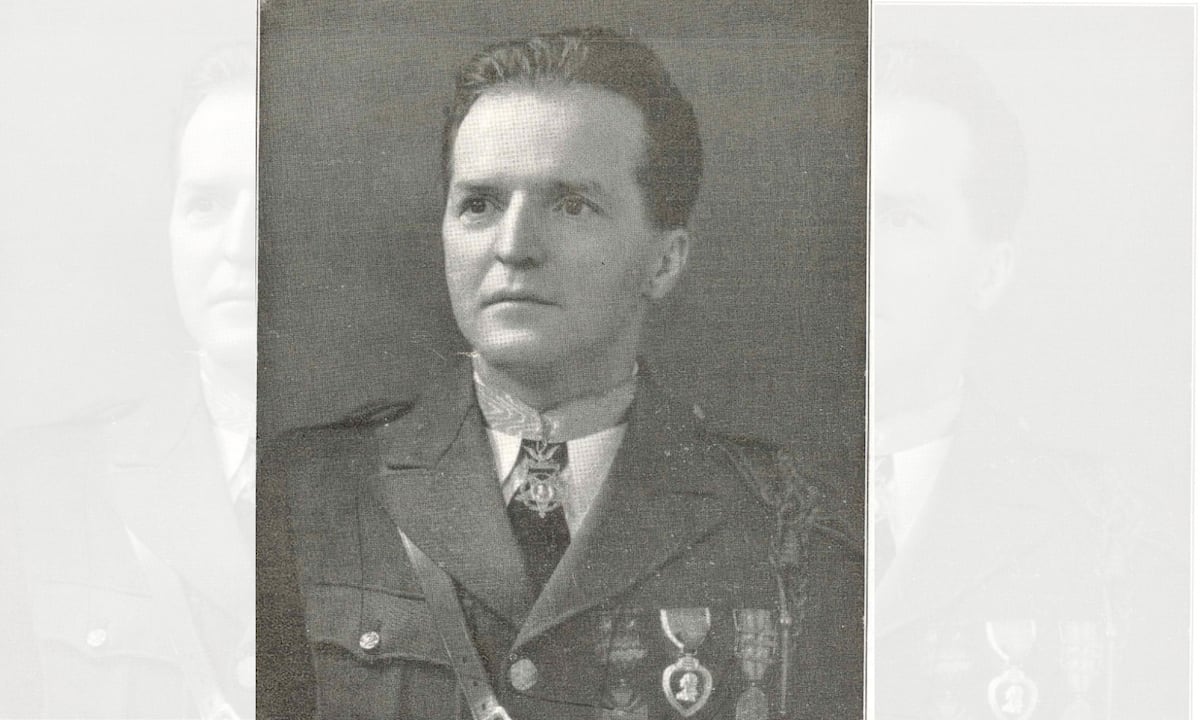
During World War I, American soldiers faced tremendous challenges on the battlefield, where acts of bravery often determined the course of events. One such act was performed by Private Sterling Lewis Morelock during the Meuse-Argonne Campaign. On October 4, 1918, Morelock and his comrades undertook a daring mission that ultimately contributed to a significant breakthrough against German forces.
Born on June 5, 1890, in Silver Run, Maryland, Morelock grew up in a modest household. His father, Addison Morelock, worked as a bookkeeper, while his mother Sarah passed away in July 1912. Following her death, Morelock relocated to Oquawka, Illinois, where he lived with friends Charles and Lena Holmes.
When the United States entered the war, Morelock enlisted and was assigned to Company M of the 28th Infantry Regiment, part of the 1st Division. His responsibilities included carrying vital communications across dangerous terrain, often dodging enemy snipers and machine gun fire.
As the American Expeditionary Forces (AEF) launched Phase Two of their offensive across the Meuse River and into the Argonne Forest, Morelock’s unit faced intense resistance. The initial phase, occurring from September 26 to October 1, had already cost many lives. Following this, General John J. Pershing replaced exhausted divisions with fresh troops, including Morelock’s regiment.
On that fateful day, near Exermont, Morelock’s detachment found themselves under heavy enemy fire. While performing their duties, Morelock identified an opportunity to advance. According to his citation, he voluntarily led his team through intense fire, penetrating enemy lines to engage hostile machine gun nests. Despite facing overwhelming odds, Morelock and his patrol managed to neutralize five enemy positions, which housed multiple machine guns.
Morelock’s actions did not go unnoticed. He maintained control of the situation until reinforcements arrived, even after sustaining injuries. He provided first aid to his wounded comrades and successfully evacuated ten German prisoners. His bravery and leadership during this critical moment earned him the Medal of Honor, awarded in 1922.
The impact of Morelock’s injuries was profound. He endured eleven years of hospital visits and surgeries, eventually receiving a steel hip replacement. Despite these challenges, he continued to serve, working as a guard for the Department of Agriculture and Veterans Administration until 1957. Morelock remained active in veteran affairs until his retirement in 1962.
Sterling Lewis Morelock passed away on September 1, 1964. He left behind a widow and two adopted daughters. His legacy lives on at Arlington National Cemetery, where he is interred, a testament to his bravery during one of the most tumultuous times in history.

Hallmark’s ‘Christmas at the Catnip Café’ Premieres Tonight

Woman Arrested for Threatening U-Haul Worker with Baton

Japan’s PM Takaichi Vows Urgent Fiscal Management Amid Rate Trends

Bitcoin Plummets Below $88K Amid Tether Concerns and Warnings

Tottenville Falls Short in PSAL 4A Title Game Against Erasmus

Shark Teeth Study Reveals Urgent Clues to Prevent Extinction

Church Members Rally Together After Thanksgiving Fire Devastation

U.S. Investment in Canadian Energy Firms Surges Despite Low Oil Prices

Nick Jonas Unveils New Solo Album ‘Sunday Best’ Set for February Release

Urgent Update: Tom Aspinall’s Vision Deteriorates After UFC 321

MIT Scientists Uncover Surprising Genomic Loops During Cell Division

University of Hawaiʻi Joins $25.6M AI Project to Enhance Disaster Monitoring

AI Disruption: AWS Faces Threat as Startups Shift Cloud Focus

Time Crystals Revolutionize Quantum Computing Potential

Honeywell Forecasts Record Business Jet Deliveries Over Next Decade

Discover the Full Map of Pokémon Legends: Z-A’s Lumiose City

GOP Faces Backlash as Protests Surge Against Trump Policies

Parenthood Set to Depart Hulu: What Fans Need to Know
-
 Top Stories1 month ago
Urgent Update: Tom Aspinall’s Vision Deteriorates After UFC 321
-
 Health1 month ago
MIT Scientists Uncover Surprising Genomic Loops During Cell Division
-
Science4 weeks ago
University of Hawaiʻi Joins $25.6M AI Project to Enhance Disaster Monitoring
-
 Top Stories1 month ago
AI Disruption: AWS Faces Threat as Startups Shift Cloud Focus
-
 Science2 months ago
Time Crystals Revolutionize Quantum Computing Potential
-
 World2 months ago
Honeywell Forecasts Record Business Jet Deliveries Over Next Decade
-
 Entertainment1 month ago
Discover the Full Map of Pokémon Legends: Z-A’s Lumiose City
-
 Top Stories2 months ago
GOP Faces Backlash as Protests Surge Against Trump Policies
-
 Entertainment2 months ago
Parenthood Set to Depart Hulu: What Fans Need to Know
-

 Politics2 months ago
Judge Signals Dismissal of Chelsea Housing Case Citing AI Flaws
-

 Sports2 months ago
Yoshinobu Yamamoto Shines in Game 2, Leading Dodgers to Victory
-

 Health2 months ago
Maine Insurers Cut Medicare Advantage Plans Amid Cost Pressures