
World
Trump Facilitates Ceasefire Between Thailand and Cambodia in Kuala Lumpur

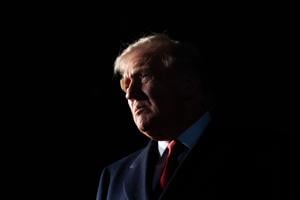
A ceasefire agreement aimed at de-escalating tensions between Thailand and Cambodia was formalized during a ceremony in Kuala Lumpur on March 3, 2024. U.S. President Donald Trump attended the event, having previously threatened economic repercussions to encourage both countries to halt border skirmishes earlier this year. The agreement includes Thailand’s commitment to release Cambodian prisoners, while Cambodia will withdraw heavy artillery as part of the initial phase.
Regional observers will be tasked with monitoring the situation to prevent a resurgence of violence. “We did something that a lot of people said couldn’t be done,” Trump stated during the ceremony. Cambodian Prime Minister Hun Manet hailed the event as a “historic day,” while Thai Prime Minister Anutin Charnvirakul emphasized that the agreement lays the groundwork for lasting peace.
The ceremony marked Trump’s first engagement at the annual summit of the Association of Southeast Asian Nations (ASEAN), which serves as a platform for regional dialogue. Following the summit, Trump plans to visit Japan and South Korea, where he anticipates a meeting with Chinese leader Xi Jinping. This trip presents an opportunity for Trump to enhance his image as an international dealmaker amidst domestic political challenges, including a government shutdown and tariff disputes.
Upon his arrival in Kuala Lumpur shortly before 0200 GMT, Trump showcased his signature campaign style, dancing with local performers while holding both an American flag and a Malaysian flag. Later in the day, he is expected to sign agreements with Malaysia focused on trade and critical minerals, reflecting U.S. efforts to diversify supply chains away from China.
Despite attending this summit only once during his first term, Trump’s presence this year underscores his intention to re-engage with Southeast Asia. In July 2023, Thailand and Cambodia experienced intense fighting, resulting in dozens of casualties and displacing hundreds of thousands. The resurgence of violence stemmed from competing territorial claims, prompting Trump to leverage economic pressure to facilitate negotiations.
The ceasefire agreement comes at a critical time, as Trump had previously signaled he would withhold trade agreements until the fighting ceased. Ou Virak, president of the Future Forum think tank in Phnom Penh, noted that Trump’s economic leverage significantly influenced the negotiation process. “The fact that Trump was holding the tariff card was actually very, very significant… that’s probably the main reason why the two sides agreed immediately to the ceasefire,” he remarked.
Following the signing of the ceasefire, Trump also initiated separate economic agreements with both Thailand and Cambodia. During his opening remarks at the summit, Malaysian Prime Minister Anwar Ibrahim praised the agreement, stating, “It reminds us that reconciliation is not concession, but an act of courage.” Thai foreign ministry spokesperson Nikorndej Balankura described the deal as a “joint declaration,” reinforcing both nations’ commitment to improving relations.
On this trip, trade and tariffs remain focal points for Trump. He is expected to meet with Brazilian President Luiz Inácio Lula da Silva but will not engage with Canadian Prime Minister Mark Carney, due to tensions arising from a Canadian advertisement opposing his tariffs. Trump recently announced plans to increase tariffs on Canada, further complicating trade relations.
As discussions continue regarding the trade war with China, Trump expressed optimism about potential agreements on issues such as fentanyl trafficking and soybean sales during his anticipated meeting with Xi. He stated, “I think we have a really good chance of making a very comprehensive deal. I want our farmers to be taken care of. And he wants things also.”
While details about the agreements remain sparse, Trump’s confidence suggests a proactive approach to finalizing trade discussions with Japan and South Korea, both critical allies. The absence of Indian Prime Minister Narendra Modi from the summit highlights the recent strains in U.S.-India relations, which have become more complex amid increased tariffs on Indian purchases of Russian oil.
The developments in Kuala Lumpur not only reflect ongoing geopolitical maneuvers but also illustrate Trump’s broader strategy in positioning himself as a mediator and peacemaker on the international stage.

Hallmark’s ‘Christmas at the Catnip Café’ Premieres Tonight

Woman Arrested for Threatening U-Haul Worker with Baton

Japan’s PM Takaichi Vows Urgent Fiscal Management Amid Rate Trends

Bitcoin Plummets Below $88K Amid Tether Concerns and Warnings

Tottenville Falls Short in PSAL 4A Title Game Against Erasmus

Shark Teeth Study Reveals Urgent Clues to Prevent Extinction

Church Members Rally Together After Thanksgiving Fire Devastation

U.S. Investment in Canadian Energy Firms Surges Despite Low Oil Prices

Nick Jonas Unveils New Solo Album ‘Sunday Best’ Set for February Release

Urgent Update: Tom Aspinall’s Vision Deteriorates After UFC 321

MIT Scientists Uncover Surprising Genomic Loops During Cell Division

University of Hawaiʻi Joins $25.6M AI Project to Enhance Disaster Monitoring

AI Disruption: AWS Faces Threat as Startups Shift Cloud Focus

Time Crystals Revolutionize Quantum Computing Potential

Honeywell Forecasts Record Business Jet Deliveries Over Next Decade

Discover the Full Map of Pokémon Legends: Z-A’s Lumiose City

GOP Faces Backlash as Protests Surge Against Trump Policies

Parenthood Set to Depart Hulu: What Fans Need to Know
-
 Top Stories1 month ago
Urgent Update: Tom Aspinall’s Vision Deteriorates After UFC 321
-
 Health1 month ago
MIT Scientists Uncover Surprising Genomic Loops During Cell Division
-
Science4 weeks ago
University of Hawaiʻi Joins $25.6M AI Project to Enhance Disaster Monitoring
-
 Top Stories1 month ago
AI Disruption: AWS Faces Threat as Startups Shift Cloud Focus
-
 Science2 months ago
Time Crystals Revolutionize Quantum Computing Potential
-
 World2 months ago
Honeywell Forecasts Record Business Jet Deliveries Over Next Decade
-
 Entertainment1 month ago
Discover the Full Map of Pokémon Legends: Z-A’s Lumiose City
-
 Top Stories2 months ago
GOP Faces Backlash as Protests Surge Against Trump Policies
-
 Entertainment2 months ago
Parenthood Set to Depart Hulu: What Fans Need to Know
-

 Politics2 months ago
Judge Signals Dismissal of Chelsea Housing Case Citing AI Flaws
-

 Sports2 months ago
Yoshinobu Yamamoto Shines in Game 2, Leading Dodgers to Victory
-

 Health2 months ago
Maine Insurers Cut Medicare Advantage Plans Amid Cost Pressures