
World
Trump Urges GOP to End Record-Breaking Government Shutdown

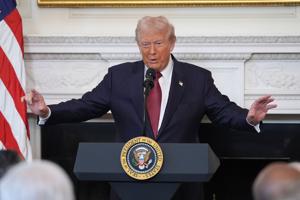
President Donald Trump has intensified pressure on Senate Republicans to bring an end to the ongoing government shutdown, which has now become the longest in U.S. history. The shutdown, which has lasted for 36 days, is disrupting essential services nationwide and affecting the lives of millions of Americans. Trump blamed the protracted impasse for the Republican Party’s recent electoral defeats, asserting that it played a significant role in their losses during key elections.
Trump’s remarks came during a breakfast meeting with GOP senators at the White House, where he reiterated his call for an end to the Senate filibuster. This rule, requiring a 60-vote threshold for most legislation, has become a focal point in the ongoing negotiations. “It’s time for Republicans to do what they have to do, and that’s terminate the filibuster,” he stated, pushing for a strategy to overcome Democratic resistance to funding the government.
Democratic leaders have responded firmly. Chuck Schumer, the Senate Democratic leader, emphasized the need for Trump to engage directly in negotiations to resolve the stalemate over expiring health care subsidies. “The election results ought to send a much-needed bolt of lightning to Donald Trump that he should meet with us to end this crisis,” Schumer said. This call for dialogue reflects the Democrats’ newfound confidence following their electoral successes.
The shutdown not only disrupts federal operations but also has significant ramifications for government employees and citizens relying on federal services. With flight delays and program cuts becoming increasingly common, officials have warned of a potential worsening scenario, particularly if air traffic controllers miss another paycheck. The situation is dire, as hundreds of thousands of federal workers have either been furloughed or are working without pay.
Mike Johnson, the House Speaker, acknowledged the gravity of the situation, referring to the shutdown as a “sad landmark.” He expressed little concern for the recent election defeats, indicating that he anticipates a more favorable outcome for Republicans in the upcoming midterm elections. Meanwhile, essential services, from food aid to child care funding, continue to face interruptions, prompting frustration among lawmakers and citizens alike.
Negotiations among centrist senators have intensified as they seek a resolution to the impasse. Key members of the Appropriations Committee are advocating for a return to the normal funding process in Congress. A potential agreement could involve a package of bills focused on bipartisan support for various government functions, including agricultural programs and military construction projects.
One major obstacle remains the funding for Affordable Care Act subsidies, which are set to expire at the end of the year. Millions of Americans are facing steep increases in insurance premiums due to the impending loss of enhanced federal subsidies, originally implemented during the COVID-19 pandemic. Republicans are hesitant to support these health care measures without significant reforms, complicating the negotiation process.
Senator John Thune remarked on the urgent need to resolve the shutdown, asking, “Have the American people suffered enough?” While he acknowledged that there is currently no support within the Senate to change the filibuster rule, he did promise Democrats a vote on their health care proposal as part of any potential deal to reopen the government.
The stark contrast between Trump’s current approach to the shutdown and his previous one during his first term is notable. In 2019, he engaged directly with congressional leaders during a 35-day partial government closure over funding for the U.S.-Mexico border wall. This time, however, Trump has largely stayed out of the public negotiations, focusing instead on global events and activities at his Mar-a-Lago resort.
As the stalemate continues, the path to a resolution remains uncertain. Senators from both parties are grappling with the complexities of reaching an agreement that satisfies all sides while addressing the critical needs of American citizens during this protracted shutdown.

Urgent: Vehicle Fire Closes Two Lanes on I-215 in Salt Lake City

Knicks Dominate Raptors 116-94, Extend Home Winning Streak

Hallmark’s ‘Christmas at the Catnip Café’ Premieres Tonight

Woman Arrested for Threatening U-Haul Worker with Baton

Japan’s PM Takaichi Vows Urgent Fiscal Management Amid Rate Trends

Bitcoin Plummets Below $88K Amid Tether Concerns and Warnings

Tottenville Falls Short in PSAL 4A Title Game Against Erasmus

Shark Teeth Study Reveals Urgent Clues to Prevent Extinction

Church Members Rally Together After Thanksgiving Fire Devastation

Urgent Update: Tom Aspinall’s Vision Deteriorates After UFC 321

MIT Scientists Uncover Surprising Genomic Loops During Cell Division

University of Hawaiʻi Joins $25.6M AI Project to Enhance Disaster Monitoring

AI Disruption: AWS Faces Threat as Startups Shift Cloud Focus

Time Crystals Revolutionize Quantum Computing Potential

Honeywell Forecasts Record Business Jet Deliveries Over Next Decade

Discover the Full Map of Pokémon Legends: Z-A’s Lumiose City

GOP Faces Backlash as Protests Surge Against Trump Policies

Parenthood Set to Depart Hulu: What Fans Need to Know
-
 Top Stories1 month ago
Urgent Update: Tom Aspinall’s Vision Deteriorates After UFC 321
-
 Health1 month ago
MIT Scientists Uncover Surprising Genomic Loops During Cell Division
-
Science4 weeks ago
University of Hawaiʻi Joins $25.6M AI Project to Enhance Disaster Monitoring
-
 Top Stories1 month ago
AI Disruption: AWS Faces Threat as Startups Shift Cloud Focus
-
 Science2 months ago
Time Crystals Revolutionize Quantum Computing Potential
-
 World2 months ago
Honeywell Forecasts Record Business Jet Deliveries Over Next Decade
-
 Entertainment1 month ago
Discover the Full Map of Pokémon Legends: Z-A’s Lumiose City
-
 Top Stories2 months ago
GOP Faces Backlash as Protests Surge Against Trump Policies
-
 Entertainment2 months ago
Parenthood Set to Depart Hulu: What Fans Need to Know
-

 Politics2 months ago
Judge Signals Dismissal of Chelsea Housing Case Citing AI Flaws
-

 Sports2 months ago
Yoshinobu Yamamoto Shines in Game 2, Leading Dodgers to Victory
-

 Health2 months ago
Maine Insurers Cut Medicare Advantage Plans Amid Cost Pressures