
World
Zhang Lu Explores Disconnection in New Film ‘Mothertongue’

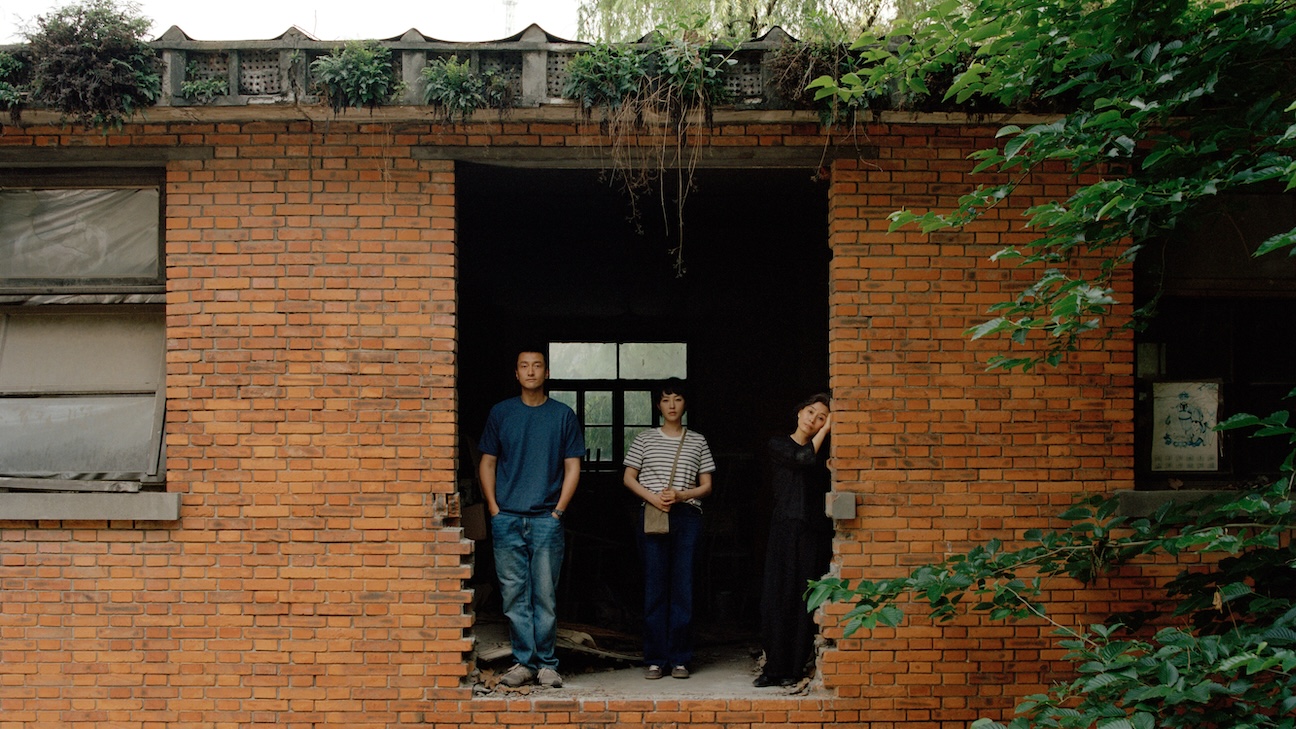
Korean-Chinese director Zhang Lu has debuted his latest film, Mothertongue, at the Tokyo International Film Festival, following his success at the Busan International Film Festival in October 2023, where he won the inaugural best film award for Gloaming in Luomo. The two films, shot in close proximity and featuring similar themes and actors, highlight Zhang’s exploration of emotional disconnection and identity.
Mothertongue tells the story of Haruki, portrayed by Bai Baihe, a struggling actress who returns to her hometown after a decade in Beijing. Her inability to communicate fluently in her native dialect exacerbates her feelings of isolation. The film also features Liu Dan as her old drama teacher, who suffers from memory loss, while Wang Chuanjun plays his supportive son, who helps Haruki reconnect with her roots.
Insight into the Director’s Vision
In a recent interview with The Hollywood Reporter, Zhang reflected on his recent award and what it means for him. He noted, “Winning an award is, of course, something to be happy about but not something to take too seriously. Getting an award doesn’t mean I’m better than others, and not winning doesn’t mean I’m worse than others — it’s mostly luck.”
The conversation turned to Zhang’s unconventional journey into filmmaking. He confirmed that a bet claiming anyone could direct a film was indeed true but emphasized that the desire to create had always been within him. “Since I was a child, I’ve been sensitive to sound and images,” he explained. “That bet simply gave me a push to discover that possibility.”
When discussing the transition from literature to cinema, Zhang remarked, “You could say I divorced literature and married cinema but really it was just a change of jobs.” He believes that both forms of storytelling are rooted in emotion, stating, “When I write, I face emotion; when I make films, I face emotion too.” This emotional foundation remains integral to his work.
Thematic Exploration of Displacement
Throughout his films, Zhang often delves into themes of displacement and the feeling of being an outsider. This stems from his own background as a Korean-Chinese individual who has experienced life as an immigrant. “I’m descended from immigrants: my grandparents moved from Korea to China,” he shared. “I’ve lived most of my life in constant motion, in unsettled environments.” He suggests that these experiences naturally influence the narratives he creates.
The significance of place is also central to Zhang’s storytelling. He reflected on how none of his films originated from a character or a plot but rather from a location that resonated with him. “Only after being moved by that particular space can I begin to imagine the people and the story that might exist there,” he explained. This focus on setting led him to Luomu, a town steeped in history, where he felt an immediate connection that inspired his latest project.
After completing Mothertongue, Zhang planned a short break at Mount Emei, but was captivated by Luomu’s atmosphere instead. He described the town as having a strong sense of history, noting, “People have lived there for more than three thousand years… you can still feel the traces of all those past generations.” This sense of time and human experience ultimately serves as the foundation for his filmmaking.
In discussing the collaborative nature of his projects, Zhang revealed that many of the costumes in Gloaming in Luomo were repurposed from Mothertongue. He emphasized the importance of trust and instinct during production, allowing actors to bring their own energy to the scenes. “When there’s deep mutual trust, the film can breathe,” he stated.
Finally, when asked about his approach to storytelling, Zhang expressed skepticism towards rigid narratives. He prefers to focus on small, intimate interactions that reveal genuine emotions. “A complete narrative, in a sense, is something frozen, dead,” he remarked. The spontaneity of human connection, he believes, is what gives his films their authenticity.
Zhang Lu’s work continues to resonate with audiences as he navigates complex themes of identity and belonging. With Mothertongue, he invites viewers to reflect on their own connections to language, place, and the people who shape their lives.

Woman Arrested for Threatening U-Haul Worker with Baton

Japan’s PM Takaichi Vows Urgent Fiscal Management Amid Rate Trends

Bitcoin Plummets Below $88K Amid Tether Concerns and Warnings

Tottenville Falls Short in PSAL 4A Title Game Against Erasmus

Shark Teeth Study Reveals Urgent Clues to Prevent Extinction

Church Members Rally Together After Thanksgiving Fire Devastation

U.S. Investment in Canadian Energy Firms Surges Despite Low Oil Prices

Nick Jonas Unveils New Solo Album ‘Sunday Best’ Set for February Release

Researchers Urge Label Changes for Low-Alcohol Drinks to Aid Pregnant Women

Urgent Update: Tom Aspinall’s Vision Deteriorates After UFC 321

MIT Scientists Uncover Surprising Genomic Loops During Cell Division

University of Hawaiʻi Joins $25.6M AI Project to Enhance Disaster Monitoring

AI Disruption: AWS Faces Threat as Startups Shift Cloud Focus

Time Crystals Revolutionize Quantum Computing Potential

Honeywell Forecasts Record Business Jet Deliveries Over Next Decade

Discover the Full Map of Pokémon Legends: Z-A’s Lumiose City

GOP Faces Backlash as Protests Surge Against Trump Policies

Parenthood Set to Depart Hulu: What Fans Need to Know
-
 Top Stories1 month ago
Urgent Update: Tom Aspinall’s Vision Deteriorates After UFC 321
-
 Health1 month ago
MIT Scientists Uncover Surprising Genomic Loops During Cell Division
-
Science4 weeks ago
University of Hawaiʻi Joins $25.6M AI Project to Enhance Disaster Monitoring
-
 Top Stories1 month ago
AI Disruption: AWS Faces Threat as Startups Shift Cloud Focus
-
 Science2 months ago
Time Crystals Revolutionize Quantum Computing Potential
-
 World2 months ago
Honeywell Forecasts Record Business Jet Deliveries Over Next Decade
-
 Entertainment1 month ago
Discover the Full Map of Pokémon Legends: Z-A’s Lumiose City
-
 Top Stories2 months ago
GOP Faces Backlash as Protests Surge Against Trump Policies
-
 Entertainment2 months ago
Parenthood Set to Depart Hulu: What Fans Need to Know
-

 Politics2 months ago
Judge Signals Dismissal of Chelsea Housing Case Citing AI Flaws
-

 Sports2 months ago
Yoshinobu Yamamoto Shines in Game 2, Leading Dodgers to Victory
-

 Health2 months ago
Maine Insurers Cut Medicare Advantage Plans Amid Cost Pressures