
Science
Russian Rocket Launches to ISS Despite Launch Pad Damage

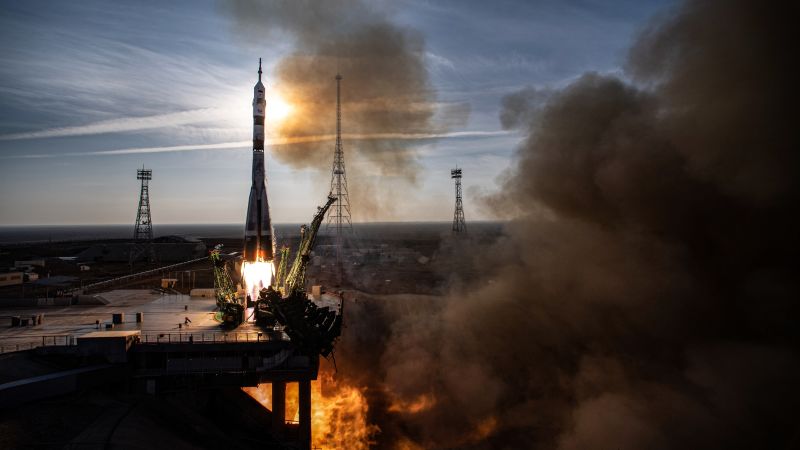
A launch pad at Russia’s Baikonur Cosmodrome in Kazakhstan sustained damage during the launch of the Soyuz MS-28 spacecraft, which successfully transported two Russian cosmonauts and an American astronaut to the International Space Station (ISS) on November 2, 2023. The mission marked a significant achievement as the spacecraft docked with the ISS shortly after takeoff, but the post-launch inspection revealed issues that could impact future missions.
According to a statement from Roscosmos, the damage affects several elements of the launch pad, which serves as the primary facility for crewed missions to the ISS. The agency confirmed that an assessment of the launch complex is currently underway and that all necessary parts for repairs are readily available. Roscosmos assured that the damage would be addressed in the near future.
Potential Impacts on Future Launches
The launch pad is equipped with vital support systems and structures that allow cosmonauts to access their spacecraft while it is mounted atop the Soyuz rocket. These facilities must endure extreme conditions, including high temperatures and vibrations during liftoff. Russian analysts suggest that repairs could take a week or longer, which raises concerns about the continuity of crewed missions to the ISS.
Georgy Trishkin, an analyst and blogger, highlighted on Telegram that prolonged repair delays may disrupt the schedule for crewed and cargo flights to the ISS. Typically, missions to the station are launched roughly every six months from Baikonur.
In a more critical assessment, commentator Vitaliy Egorov emphasized on Telegram, “This is the only launch pad Roscosmos uses for the ISS program, and it was also intended for future launches to the Russian Orbital Station. Effectively, from this day Russia has lost the ability to launch humans into space, something that has not occurred since 1961.”
Current Crew and Future Prospects
The three crew members on the Soyuz MS-28 mission join an existing crew of seven aboard the ISS. NASA confirmed that three of the current occupants are scheduled to return to Earth by December 8, 2023. While Russia’s Soyuz spacecraft remains a critical component for crew transport, NASA also employs SpaceX’s Dragon spacecraft for missions to the ISS.
As Roscosmos navigates the repair process, the future of Russian crewed spaceflight remains uncertain. The agency’s ability to maintain a steady flow of missions to the ISS is essential not only for international collaboration in science and exploration but also for preserving Russia’s position in the global space community.

Philadelphia Parks Launch Free Earth Month Events Starting April 1

Bradford’s Fish Fry Fridays Serve Community with Delicious Dinners

Trump Faces Growing Challenges Amid Rising Tensions with Iran

Scientists Probe the Universe’s Missing Topological Defects

Samsung Galaxy Watch 9 to Feature Larger 435mAh Battery

UConn Huskies Aim to Defend Title in 2026 NCAA Women’s Tournament

U.S. Littoral Combat Ships Dock in Malaysia Amid Regional Tensions

Healthy Choice Wellness Reports Quarterly Earnings, Shares Rise

Urgent News: Charles M. Payment Passes Away at 78 in Duluth

University of Hawaiʻi Joins $25.6M AI Project to Enhance Disaster Monitoring

Major Grant Enhances Cancer Care and Research in Hawaiʻi

Joleen Chaney, Beloved Journalist, Passes Leaving Lasting Legacy

San Francisco’s SFO to Welcome 16 Airlines with Nonstop Flights to Europe in 2026

Goldman Sachs Unveils 2026 Catalyst Playbook for Biotech Investors

Discover Top Business Smartphones for Professionals in 2026

Urgent Update: Tom Aspinall’s Vision Deteriorates After UFC 321

Texas Roadhouse Honors Veterans with Free Meal Vouchers

CD Projekt Red Confirms No Release for The Witcher 4 in 2026
-
Science9 months ago
University of Hawaiʻi Joins $25.6M AI Project to Enhance Disaster Monitoring
-
 Health8 months ago
Major Grant Enhances Cancer Care and Research in Hawaiʻi
-
 Top Stories9 months ago
Joleen Chaney, Beloved Journalist, Passes Leaving Lasting Legacy
-
 World7 months ago
San Francisco’s SFO to Welcome 16 Airlines with Nonstop Flights to Europe in 2026
-
 Business8 months ago
Goldman Sachs Unveils 2026 Catalyst Playbook for Biotech Investors
-
 Business7 months ago
Discover Top Business Smartphones for Professionals in 2026
-
 Top Stories9 months ago
Urgent Update: Tom Aspinall’s Vision Deteriorates After UFC 321
-
 Lifestyle9 months ago
Texas Roadhouse Honors Veterans with Free Meal Vouchers
-
 Entertainment8 months ago
CD Projekt Red Confirms No Release for The Witcher 4 in 2026
-

 Top Stories10 months ago
AI Disruption: AWS Faces Threat as Startups Shift Cloud Focus
-

 Health10 months ago
MIT Scientists Uncover Surprising Genomic Loops During Cell Division
-

 Entertainment10 months ago
Discover the Full Map of Pokémon Legends: Z-A’s Lumiose City