
Science
Groundbreaking Simulation Models Milky Way with 100 Billion Stars

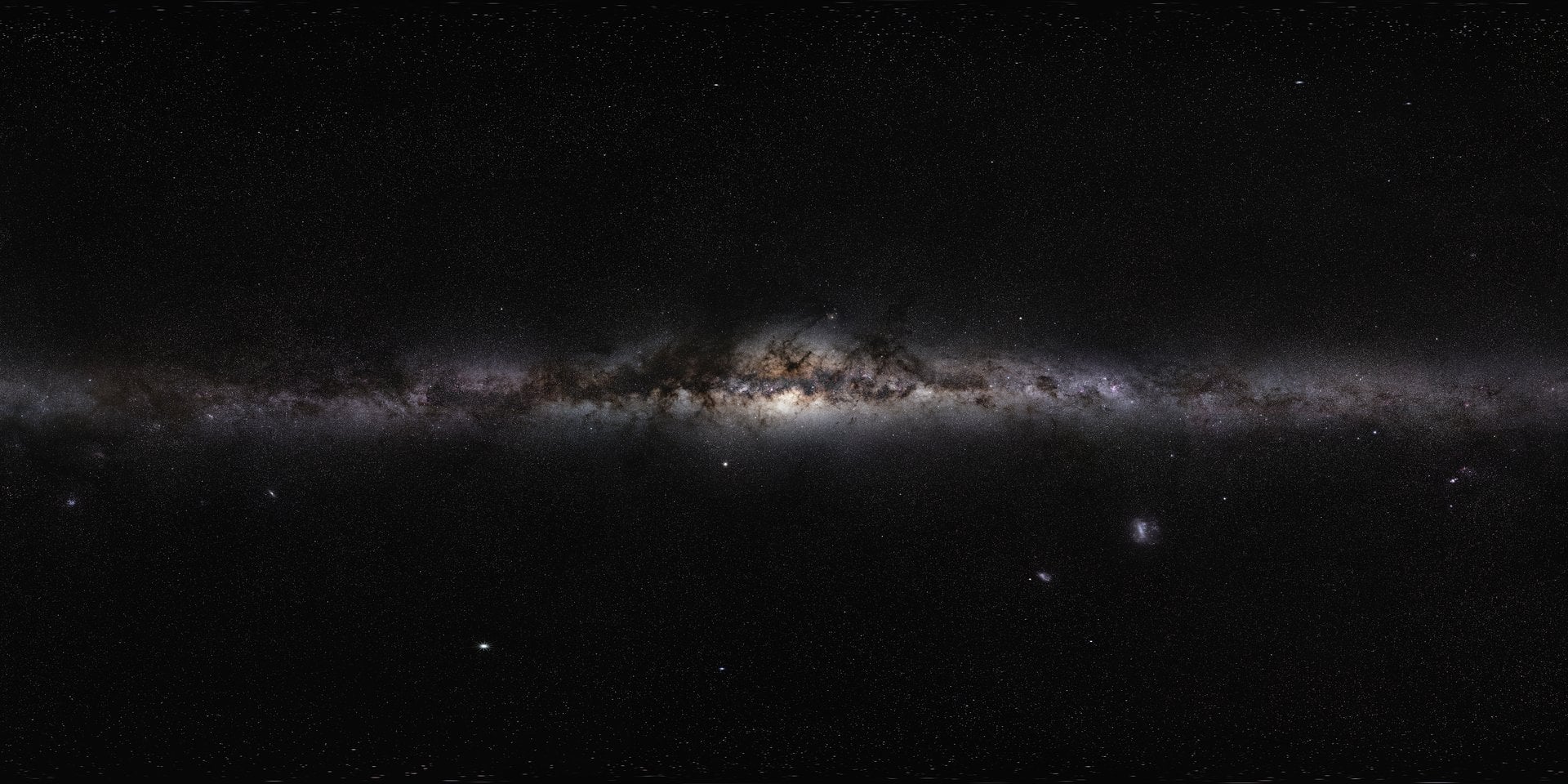
Researchers at the RIKEN Center for Interdisciplinary Theoretical and Mathematical Sciences (iTHEMS) in Japan have achieved a significant milestone in astrophysics by creating the world’s first simulation of the Milky Way that accurately models more than 100 billion stars over a time span of 10,000 years. This unprecedented simulation, conducted in collaboration with colleagues from the University of Tokyo and the Universitat de Barcelona, not only features a hundredfold increase in the number of stars compared to previous models, but it also operates at a speed that is a hundred times faster.
The breakthrough was made possible through an innovative combination of 7 million CPU cores, advanced machine learning algorithms, and sophisticated numerical simulations. The research, detailed in a paper titled “The First Star-by-star N-body/Hydrodynamics Simulation of Our Galaxy Coupling with a Surrogate Model,” was presented at the Proceedings of the International Conference for High Performance Computing, Networking, Storage and Analysis (SC ’25).
Advancing Galactic Studies
Simulations that can capture the dynamics of individual stars are essential for testing theories related to galactic formation, structure, and evolution. Historically, astronomers have faced challenges in developing simulations that accurately reflect the myriad forces at play, including gravity, fluid dynamics, supernovae, and the influence of supermassive black holes (SMBHs).
Current computational limits have made it difficult to model galaxies in such detail. The typical mass limit for these simulations stands at about one billion solar masses, which represents less than 1% of the stars in the Milky Way. Moreover, simulating just 1 million years of galactic evolution with state-of-the-art supercomputers would take approximately 315 hours, or over 13 days. To simulate the desired 1 billion years would require more than 36 years of computational time.
The RIKEN team addressed these limitations by introducing an AI shortcut in the form of a machine learning surrogate model. This model was specifically trained on high-resolution simulations of supernovae, enabling it to predict the impact of these cosmic explosions on surrounding gas and dust up to 100,000 years post-explosion. By integrating this model with physical simulations, the team could simultaneously analyze the overall dynamics of a Milky Way-sized galaxy alongside small-scale stellar phenomena.
Performance and Implications
The team validated their model’s capabilities through extensive testing on the Fugaku and Miyabi Supercomputer Systems, located at the RIKEN Center for Computational Science and the University of Tokyo, respectively. Results indicated that their approach could accurately simulate star resolution in galaxies containing over 100 billion stars, with 1 million years of evolution modeled in just 2.78 hours. This remarkable efficiency suggests that simulating 1 billion years of galactic history could be accomplished in just 115 days.
The implications of this research extend beyond the field of astrophysics. The innovative use of surrogate AI models could revolutionize complex simulations across various scientific disciplines, including meteorology, ocean dynamics, and climate science. The efficiency gained from this method not only reduces computational time but also the energy required for such simulations.
As Hirashima noted in a RIKEN press release, this advancement opens new avenues for astronomers to explore theories concerning galactic evolution and the origins of the universe. The capacity to conduct such detailed simulations and the integration of AI into computational models signify a leap forward in our understanding of the cosmos.
In conclusion, this groundbreaking simulation paves the way for future research and exploration, providing critical insights into the vast complexities of our universe.

Philadelphia Parks Launch Free Earth Month Events Starting April 1

Bradford’s Fish Fry Fridays Serve Community with Delicious Dinners

Trump Faces Growing Challenges Amid Rising Tensions with Iran

Scientists Probe the Universe’s Missing Topological Defects

Samsung Galaxy Watch 9 to Feature Larger 435mAh Battery

UConn Huskies Aim to Defend Title in 2026 NCAA Women’s Tournament

U.S. Littoral Combat Ships Dock in Malaysia Amid Regional Tensions

Healthy Choice Wellness Reports Quarterly Earnings, Shares Rise

Urgent News: Charles M. Payment Passes Away at 78 in Duluth

University of Hawaiʻi Joins $25.6M AI Project to Enhance Disaster Monitoring

Major Grant Enhances Cancer Care and Research in Hawaiʻi

Joleen Chaney, Beloved Journalist, Passes Leaving Lasting Legacy

San Francisco’s SFO to Welcome 16 Airlines with Nonstop Flights to Europe in 2026

Goldman Sachs Unveils 2026 Catalyst Playbook for Biotech Investors

Discover Top Business Smartphones for Professionals in 2026

Urgent Update: Tom Aspinall’s Vision Deteriorates After UFC 321

Texas Roadhouse Honors Veterans with Free Meal Vouchers

CD Projekt Red Confirms No Release for The Witcher 4 in 2026
-
Science9 months ago
University of Hawaiʻi Joins $25.6M AI Project to Enhance Disaster Monitoring
-
 Health8 months ago
Major Grant Enhances Cancer Care and Research in Hawaiʻi
-
 Top Stories9 months ago
Joleen Chaney, Beloved Journalist, Passes Leaving Lasting Legacy
-
 World7 months ago
San Francisco’s SFO to Welcome 16 Airlines with Nonstop Flights to Europe in 2026
-
 Business8 months ago
Goldman Sachs Unveils 2026 Catalyst Playbook for Biotech Investors
-
 Business7 months ago
Discover Top Business Smartphones for Professionals in 2026
-
 Top Stories9 months ago
Urgent Update: Tom Aspinall’s Vision Deteriorates After UFC 321
-
 Lifestyle9 months ago
Texas Roadhouse Honors Veterans with Free Meal Vouchers
-
 Entertainment8 months ago
CD Projekt Red Confirms No Release for The Witcher 4 in 2026
-

 Top Stories10 months ago
AI Disruption: AWS Faces Threat as Startups Shift Cloud Focus
-

 Health10 months ago
MIT Scientists Uncover Surprising Genomic Loops During Cell Division
-

 Entertainment10 months ago
Discover the Full Map of Pokémon Legends: Z-A’s Lumiose City