
Lifestyle
Celebrated NY Times Reporter John Noble Wilford Passes Away at 92

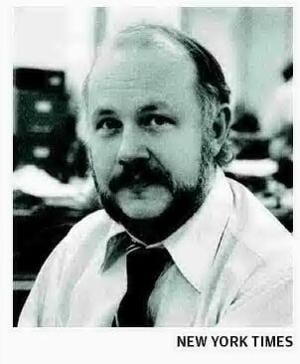
John Noble Wilford, a renowned science reporter for The New York Times, passed away at the age of 92. His career spanned decades, during which he became a prominent voice in science journalism. Wilford is particularly remembered for his enthusiastic coverage of the United States’ first moon landing on July 20, 1969, an event that captivated the world.
Wilford’s reporting on the Apollo 11 mission showcased not only his journalistic skill but also his profound interest in space exploration. He approached the moon landing with a sense of wonder, often comparing his experience to that of a fellow astronaut witnessing the historic moment alongside Neil Armstrong. His work brought the extraordinary event into the homes of millions, helping to shape public understanding of space science.
Recognition and Legacy
Throughout his career, Wilford received numerous accolades, including the prestigious Pulitzer Prize for his insightful reporting. His contributions extended beyond the moon landing, encompassing a wide range of topics in science and technology. Colleagues and readers alike respected his ability to translate complex scientific concepts into accessible narratives.
Wilford’s legacy endures not only through his written work but also through the inspiration he provided to future generations of science journalists. His commitment to accuracy and clarity set a standard in the field, encouraging aspiring reporters to adopt a similar approach.
In addition to his journalistic achievements, Wilford authored several books that explored themes of space and science. His writing often reflected his deep curiosity about the universe, as well as his belief in the importance of scientific literacy in society.
Life and Career
Born in 1931, Wilford developed an interest in journalism early in life. He joined The New York Times in 1955, where he would spend the majority of his career. His reporting style combined rigor with a sense of adventure, drawing readers into the stories he told.
Wilford’s coverage of the Apollo missions was marked by a sense of urgency and excitement. His articles provided context for the monumental achievements of NASA, making the technical aspects of space exploration accessible to the general public. As he reported on the events leading up to the moon landing, his enthusiasm shone through, making readers feel as if they were part of the journey.
After his retirement, Wilford continued to engage with the scientific community, participating in discussions and lectures about space exploration. His enduring passion for science and journalism left a significant mark on the field, inspiring many to follow in his footsteps.
The world of journalism mourns the loss of John Noble Wilford, a giant in the field whose work transcended the boundaries of traditional reporting. His unique ability to convey the wonders of science will be remembered for years to come.

Intergenerational Support: Navigating Complex Health Impacts

Machado’s Daughter Accepts Nobel Peace Prize in Oslo

EPA Removes Fossil Fuels from Climate Change Webpage

Ancient Fossils Show Dugongs Shaped Arabian Gulf Ecosystems

Europe Considers Russian Assets to Support Ukraine’s Defense Efforts

Oreo to Launch Zero-Sugar Cookies in 2026, Reports Confirm

Munson Holiday Art Market Kicks Off Dec. 11-12 with Festivities

Chico State Students De-Stress with Ramen and Quilt Crafting

ECB Boosts Growth Estimates Amid Concerns Over U.S. Agriculture

Urgent Update: Tom Aspinall’s Vision Deteriorates After UFC 321

University of Hawaiʻi Joins $25.6M AI Project to Enhance Disaster Monitoring

MIT Scientists Uncover Surprising Genomic Loops During Cell Division

AI Disruption: AWS Faces Threat as Startups Shift Cloud Focus

Time Crystals Revolutionize Quantum Computing Potential

Discover the Full Map of Pokémon Legends: Z-A’s Lumiose City

Parenthood Set to Depart Hulu: What Fans Need to Know

GOP Faces Backlash as Protests Surge Against Trump Policies

Judge Signals Dismissal of Chelsea Housing Case Citing AI Flaws
-
 Top Stories1 month ago
Urgent Update: Tom Aspinall’s Vision Deteriorates After UFC 321
-
Science1 month ago
University of Hawaiʻi Joins $25.6M AI Project to Enhance Disaster Monitoring
-
 Health2 months ago
MIT Scientists Uncover Surprising Genomic Loops During Cell Division
-
 Top Stories2 months ago
AI Disruption: AWS Faces Threat as Startups Shift Cloud Focus
-
 Science2 months ago
Time Crystals Revolutionize Quantum Computing Potential
-
 Entertainment2 months ago
Discover the Full Map of Pokémon Legends: Z-A’s Lumiose City
-
 Entertainment2 months ago
Parenthood Set to Depart Hulu: What Fans Need to Know
-
 Top Stories2 months ago
GOP Faces Backlash as Protests Surge Against Trump Policies
-
 Politics2 months ago
Judge Signals Dismissal of Chelsea Housing Case Citing AI Flaws
-

 World2 months ago
Honeywell Forecasts Record Business Jet Deliveries Over Next Decade
-

 Health2 months ago
Maine Insurers Cut Medicare Advantage Plans Amid Cost Pressures
-

 Sports2 months ago
Yoshinobu Yamamoto Shines in Game 2, Leading Dodgers to Victory