
Science
Metal Detectorist Unearths Viking Age Grave in Norway

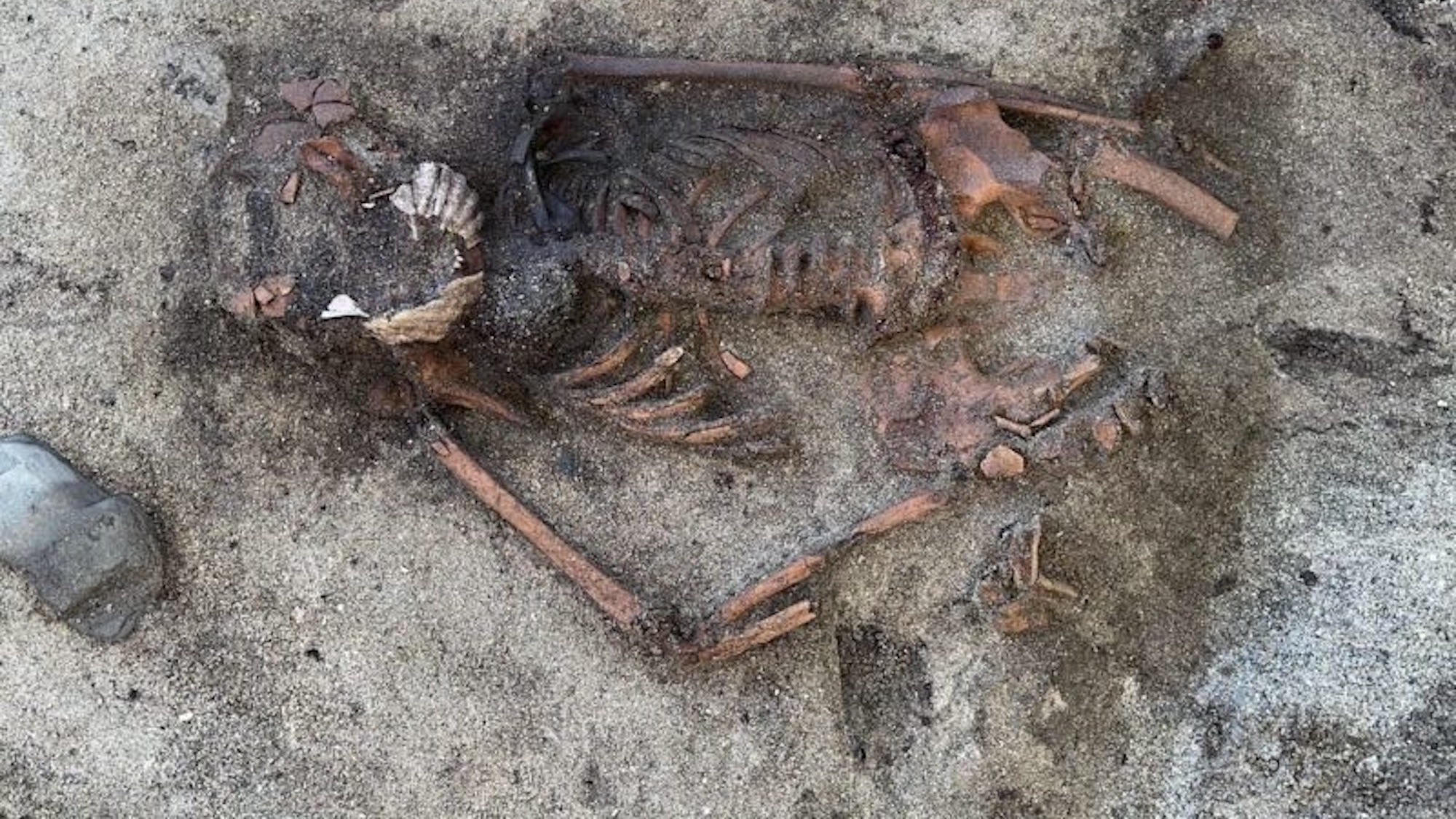
A significant archaeological discovery has emerged in Trøndelag County, Norway, where a metal detectorist uncovered a Viking Age grave. This site features a burial adorned with costume and jewelry from the 800s, suggesting important insights into the life of the individual buried there.
Roy Søreng made the discovery when he found an oval brooch and subsequently contacted researchers for further examination. The excavation, which has been conducted discreetly to protect the site, has revealed that the grave likely belongs to a woman of considerable status. According to Raymond Sauvage, head engineer at the NTNU Museum’s Department of Archaeology and Cultural History, she may have been a free and possibly married woman, perhaps even the mistress of a local farm.
The excavation team unearthed skeletal remains along with two oval brooches, including the one discovered by Søreng. These brooches would have attached to the straps of a suspender dress, providing a glimpse into the fashion of the time. Additionally, a ring buckle found in the grave would have been used to fasten the neck opening of a petticoat, further enhancing the understanding of Viking attire.
One of the most intriguing features discovered was the presence of two scallop shells that partially covered the deceased’s mouth. While scallop shells became associated with Christianity during the Middle Ages, particularly linked to the cult of St. James, their appearance in pre-Christian graves is exceedingly rare. Sauvage noted, “This is a practice that is not previously known from pre-Christian graves in Norway. We don’t yet know what the symbolism means.”
In addition to the shells, the team found bird bones, likely wing bones, alongside the grave. These artifacts may hold significant symbolic meaning, indicating a ritualistic aspect to the burial that warrants further investigation.
The excavation follows the earlier discovery of another complete skeleton in the same field earlier this year. Field supervisor Hanne Bryn indicated that the newly discovered grave is likely one to three generations younger than the previous find. “During the inspection, we quickly realized that we were facing a new skeletal grave that was in acute danger of being damaged during the next ploughing,” she explained. Fortunately, landowner Arve Innstrand authorized the continuation of the excavation, allowing researchers to explore the site further.
With the excavation now complete, the next phase involves detailed analysis. Researchers plan to examine the skeleton, preserve the artifacts, and collect samples for dating and DNA analysis. The aim is to uncover more about the individual and their potential connection to the earlier discovery. The study will focus on body height, gender-defining characteristics, and any signs of disease, thereby enriching the understanding of Viking Age society and its burial practices.
This remarkable find adds to a growing list of significant archaeological discoveries in the region, further highlighting the importance of metal detecting in uncovering historical treasures.

Philadelphia Parks Launch Free Earth Month Events Starting April 1

Bradford’s Fish Fry Fridays Serve Community with Delicious Dinners

Trump Faces Growing Challenges Amid Rising Tensions with Iran

Scientists Probe the Universe’s Missing Topological Defects

Samsung Galaxy Watch 9 to Feature Larger 435mAh Battery

UConn Huskies Aim to Defend Title in 2026 NCAA Women’s Tournament

U.S. Littoral Combat Ships Dock in Malaysia Amid Regional Tensions

Healthy Choice Wellness Reports Quarterly Earnings, Shares Rise

Urgent News: Charles M. Payment Passes Away at 78 in Duluth

University of Hawaiʻi Joins $25.6M AI Project to Enhance Disaster Monitoring

Major Grant Enhances Cancer Care and Research in Hawaiʻi

Joleen Chaney, Beloved Journalist, Passes Leaving Lasting Legacy

San Francisco’s SFO to Welcome 16 Airlines with Nonstop Flights to Europe in 2026

Goldman Sachs Unveils 2026 Catalyst Playbook for Biotech Investors

Discover Top Business Smartphones for Professionals in 2026

Urgent Update: Tom Aspinall’s Vision Deteriorates After UFC 321

Texas Roadhouse Honors Veterans with Free Meal Vouchers

CD Projekt Red Confirms No Release for The Witcher 4 in 2026
-
Science9 months ago
University of Hawaiʻi Joins $25.6M AI Project to Enhance Disaster Monitoring
-
 Health8 months ago
Major Grant Enhances Cancer Care and Research in Hawaiʻi
-
 Top Stories9 months ago
Joleen Chaney, Beloved Journalist, Passes Leaving Lasting Legacy
-
 World7 months ago
San Francisco’s SFO to Welcome 16 Airlines with Nonstop Flights to Europe in 2026
-
 Business8 months ago
Goldman Sachs Unveils 2026 Catalyst Playbook for Biotech Investors
-
 Business8 months ago
Discover Top Business Smartphones for Professionals in 2026
-
 Top Stories9 months ago
Urgent Update: Tom Aspinall’s Vision Deteriorates After UFC 321
-
 Lifestyle9 months ago
Texas Roadhouse Honors Veterans with Free Meal Vouchers
-
 Entertainment8 months ago
CD Projekt Red Confirms No Release for The Witcher 4 in 2026
-

 Top Stories10 months ago
AI Disruption: AWS Faces Threat as Startups Shift Cloud Focus
-

 Health10 months ago
MIT Scientists Uncover Surprising Genomic Loops During Cell Division
-

 Entertainment10 months ago
Discover the Full Map of Pokémon Legends: Z-A’s Lumiose City