
Science
Researchers Uncover Prehistoric Elephant Footprints in Murcia

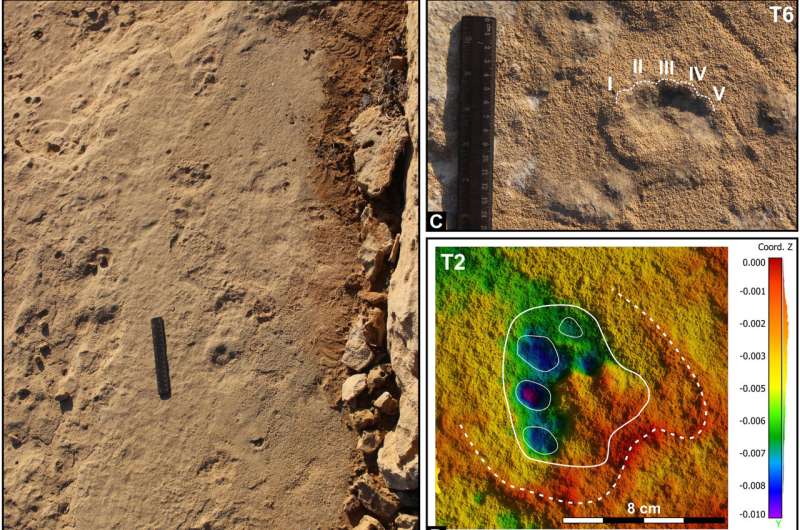
An international team of researchers has documented the first fossilized vertebrate footprints from the Quaternary period in coastal dune deposits of Murcia, Spain. These footprints, attributed to the prehistoric elephant species Palaeoloxodon antiquus, also known as the straight-tusked elephant, provide critical insights into the movement of megafauna approximately 125,000 years ago.
The study, titled “New vertebrate footprint sites in the latest interglacial dune deposits on the coast of Murcia (southeast Spain). Ecological corridors for elephants in Iberia?” was published in the journal Quaternary Science Reviews. It highlights the significance of these tracks in reconstructing the ecological landscape of Iberia during the Last Interglacial.
Discoveries from Coastal Campaigns
Conducted in areas such as Calblanque and Torre de Cope, the research involved prospecting campaigns led by Carlos Neto de Carvalho from the Geology Office of the Municipality of Idanha-a-Nova and the University of Lisbon. Key contributors included Fernando Muñiz Guinea and Miguel Cortés-Sánchez from the University of Seville, along with researchers from the Andalusian Institute of Earth Sciences and the University of Huelva.
Among the most notable findings is a 2.75-meter-long proboscidean trackway at Torre de Cope, featuring four rounded footprints measuring between 40–50 cm in diameter. This arrangement, characteristic of an elephant’s quadrupedal gait, suggests the trackway belonged to an adult Palaeoloxodon antiquus, approximately 2.3 meters tall at the hip and weighing around 2.6 tonnes.
The research team also documented various other animal tracks, indicating a diverse mammalian community. In Calblanque, they discovered a medium-sized mustelid trail, consisting of ten nearly circular footprints, which suggests slow movements near water sources. Additionally, an isolated canid footprint, measuring 10 × 8 cm, indicates the presence of predators such as wolves (Canis lupus) in the region.
Ecological Implications and Connections to Neanderthals
The findings support the existence of ecological corridors that may have facilitated seasonal migrations between Mediterranean forests and coastal landscapes. This theory aligns with evidence of a rich coastal forest ecosystem during the marine isotopic stage (MIS 5e) of Earth.
The implications of this research extend beyond the animal tracks themselves. The authors propose a connection between these coastal corridors and Neanderthal populations, highlighting a geographical overlap between the migration routes of elephants in southeastern Iberia and known Neanderthal sites. This suggests these areas were resource-rich and crucial for the survival of prehistoric human populations.
As the study continues to unfold, it reinforces the importance of the Iberian Peninsula as a climate refuge for flora and fauna during the Pleistocene. The evidence collected provides a clearer picture of the ecological dynamics in this region and their relevance to the history of both megafauna and early human inhabitants.
This groundbreaking research not only sheds light on the ancient ecosystem of Iberia but also opens avenues for further exploration into the interactions between prehistoric wildlife and early human life. The study’s findings are a valuable addition to our understanding of how ancient species coexisted and migrated in response to environmental changes.

Record Holiday Travel Despite California Storm Warnings

St. George Officials Act on Persistent Odor from Dairy Plant

Kyrie Irving’s Humorous Encounter with Humanoid Robot Goes Viral

Chargers Showcase Physical Dominance in Narrow Win Over Chiefs

Singer Survives Electric Shock on Stage in Peru Concert

Waterbury Lifts Boil Water Advisory After Major Main Break

Ranking the Wealth of ‘The Big Bang Theory’ Cast Members

U.K. Prime Minister Starmer Appoints Christian Turner as U.S. Ambassador

Zoe Spencer Sparks Viral Twerk-Off on TMZ Brunch Bus Today

Urgent Update: Tom Aspinall’s Vision Deteriorates After UFC 321

University of Hawaiʻi Joins $25.6M AI Project to Enhance Disaster Monitoring

MIT Scientists Uncover Surprising Genomic Loops During Cell Division

AI Disruption: AWS Faces Threat as Startups Shift Cloud Focus

Time Crystals Revolutionize Quantum Computing Potential

Discover the Full Map of Pokémon Legends: Z-A’s Lumiose City

GOP Faces Backlash as Protests Surge Against Trump Policies

Honeywell Forecasts Record Business Jet Deliveries Over Next Decade

Judge Signals Dismissal of Chelsea Housing Case Citing AI Flaws
-
 Top Stories2 months ago
Urgent Update: Tom Aspinall’s Vision Deteriorates After UFC 321
-
Science2 months ago
University of Hawaiʻi Joins $25.6M AI Project to Enhance Disaster Monitoring
-
 Health2 months ago
MIT Scientists Uncover Surprising Genomic Loops During Cell Division
-
 Top Stories2 months ago
AI Disruption: AWS Faces Threat as Startups Shift Cloud Focus
-
 Science2 months ago
Time Crystals Revolutionize Quantum Computing Potential
-
 Entertainment2 months ago
Discover the Full Map of Pokémon Legends: Z-A’s Lumiose City
-
 Top Stories2 months ago
GOP Faces Backlash as Protests Surge Against Trump Policies
-
 World2 months ago
Honeywell Forecasts Record Business Jet Deliveries Over Next Decade
-
 Politics2 months ago
Judge Signals Dismissal of Chelsea Housing Case Citing AI Flaws
-

 Entertainment2 months ago
Parenthood Set to Depart Hulu: What Fans Need to Know
-

 Top Stories1 month ago
Joleen Chaney, Beloved Journalist, Passes Leaving Lasting Legacy
-

 Sports2 months ago
Yoshinobu Yamamoto Shines in Game 2, Leading Dodgers to Victory